FM Sitharaman: Tata Trusts-Tata Sons row to settle amicably; LTCG tax review on table
Synopsis
Finance Minister Nirmala Sitharaman broke her silence on two pressure points at once: the Tata boardroom dispute and FPI pressure on LTCG tax. Her message was deliberate restraint — settle Tata internally, and on capital gains, she will listen but not rush. In a market rattled by FII outflows, even a 'I will consider all this' from the FM moves the needle.
Key Takeaways
Finance Minister Nirmala Sitharaman on 2 November 2026 called for an amicable internal resolution to the Tata Trusts-Tata Sons dispute over the chairman's re-appointment and the proposed listing of Tata Sons .
Sitharaman described the Tata Group as 'a very critical component to the Indian economy' and urged all parties to avoid prolonged public disagreements.
On LTCG tax , the FM said the government would assess FPI concerns before deciding on any changes to the capital gains framework.
She noted that the same taxation structure existed in 2023 when India saw record foreign investment inflows, implying outflows are driven by market conditions, not tax policy alone.
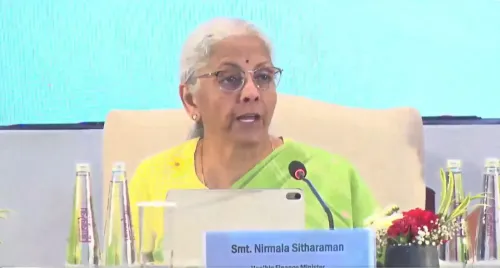
The remarks were made at the Financial Express Leadership Awards in Mumbai .
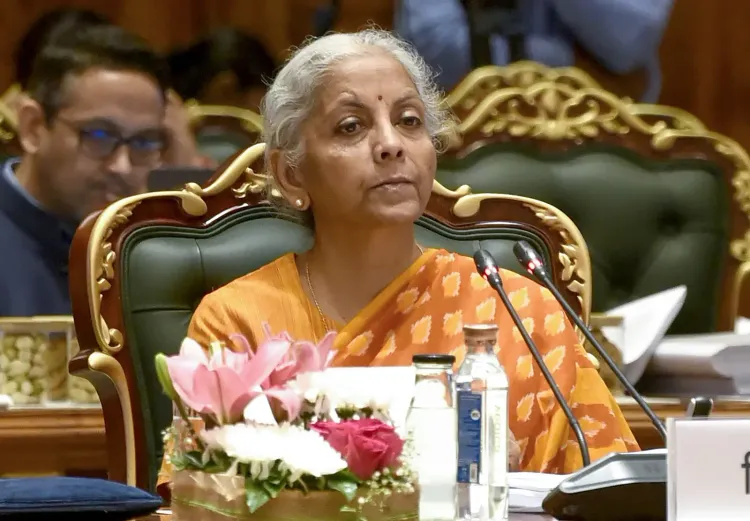
Finance Minister Nirmala Sitharaman on Monday, 2 November 2026, expressed confidence that internal disputes within the Tata Group — including differences over the re-appointment of its chairman and the proposed listing of Tata Sons — would be resolved through dialogue rather than public confrontation. She made the remarks at the Financial Express Leadership Awards in Mumbai.
Sitharaman on the Tata Group Dispute
Calling the matter a 'sensitive issue' involving significant commercial and business considerations, Sitharaman urged all stakeholders to engage in dialogue and restore normalcy at the earliest. She emphasised that prolonged public disputes were not desirable for an institution of such national and global stature.
'I know the brand value of Tata, the contribution of the Parsee community to make Tata a huge global brand. I also know the expanse of activities in which Tatas are invested. So this is a very critical component to the Indian economy and therefore it has to be amicably settled between themselves,' Sitharaman said.
She highlighted the conglomerate's significance to the Indian economy, pointing to its global brand equity, the historic contribution of the Parsi community in building the group, and the wide range of sectors in which Tata companies operate.
LTCG Tax: Government to Weigh FPI Concerns
Addressing growing investor anxiety over India's capital gains tax structure, Sitharaman said the government would carefully assess demands from foreign portfolio investors (FPIs) before deciding on any course of action regarding long-term capital gains (LTCG) tax.
'These are very delicate matters, and a lot of business and commercial acumen will have to come into play,' the minister said, signalling a measured rather than reactive approach.
Notably, Sitharaman pointed out that the existing taxation framework was identical in 2023, when India recorded peak foreign investment inflows — suggesting that the current outflows are driven by broader market conditions rather than the tax structure alone.
'The taxation structure was what it is today even in 2023, when inflows were at record highs. Today, the circumstances have changed. FII outflows have happened, and voices of concern are louder. I will consider all this,' she said.
Why These Remarks Matter
The twin signals — on the Tata Group succession dispute and on the LTCG tax regime — come at a sensitive moment for Indian capital markets. FII outflows have accelerated in recent months, and any revision to the capital gains framework could significantly alter India's attractiveness as an investment destination. Meanwhile, any prolonged boardroom conflict within the Tata conglomerate risks unsettling investor confidence in one of India's most iconic institutional brands.
This comes amid a broader global environment of tightening liquidity and rising risk aversion, which has amplified calls from foreign investors for a friendlier tax regime in emerging markets including India.
What to Watch Next
Markets and investors will now watch for whether the Union Budget process or a separate policy review takes up the LTCG question formally. On the Tata front, stakeholders will look for signs of internal reconciliation between Tata Trusts and Tata Sons leadership. Sitharaman's intervention — public but non-prescriptive — appears designed to nudge both sides toward a quiet resolution without direct government involvement.
Point of View
She has effectively told the protagonists that the government is watching but will not intervene, which is both wise and a pressure signal. On LTCG, the 2023 comparison is her strongest card: if inflows were at records with the same tax rate, the outflows story is about global risk-off, not India's tax design. The real question is whether this nuance is heard by FPIs who are already voting with their feet. A review that concludes 'no change needed' could deepen the confidence gap — the government will need to manage the communication as carefully as the policy itself.
NationPress
2 Nov 2026
Frequently Asked Questions
What did FM Sitharaman say about the Tata Trusts-Tata Sons dispute?
Finance Minister Nirmala Sitharaman expressed confidence that the differences between Tata Trusts and Tata Sons — over the chairman's re-appointment and the proposed listing of Tata Sons — would be resolved amicably through internal discussions. She urged all stakeholders to engage in dialogue and avoid prolonged public disagreements, calling the Tata Group 'a very critical component to the Indian economy.'
Will the government reduce LTCG tax following FPI demands?
Finance Minister Sitharaman said the government would assess concerns raised by foreign portfolio investors regarding the long-term capital gains tax before deciding on any action. She stopped short of committing to a reduction, calling it a 'very delicate matter' that requires careful consideration of multiple factors.
Why did Sitharaman reference 2023 in her LTCG remarks?
She pointed out that India's capital gains tax structure in 2023 was the same as it is today, yet the country recorded peak foreign investment inflows that year. Her argument is that current FII outflows are driven by changing global market conditions rather than the tax framework itself.
What is the Tata Trusts-Tata Sons dispute about?
The dispute involves differences between Tata Trusts, the majority shareholder of Tata Sons, and Tata Sons' leadership over the re-appointment of the group's chairman and a proposed listing of Tata Sons. The matter has drawn public attention given the Tata Group's stature as one of India's most important conglomerates.
What should investors watch next on the LTCG tax issue?
Investors will watch whether the Union Budget process or a separate policy review formally takes up the LTCG question. Sitharaman's signal that she will 'consider all this' suggests a review is underway, but no timeline or outcome has been indicated.