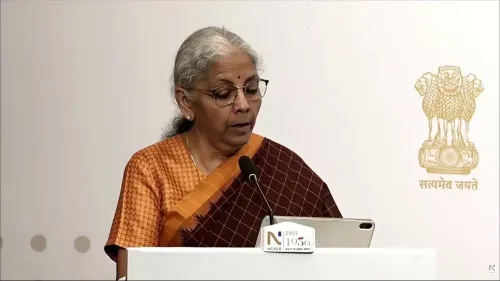
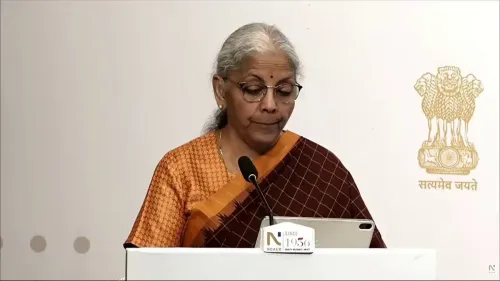
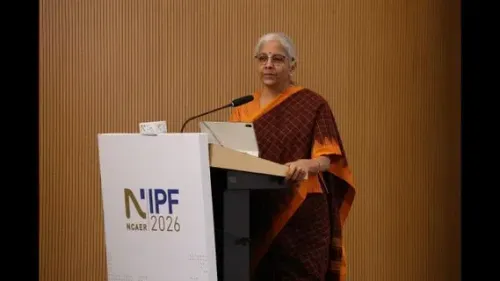
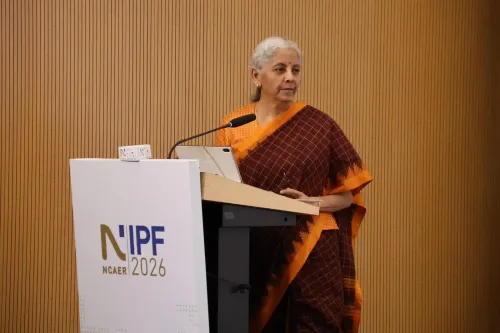
Sitharaman traces India's rise from 1991 to Vajpayee era
Synopsis
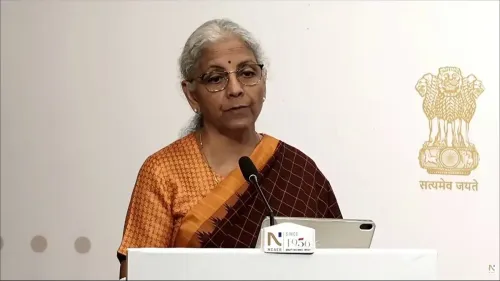
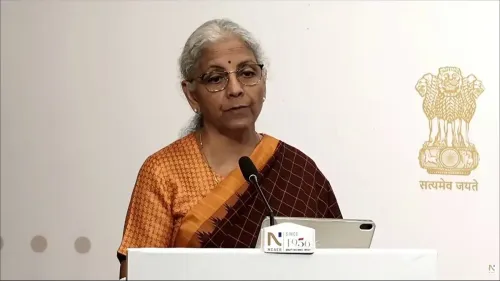
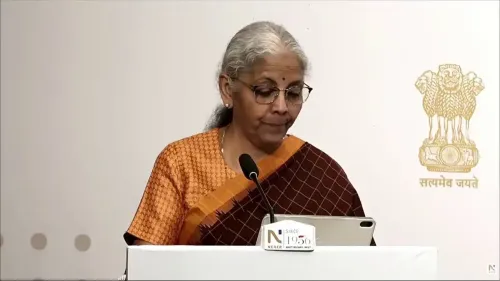
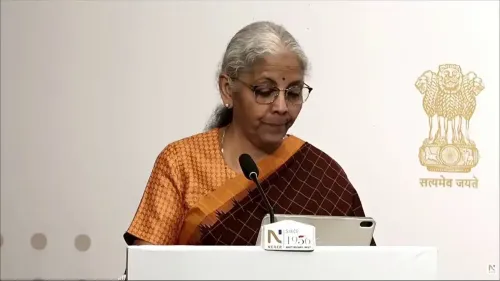
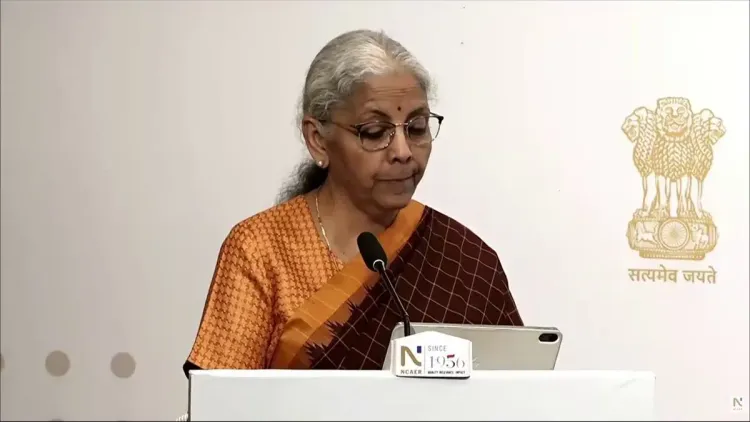
Union Finance Minister Nirmala Sitharaman used the C.D. Deshmukh Lecture 2026 in New Delhi to map India's reform journey — from the 1991 liberalisation crisis through Pokhran-II's strategic assertion to Vajpayee's Golden Quadrilateral and telecom revolution — as a single compounding arc of national capability-building.
Key Takeaways
Sitharaman delivered the C.D.
Deshmukh Lecture 2026 in New Delhi on 6 August 2026 , tracing three decades of Indian economic and strategic policy.
She framed the 1991 economic reforms as the foundational track-change, followed by Pokhran-II (1998) as proof that strategic autonomy requires credible national capability.
Prime Minister Atal Bihari Vajpayee is credited with elevating physical connectivity and digital infrastructure to the top of the national agenda from 2000 onwards.
The Golden Quadrilateral highway project and the New Telecom Policy 1999 are cited as twin pillars that opened space for both public and private sectors.
The address was marked '1/n' , indicating it is the first part of a multi-segment lecture.
At a prestigious annual lecture in New Delhi on 6 August 2026, Union Finance Minister Nirmala Sitharaman drew a sweeping arc across three decades of Indian statecraft — from the crisis-driven reforms of 1991 to the nuclear assertion of Pokhran-II and the infrastructure ambition of the Vajpayee years — arguing that each inflection point was inseparable from the ones before it.
From balance-of-payments crisis to nuclear deterrence
Speaking at the C.D. Deshmukh Lecture 2026, Sitharaman opened with a precise sequencing of cause and effect. The 1991 economic reforms — born of a foreign-exchange crisis under Prime Minister P.V. Narasimha Rao — 'changed the track,' she said. Then came Pokhran-II in May 1998: five nuclear tests in the Rajasthan desert that announced India's credible minimum deterrence to the world. Her framing was deliberate — strategic autonomy, she argued, is not declared; it is demonstrated through 'credible national capability.'
Vajpayee's bet on roads and signals
By 2000, with that strategic foundation in place, Prime Minister Atal Bihari Vajpayee pivoted the national agenda toward physical and digital connectivity. The Golden Quadrilateral — the 5,846-kilometre highway network linking Delhi, Mumbai, Chennai and Kolkata — was formally approved under the National Highways Development Project in 1998-99 and became the defining infrastructure symbol of the era. Simultaneously, the New Telecom Policy 1999 threw open mobile telephony to private players, triggering an expansion that would eventually put a phone in hundreds of millions of hands. Sitharaman described both as opening 'the space for both the public and the private sectors' — a phrase that signals a deliberate ideological point about state capacity and market energy working in tandem.
Why the C.D. Deshmukh lecture is the right venue
Chintaman Dwarkanath Deshmukh was independent India's first Indian-born Governor of the Reserve Bank and later Finance Minister — a figure who navigated the country's earliest economic architecture. The lecture series held in his name at the Indian Council for Research on International Economic Relations (ICRIER) has long served as a platform for high-stakes economic thinking. Sitharaman's choice to trace India's reform lineage here — before an audience of economists and policymakers — signals that the speech is intended as intellectual framing, not routine political messaging.
A reform arc that later governments inherited
The broader pattern Sitharaman sketched is one successive administrations have built upon: liberalisation begetting strategic confidence, strategic confidence begetting infrastructure ambition, and infrastructure ambition begetting digital scale. The Golden Quadrilateral's model of corridor-based connectivity has since been extended through programmes like Bharatmala; the telecom revolution seeded the data economy that underpins today's digital public infrastructure. Her lecture positions these not as isolated policy decisions but as a compounding chain — each government inheriting and accelerating the previous one's logic.
The finance minister was delivering the first of what appeared to be a multi-part address — the post was marked '1/n' — suggesting further threads on India's economic trajectory are still to come.
Point of View
The 1998 nuclear assertion, and the Vajpayee-era connectivity push. By delivering this at ICRIER's Deshmukh lecture, she is signalling to the policy establishment that the present government sees itself as a continuum, not a break, with that reform lineage. The cross-party acknowledgement of Vajpayee is politically notable but also strategically safe — it reinforces the BJP's ownership of that era while framing liberalisation as a national rather than a Congress achievement. Watch for the subsequent parts of the lecture to reveal where she believes the arc points next.
NationPress
6 Aug 2026
Frequently Asked Questions
What is the C.D. Deshmukh Lecture?
The C.D. Deshmukh Lecture is an annual address held in honour of Chintaman Dwarkanath Deshmukh , independent India's first Indian-born RBI Governor and a former Finance Minister, organised by the Indian Council for Research on International Economic Relations (ICRIER) in New Delhi.
What did Nirmala Sitharaman say about Pokhran-II?
Sitharaman said the 1998 Pokhran-II nuclear tests 'strengthened India's strategic deterrence and demonstrated that genuine strategic autonomy rests on credible national capability,' framing them as a pivotal step between the 1991 reforms and the Vajpayee-era infrastructure drive.
What is the Golden Quadrilateral highway project?
The Golden Quadrilateral is a roughly 5,846-kilometre national highway network connecting Delhi, Mumbai, Chennai and Kolkata , approved under the National Highways Development Project in 1998-99 during Prime Minister Vajpayee's tenure.
What was India's telecom revolution in 1999?
The New Telecom Policy 1999 replaced the 1994 policy and opened mobile telephony to private-sector competition, triggering rapid subscriber growth that Sitharaman credited as part of Vajpayee's broader push for digital infrastructure.
Why did Sitharaman connect 1991 reforms to Pokhran-II?
Sitharaman argued that India's economic liberalisation in 1991 set the foundation, and Pokhran-II in 1998 added strategic confidence — together creating the conditions for the Vajpayee government to make infrastructure and digital connectivity its top national priority from 2000 onwards.