Sitharaman urges SIDBI to deepen MSME cluster support
Synopsis
Finance Minister Nirmala Sitharaman, speaking in Tiruchuli, Tamil Nadu, urged SIDBI to deepen its presence in India's 300-plus MSME clusters by pairing credit with handholding, market linkages, and technology support — citing Virudhunagar chilli producers as a model of cluster-led global expansion.
Key Takeaways
Finance Minister Nirmala Sitharaman urged SIDBI to go beyond credit and provide handholding, market linkages, technology, and capacity building in MSME clusters.
India has over 300 recognised MSME clusters functioning as hubs for local entrepreneurship.
The remarks were made in Tiruchuli, Tamil Nadu , on 18 July 2026 .
Virudhunagar chilli producers were cited as an example of cluster-level support enabling global market access.
The cluster-based approach builds on the MSE-CDP launched in 2007 and was expanded under the 2020 Atmanirbhar Bharat MSME package .
Policy focus has shifted from individual unit financing to integrated cluster ecosystems combining credit, technology, and market access.
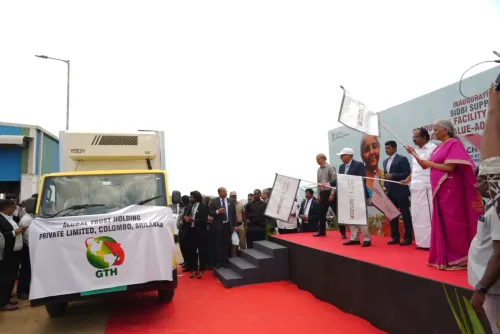
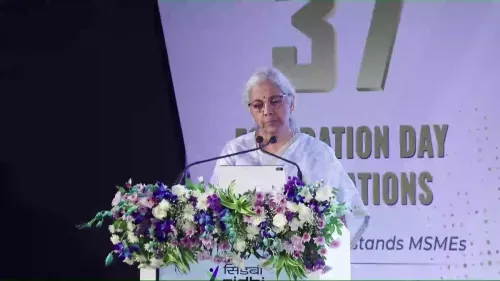
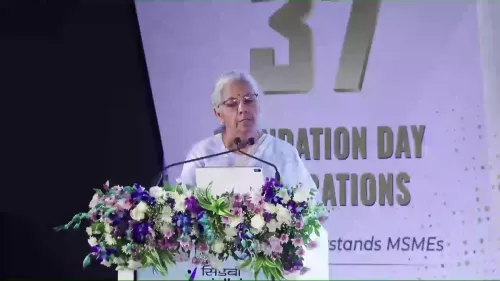
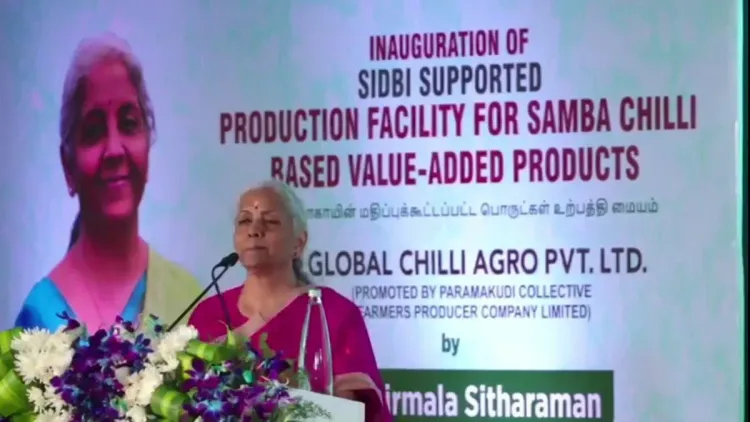
Union Finance Minister Nirmala Sitharaman on Saturday, 18 July 2026, called on SIDBI to strengthen its presence across India's recognised MSME clusters, urging the development bank to go beyond credit and provide handholding support, market linkages, technology, and capacity building. The Minister made the remarks in Tiruchuli, Tamil Nadu, highlighting the example of Virudhunagar chilli producers as a model of how cluster-level support can help local enterprises reach global markets.
Context
Sitharaman stated that India has over 300 recognised MSME clusters, each functioning as a hub for entrepreneurship and local enterprise. She urged SIDBI — the Small Industries Development Bank of India — to not merely extend credit but to accompany it with developmental handholding. 'This collaborative approach is enabling local enterprises, such as the Virudhunagar chilli producers, to access new markets and expand their global footprint,' she said.
The remarks were delivered during her visit to Tiruchuli, a town in Tamil Nadu's Virudhunagar district, a region long associated with chilli and spice processing that supplies both domestic and export markets.
Policy Backdrop
India's cluster-based MSME policy has roots in the Micro and Small Enterprises Cluster Development Programme (MSE-CDP), launched by the Ministry of MSME in 2007, which focuses on upgrading infrastructure and technology in geographically concentrated enterprise zones. SIDBI has operated cluster-focused financing programmes since the mid-2000s, with the scope expanded significantly under the 2020 Atmanirbhar Bharat MSME package.
The shift in emphasis — from individual unit financing to cluster-level ecosystems — reflects lessons drawn from earlier credit-only programmes that showed limited impact on sustainable enterprise growth. Combining credit with market access, technology transfer, and skilling has since become the preferred policy approach, particularly for agricultural and food-processing clusters in southern states.
Stakeholders and Impact
The primary beneficiaries of this push are MSME entrepreneurs operating within recognised clusters, including agri-processing units such as the chilli and spice producers of Virudhunagar. For these producers, SIDBI's deeper cluster presence could mean structured access to export promotion networks, quality certification support, and working-capital facilities tailored to seasonal production cycles.
Broader regional value chains in southern states stand to gain as well. Cluster-level interventions that connect producers to export markets directly support India's goal of diversifying its merchandise export base beyond large industrial sectors.
What's Next
Attention will now turn to SIDBI's operational response — specifically whether the bank will announce new branch or facilitation-centre openings within designated MSME clusters, or formalise partnerships with state agencies and export promotion councils for spice and agri-processing clusters. The Finance Minister's public directive signals that cluster outreach will likely feature in upcoming budget discussions and SIDBI's annual programme priorities. For Virudhunagar's chilli producers and similar clusters nationwide, the next step is translating ministerial intent into on-ground credit and market-linkage programmes.
Point of View
The Finance Ministry is framing cluster support as a proven model rather than an aspiration. The choice of Tiruchuli — a constituency with political resonance in Tamil Nadu — also underscores the BJP's continued effort to build economic credibility in a state where it has limited electoral presence. Whether SIDBI translates this ministerial nudge into measurable cluster outreach will be the real test of policy follow-through.
NationPress
18 Jul 2026
Frequently Asked Questions
What did Nirmala Sitharaman say about SIDBI and MSME clusters?
Finance Minister Nirmala Sitharaman urged SIDBI to strengthen its presence in India's recognised MSME clusters by providing not just credit but also handholding support, market linkages, technology, and capacity building to help enterprises grow sustainably.
How many MSME clusters are there in India?
India has over 300 recognised MSME clusters, each serving as a hub for local entrepreneurship and enterprise, according to the Finance Minister's statement on 18 July 2026.
What is SIDBI's role in MSME development?
SIDBI, the Small Industries Development Bank of India, is the principal financial institution for MSMEs. It provides refinance, direct credit, and developmental support, and has been expanding cluster-focused financing programmes since the mid-2000s.
Why are Virudhunagar chilli producers significant?
Virudhunagar, a district in southern Tamil Nadu, hosts a long-established chilli and spice processing cluster. The Finance Minister cited its producers as an example of how cluster-level support from SIDBI can help local enterprises access new markets and expand their global footprint.
What is the MSE Cluster Development Programme?
The Micro and Small Enterprises Cluster Development Programme (MSE-CDP) was launched by the Ministry of MSME in 2007 to upgrade infrastructure, technology, and market access in geographically concentrated enterprise zones across India.