PM Modi at 5th Skill Convocation: 'AI cannot replace a skilled person'
Synopsis
At the 5th National Skill Convocation in Lucknow, PM Modi declared that no AI can displace a skilled person — a belief he reportedly held since his Gujarat Chief Minister days when he envisioned turning every everyday service into a livelihood opportunity. With India's demographic peak approaching, his words carry more urgency than ever.
Key Takeaways
PM Modi addressed the 5th National Skill Convocation at Indira Gandhi Pratishthan, Lucknow on 21 November 2026 .
He stated that no technology, including artificial intelligence , can displace a worker who possesses genuine skills.
Modi described India as steadily moving towards becoming the world's skill capital , with skilled youth as the driving force of national progress.
According to a Modi Story post on X , this vision dates to his tenure as Gujarat Chief Minister , when he sought to turn everyday services into skill and livelihood opportunities.
The Prime Minister criticised British-era education for prioritising clerical roles over practical skills, and alleged that historical invaders targeted India's skill ecosystem to weaken its economy.
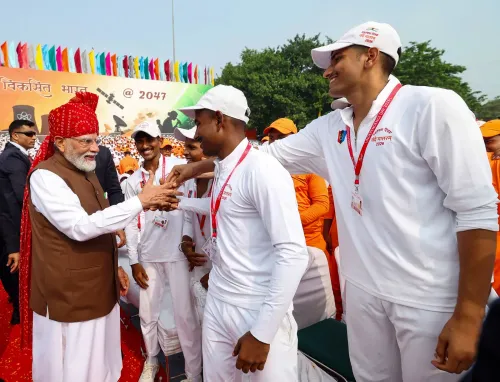
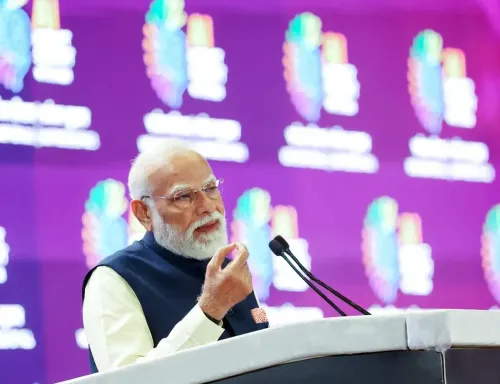
Prime Minister Narendra Modi on Saturday, 21 November 2026, declared at the 5th National Skill Convocation in Lucknow that no technology — including artificial intelligence — can displace a worker who possesses genuine skills. Addressing trainees, educators, and policymakers at the Indira Gandhi Pratishthan, Modi reaffirmed skill development as the cornerstone of India's economic future and its strongest defence against technological disruption.
The Core Message: Skills Over AI
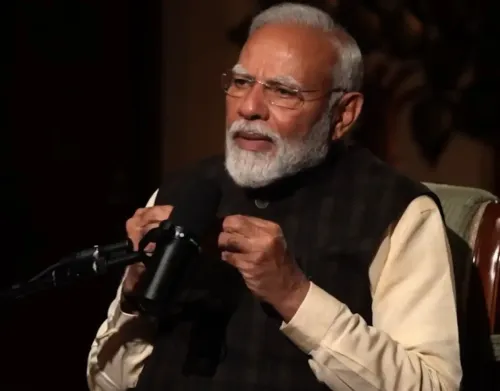
'There is a lot of discussion about artificial intelligence across the world, but no one can take away the livelihood of a skilled person,' the Prime Minister said, underscoring that practical abilities and technical expertise remain indispensable in a rapidly evolving global economy. He emphasised that India is steadily progressing towards becoming the world's skill capital, with skilled youth serving as the primary engine of national progress.
Modi stressed that skill development is not merely a policy objective but the most robust safeguard available to workers navigating shifting technological trends — a point he said has underpinned his development thinking for decades.
A Vision Rooted in His Gujarat Days
According to a post on Modi Story on social media platform X, this vision of a skilled India was taking shape in Modi's mind long before it became a national priority. 'As Gujarat Chief Minister,' the post noted, 'he would speak of identifying hundreds of everyday services a common person needs and turning each into an opportunity for skill development and income generation.' The post added: 'His simple belief was that every service could become a skill, and every skill could become a source of income.'
The post further noted that by equipping people with multiple skills, Modi envisioned opening up multiple avenues of livelihood — a philosophy now embedded in flagship national schemes.
India's Skill Heritage and Colonial Critique
Drawing on India's history of craftsmanship and traditional occupations, the Prime Minister argued that the country's artisans and skilled workers were central to its historical prosperity. He alleged that foreign invaders had deliberately targeted India's traditional skill ecosystem because they recognised its economic significance. 'When invaders came to India, their first attack was on our skills. They knew that the craftsmanship of Indians was making the country great and prosperous,' he said.
Modi also criticised the education model introduced during British colonial rule, claiming it was designed primarily to produce clerical workers rather than to nurture practical skills or foster innovation — a critique he has raised at earlier skill-focused events as well.
A Decade of Skill Initiatives
The Prime Minister highlighted that initiatives launched over the past decade have concentrated on enhancing employability, encouraging entrepreneurship, and widening opportunities for India's youth. The 5th National Skill Convocation serves as a marker of that sustained push, bringing together stakeholders from across the skill-development ecosystem to assess progress and chart the road ahead.
Notably, the convocation's choice of Lucknow as its venue also carries political and policy significance, given Uttar Pradesh's large youth demographic and its centrality to national skilling targets.
What Comes Next
With India's demographic dividend peaking over the next decade, the government's ability to deliver on its skilling ambitions will face intensifying scrutiny — particularly as AI-driven automation reshapes labour markets globally. Whether the frameworks in place can scale fast enough to absorb and credential millions of new workers each year remains the defining question for India's skills agenda going forward.
Point of View
But the proof will be in the numbers: India's formal skilling ecosystem has consistently fallen short of its annual certification targets, and certificate completion has not reliably translated into employment. Invoking colonial-era damage to India's skill heritage is a recurring rhetorical device, but the more pressing structural challenge is the quality gap between certified and job-ready workers. As automation accelerates, the government's real test is not the vision — which has been consistent — but whether delivery mechanisms can scale credibly before the demographic dividend begins to narrow.
NationPress
22 Nov 2026
Frequently Asked Questions
What did PM Modi say about AI at the 5th National Skill Convocation?
PM Modi stated that despite the growing global focus on artificial intelligence, no technology can replace a person who possesses genuine skills. He made these remarks at the 5th National Skill Convocation held at Indira Gandhi Pratishthan in Lucknow on 21 November 2026.
Where was the 5th National Skill Convocation held?
The 5th National Skill Convocation was held at the Indira Gandhi Pratishthan in Lucknow, Uttar Pradesh. It brought together trainees, educators, and policymakers to discuss India's skill development agenda.
How does Modi's skill vision connect to his Gujarat Chief Minister days?
According to a Modi Story post on X, Modi had been articulating this vision since his tenure as Gujarat Chief Minister, when he spoke of identifying hundreds of everyday services and converting each into an opportunity for skill development and income generation. His belief was that every service could become a skill and every skill a source of income.
What was PM Modi's critique of colonial-era education?
PM Modi claimed that the education system introduced during British rule was designed primarily to produce clerical workers rather than to encourage practical skills or innovation. He also alleged that historical foreign invaders had deliberately targeted India's traditional skill ecosystem because they recognised its economic significance.
Why does skill development matter in the context of rising AI?
As artificial intelligence reshapes global labour markets, policymakers and workers face growing uncertainty about job security. Modi's argument is that practical, hands-on skills provide a durable livelihood buffer that AI cannot easily replicate, making skilling a strategic national priority as India's large youth population enters the workforce.