Delhi sanitation workers' deaths: SKU protests Mundka septic tank tragedy, demands ₹50 lakh each

Synopsis
Three sanitation workers died inside a septic tank in Mundka, West Delhi — and the Safai Kamgar Union's protest response cuts to a deeper truth: manual scavenging, though outlawed for decades, continues killing Dalit workers while governments fail to enforce safety gear mandates, prosecute contractors, or end the contractual hiring model that strips workers of all protection.
Key Takeaways
Three sanitation workers died inside a septic tank in Mundka, West Delhi , triggering a protest by the Safai Kamgar Union (SKU) on 27 June .
The SKU demanded ₹50 lakh compensation for each deceased worker's family and a government job for one family member.
The union called for homicide cases to be registered against the factory owner, contractor, and responsible officials.
Workers from Ambedkar University Delhi , IGDTUW , and Delhi University joined the protest under the SKU banner.
The SKU cited entrenched caste bias , contractual hiring , and non-enforcement of labour laws as systemic causes of recurring deaths.
Manual scavenging remains banned under Indian law but continues in practice, according to the union.
The Safai Kamgar Union (SKU) staged a protest in New Delhi on Saturday, 27 June, following the deaths of three sanitation workers inside a septic tank in Mundka, West Delhi. The union demanded safety audits across all workplaces, ₹50 lakh compensation for each deceased worker's family, and a government job for one family member per household.
What Happened in Mundka
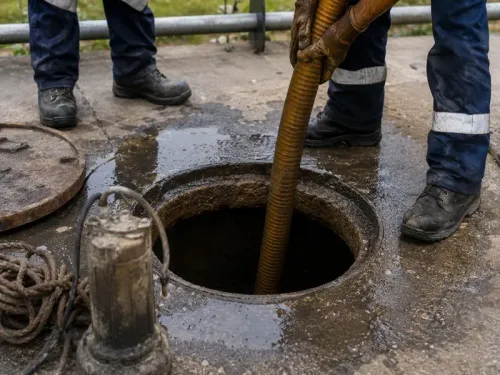
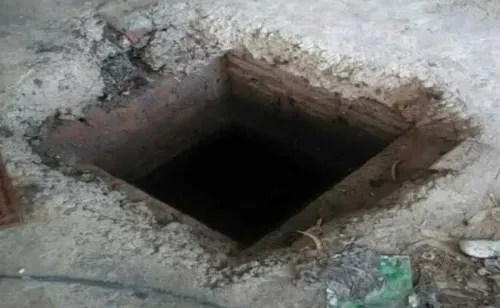
Three sanitation workers died while working inside a septic tank in Mundka, a locality in West Delhi. The SKU condemned what it described as criminal negligence by the authorities, demanding that homicide cases be registered against the factory owner, the contractor, and the officials responsible. The union also called for strict punitive action against all parties involved.
Who Joined the Protest
The demonstration was organised under the SKU banner and drew sanitation workers from several institutions, including Ambedkar University Delhi (AUD), Indira Gandhi Delhi Technical University for Women (IGDTUW), and Delhi University (DU). The breadth of participation underscored the widespread anger among contractual sanitation staff across Delhi's public institutions.
The Systemic Failure Behind the Deaths
The SKU statement pointed to entrenched caste biases and class hierarchies as root causes, noting that the majority of sanitation workers belong to the Dalit community and live in precarious conditions. The union argued that the policy of hiring sanitation staff on a contractual basis — prevalent across institutions — strips workers of protections and leaves them at the mercy of private contractors.
'This is not an isolated incident, as every year, many sanitation workers die while cleaning sewers and septic tanks. This practice, which is outlawed, still exists even 75 years after India's Independence,' the SKU statement said.
The union further noted that manual scavenging — prohibited under law — continues in practice, enabled by privatisation of sanitation services and non-enforcement of labour laws. Government agencies, it said, have still not made the use of safety gear mandatory for sanitation workers on the ground.
Key Demands Raised by the SKU
Beyond compensation, the union demanded mandatory safety audits at all workplaces, enforcement of existing labour laws, and an end to the contractual hiring model for sanitation staff. It also called for accountability of private employer companies and contractors who, according to the SKU, routinely force workers to risk their lives without adequate protective equipment.
A Pattern That Keeps Repeating
The SKU noted that deaths of sanitation workers in sewers and septic tanks recur with alarming regularity across India, despite legislation explicitly banning manual scavenging. Critics argue that the combination of privatisation, weak enforcement, and social marginalisation of Dalit workers creates conditions where such tragedies are structurally inevitable. The Mundka incident, the union said, exposes the precarious reality facing not just sanitation workers but the broader informal workforce across the country.
With the union's demands now formally on record, pressure is expected to mount on Delhi authorities and the institutions involved to respond with concrete accountability measures.
Point of View
Contractual labour, and zero enforcement of safety mandates. The SKU's demand for homicide charges is legally grounded: courts have repeatedly held that deaths from preventable occupational hazards can attract culpable homicide charges. What mainstream coverage often misses is the caste dimension — the near-total concentration of this hazardous work among Dalit workers is not incidental but structural. Until accountability travels up the chain to contractors and institutional employers, and until safety gear becomes non-negotiable rather than advisory, the next death in a septic tank is not a possibility but a certainty.
NationPress
26 Sept 2026
Frequently Asked Questions
What happened in Mundka, West Delhi?
Three sanitation workers died inside a septic tank in Mundka, West Delhi. The Safai Kamgar Union staged a protest on 27 June demanding accountability, compensation, and systemic safety reforms.
What is the Safai Kamgar Union demanding?
The SKU is demanding ₹50 lakh compensation for each deceased worker's family, a government job for one family member, mandatory safety audits at all workplaces, and registration of homicide cases against the factory owner, contractor, and responsible officials.
Is manual scavenging legal in India?
No. Manual scavenging is explicitly prohibited under Indian law, including the Prohibition of Employment as Manual Scavengers and their Rehabilitation Act, 2013. However, the SKU and other labour groups say the practice continues due to weak enforcement and the privatisation of sanitation services.
Why are Dalit workers disproportionately affected?
The SKU's statement points to entrenched caste hierarchies that concentrate hazardous sanitation work among Dalit workers, who make up the majority of the sanitation workforce. Combined with contractual hiring and absent safety enforcement, this leaves them structurally vulnerable to occupational deaths.
Who participated in the SKU protest?
Sanitation workers from Ambedkar University Delhi, Indira Gandhi Delhi Technical University for Women, and Delhi University joined the protest under the SKU banner on 27 June in New Delhi.