Smriti Irani links Diwali to Modi's nationwide development push
Synopsis
On Diwali 2026, BJP leader Smriti Irani praised PM Modi's development drive, saying welfare schemes have reached every Indian home alongside the festival's light. The post, tagging Bihar's Nitin Nabin, reflects the party's coordinated festival-season outreach strategy.
Key Takeaways
Smriti Irani posted on 12 November 2026 , linking Diwali celebrations to PM Modi's nationwide development schemes.
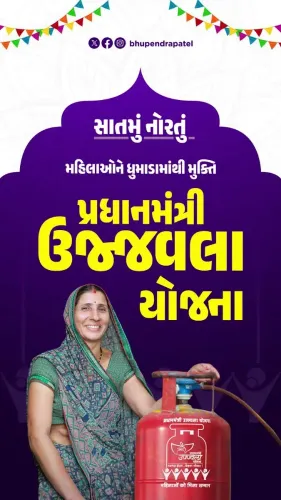
She credited schemes like Pradhan Mantri Ujjwala Yojana and Saubhagya — launched since 2014 — with delivering light and energy access to Indian homes.
The post tagged Bihar BJP leader Nitin Nabin , indicating coordinated state-level party outreach during the festival season.
The BJP has consistently used cultural festivals as platforms to highlight perceived grassroots delivery of central welfare programmes.
The messaging comes ahead of the winter session of Parliament , when scheme-saturation announcements are typically made.
On the occasion of Diwali 2026, BJP leader Smriti Irani invoked the festival's symbolism to amplify a familiar but potent message: that Prime Minister Narendra Modi's welfare schemes have carried light — literal and metaphorical — into every corner of India. The post, shared on 12 November 2026, tags Bihar BJP leader Nitin Nabin and frames grassroots scheme delivery as inseparable from the spirit of the festival.
Irani wrote, 'Modi ji ne desh ke har kone tak vikas ki roshni pahunchane ka prayas kiya hai' — 'Modi ji has made every effort to carry the light of development to every corner of the country. Today across all of India, the celebration of Diwali and the schemes of development are reaching home to home.' The choice of words is deliberate: roshni (light) threads the festival and the policy narrative into a single image.
The schemes behind the symbolism
The rhetorical bridge Irani builds rests on a decade-long policy foundation. Since 2014, the central government has rolled out household-focused programmes — most notably Pradhan Mantri Ujjwala Yojana, which supplied LPG connections to low-income families, and the Saubhagya scheme, which aimed at universal household electrification. Both were explicitly framed by the BJP as instruments of delivering light — cooking flame and electric bulb — to India's poorest homes.
That lineage makes Diwali a natural communication moment for the party. The festival of lights becomes a living proof-point: if a home has an LPG stove, an electric bulb, or a subsidised ration, the argument goes, then development has already arrived at the doorstep.
BJP's Diwali messaging playbook — and what Nabin's mention signals
The tagging of Nitin Nabin, a BJP leader with active outreach work in Bihar, is a signal worth reading. Bihar has been a key state for the BJP's welfare-scheme saturation drives, and invoking a state-level leader alongside a national message suggests coordinated, ground-up Diwali communication across party units. This kind of layered amplification — a central figure tags a state leader who in turn carries the message to local networks — is a well-established BJP social-media architecture.
The post arrives as the winter session of Parliament approaches, a window when the government typically announces progress on scheme coverage and saturation targets. Diwali outreach by senior leaders often sets the rhetorical stage for those announcements.
As the diyas burn and the data rolls in, the BJP's core wager remains unchanged: that the voter who flips a switch or lights a stove will, at the ballot box, remember who they believe delivered it.
Point of View
The party reinforces a decade-old brand identity: welfare as a visible, domestic, sensory experience. The tagging of a Bihar leader points to a bottom-up amplification strategy that becomes especially relevant as the winter session nears and the party will want scheme-saturation figures in the public conversation. The pattern also reveals how senior central leaders function as megaphones for state units, lending national weight to ground-level outreach.
NationPress
12 Nov 2026
Frequently Asked Questions
What did Smriti Irani say on Diwali 2026?
Smriti Irani posted on 12 November 2026 that PM Modi has worked to carry the light of development to every corner of India, adding that Diwali celebrations and government welfare schemes are both reaching home to home across the country.
Which Modi schemes is Smriti Irani referring to in her Diwali post?
The post broadly refers to development schemes under PM Modi. Key programmes in this space include Pradhan Mantri Ujjwala Yojana , which provided LPG cooking connections, and the Saubhagya scheme for household electrification, both launched after 2014.
Who is Nitin Nabin and why was he tagged?
Nitin Nabin is a BJP leader from Bihar known for party outreach activities. His tagging in Irani's post signals coordinated state-level Diwali communication by the BJP.
Why does the BJP link Diwali to government schemes?
The BJP has a well-established communication strategy of connecting cultural festivals like Diwali with welfare delivery, using the festival's symbolism of light to highlight schemes that brought electricity and clean cooking fuel to homes.
What is the significance of this post ahead of Parliament's winter session?
The post comes ahead of the winter session of Parliament , when the government typically announces progress on scheme coverage. Diwali outreach by senior leaders often sets the stage for such announcements and reinforces the party's development narrative.