Smriti Irani marks Emergency anniversary as Samvidhan Hatya Diwas
Synopsis
On 25 June 2026, BJP leader Smriti Irani marked the 51st anniversary of the 1975 Emergency, calling it a dark chapter when constitutional rights were crushed. Using #SamvidhanHatyaDiwas, she paid tribute to thousands jailed for resisting Indira Gandhi's 21-month suspension of democratic freedoms.
Key Takeaways
Smriti Irani posted on 25 June 2026 , the 51st anniversary of the proclamation of the internal Emergency.
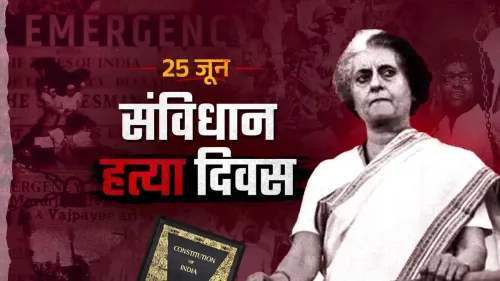
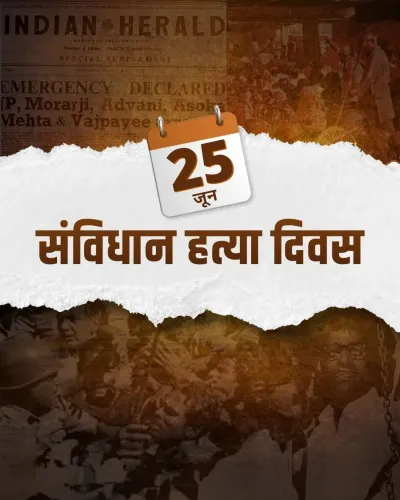
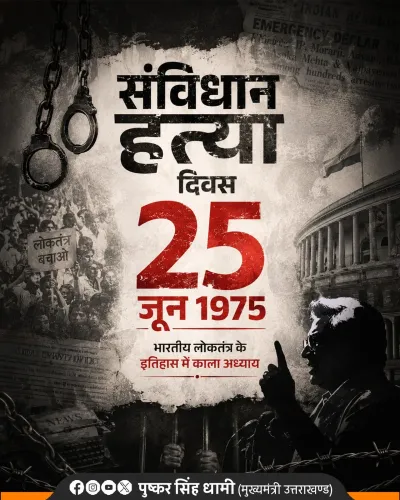
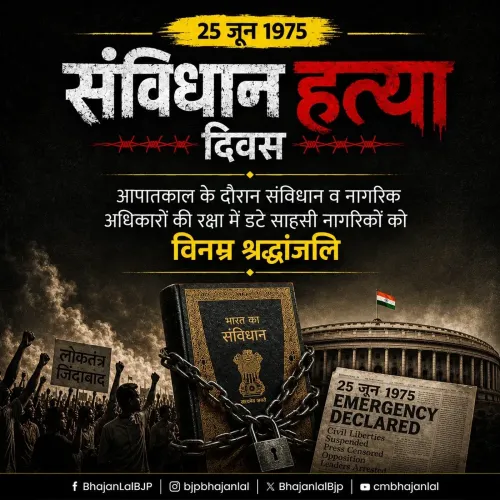
She used the hashtag #SamvidhanHatyaDiwas to frame the day as 'Constitution Murder Day,' consistent with BJP's annual observance.
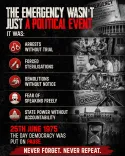
The post cited suppression of fundamental rights, weakening of democratic institutions, press censorship, and mass imprisonment of democracy fighters.
The 1975 Emergency was declared under Article 352 on the advice of Prime Minister Indira Gandhi and lasted 21 months until 21 March 1977 .
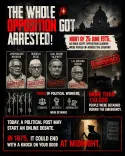
Opposition leader Jayaprakash Narayan was among thousands detained without trial during the period.
The BJP has institutionalised this annual commemoration as part of a broader narrative positioning the party as a defender of constitutional values.
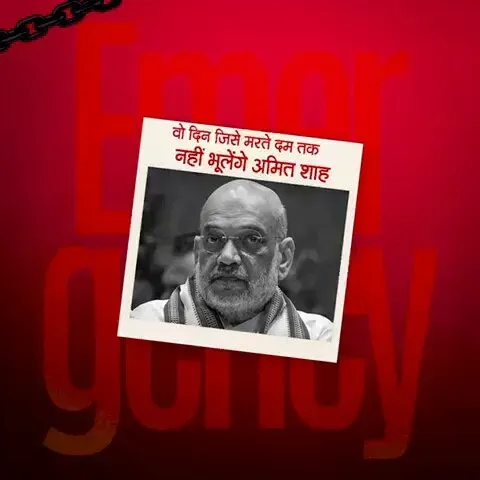
BJP leader and former Union Minister Smriti Irani on Thursday, 25 June 2026 marked the 51st anniversary of the imposition of the Emergency by invoking the hashtag #SamvidhanHatyaDiwas, paying tribute to those who resisted the 21-month suspension of democratic rights and calling the day a dark chapter in Indian constitutional history.
Context
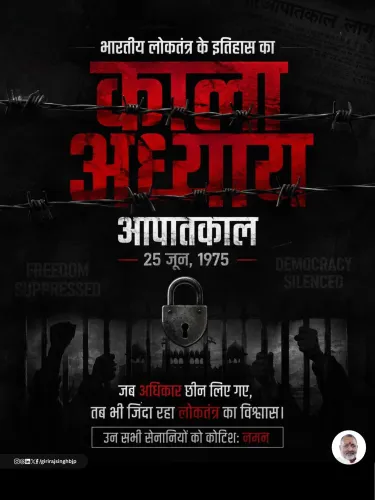
In her post, Irani described 25 June 1975 as 'भारतीय लोकतंत्र के इतिहास का वह काला अध्याय' ('that dark chapter in the history of Indian democracy'), when, in her words, 'the arrogance of power attempted to crush the soul of the Constitution.' She specifically cited the suppression of fundamental rights, the weakening of democratic institutions, the silencing of the press, and the imprisonment of thousands of democracy fighters. She concluded with a salute — 'शत-शत नमन' (a hundredfold salutation) — to all those who resisted the Emergency without fear.
Policy Backdrop
On 25 June 1975, the President of India, acting on the advice of then Prime Minister Indira Gandhi, proclaimed a state of internal emergency under Article 352 of the Constitution. The proclamation led to the suspension of fundamental rights, blanket press censorship, and the detention of thousands of political opponents without trial — among them prominent opposition leader Jayaprakash Narayan. The Emergency lasted 21 months and was formally revoked on 21 March 1977, days before a general election that ended Congress rule at the Centre.
The BJP has in recent years institutionalised annual commemoration of this date under the framing of Samvidhan Hatya Diwas ('Constitution Murder Day'), positioning the party as a defender of constitutional values and using the occasion to underscore what it describes as Congress-era authoritarianism. The annual observance has become a fixture of the party's political calendar, typically drawing statements from senior leaders across the organisation.
Stakeholders and Impact
The post resonates with a broad constituency that includes journalists, civil liberties advocates, and political activists — many of whom trace their families' or organisations' histories through the Emergency period. Opposition activists imprisoned during the Emergency, and the families of those detained, are central to the commemorative narrative that the BJP has built around this date.
For journalists in particular, the Emergency-era press censorship remains a touchstone: all major publications were placed under government control, and editors who refused compliance faced consequences. Irani's explicit mention of the press being silenced — 'प्रेस की आवाज दबाई गई' ('the voice of the press was suppressed') — directly addresses this legacy.
What's Next
Parliamentary references to the Emergency tend to intensify around 25 June each year, with BJP members frequently raising the subject in both Houses. Debates around school curricula covering the Emergency period are an ongoing area of policy attention, with questions about how the episode is taught in textbooks remaining unresolved across several states. The 2026 observance, falling on the 51st anniversary, is likely to draw wider participation from BJP leaders at the national and state levels, reinforcing the party's long-term effort to embed the Emergency's memory in public consciousness as a counterpoint to Congress's founding-era legacy.
Point of View
And senior leaders' participation signals its importance to the BJP's identity politics. By explicitly naming press censorship and mass detentions, the post speaks simultaneously to civil society constituencies and to the party's core base, reinforcing a historical memory that cuts across ideological lines. The durability of this narrative suggests it will remain central to BJP political communication well beyond any single election cycle.
NationPress
25 Jun 2026
Frequently Asked Questions
What is Samvidhan Hatya Diwas?
Samvidhan Hatya Diwas, meaning 'Constitution Murder Day,' is the term used by the BJP to mark 25 June as the anniversary of the imposition of the 1975 Emergency by Prime Minister Indira Gandhi, when fundamental rights were suspended and democratic institutions curtailed.
Why did Smriti Irani post about the Emergency on 25 June 2026?
25 June 2026 marks the 51st anniversary of the proclamation of the internal Emergency in India. Irani's post is part of the BJP's annual commemoration of the date, paying tribute to those who resisted the suspension of democratic rights.
What happened during the 1975 Emergency in India?
On 25 June 1975, the President of India declared a state of internal emergency under Article 352 on the advice of Prime Minister Indira Gandhi. Fundamental rights were suspended, press censorship was imposed, and thousands of political opponents — including Jayaprakash Narayan — were detained without trial. The Emergency lasted 21 months and ended on 21 March 1977.
Who was Jayaprakash Narayan and what was his role during the Emergency?
Jayaprakash Narayan was a prominent opposition leader who mobilised popular resistance against the Emergency and was imprisoned by the government during the 21-month period. He remains a central figure in the commemorative narrative around the Emergency.
How does the BJP observe the Emergency anniversary each year?
The BJP observes 25 June annually as Samvidhan Hatya Diwas, with senior leaders issuing statements, parliamentary references to the Emergency, and events honouring those who resisted the 1975 suspension of democratic freedoms. The observance is part of the party's broader political narrative positioning it as a defender of constitutional values.