Smriti Irani Highlights PM Modi's Meet With Women Dairy Farmers in Banaskantha

Synopsis
BJP leader Smriti Irani spotlighted PM Modi's engagement with women dairy and animal husbandry workers at the Bharat Bovine Breeding & Research Centre in Banaskantha, Gujarat, linking their work to the Nari Shakti and Atmanirbhar Bharat vision underpinned by the Rashtriya Gokul Mission.
Key Takeaways
BJP leader Smriti Irani shared PM Modi's interaction with women workers at the Bharat Bovine Breeding & Research Centre in Banaskantha, Gujarat on October 30, 2026 .
The centre focuses on bovine breed improvement and dairy productivity, directly benefiting rural women farmers in northern Gujarat.
Irani invoked ' Nari Shakti ' and ' Atmanirbhar Bharat ' to frame women dairy workers as leaders — not beneficiaries — of rural economic growth.
The visit aligns with the Rashtriya Gokul Mission , launched in 2014 , which promotes indigenous cattle breed development and dairy sector expansion.
Banaskantha is a key district in Gujarat's cooperative dairy economy, making it a flagship site for government outreach in allied agriculture.
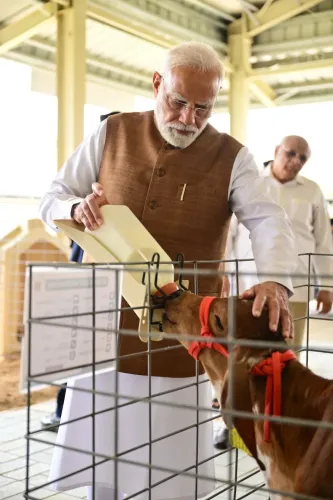
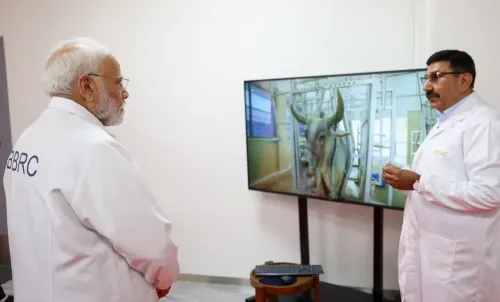
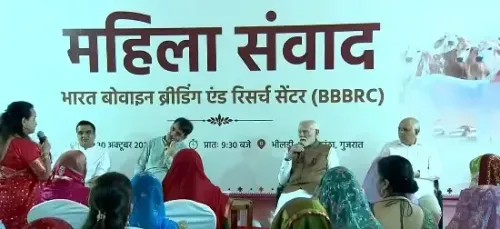
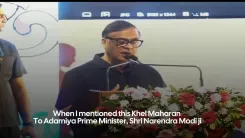
In the heart of Gujarat's most productive dairy belt, women are not just tending cattle — they are leading an agrarian revolution. BJP leader Smriti Irani on Friday, October 30, 2026, shared glimpses of Prime Minister Narendra Modi interacting with women dairy and animal husbandry workers at the Bharat Bovine Breeding & Research Centre in Banaskantha, Gujarat, calling them the 'true spirit of an empowered, self-reliant India.'
Banaskantha's Women at the Centre of India's Dairy Drive
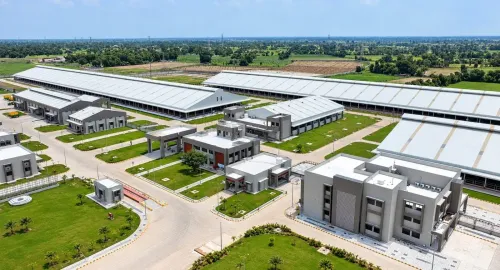
Banaskantha is no ordinary backdrop for this moment. Situated in northern Gujarat, the district sits at the core of one of India's most robust dairy economies — a region where cooperative milk collection has, for decades, sustained rural livelihoods. The Bharat Bovine Breeding & Research Centre extends that tradition into the domain of science and breed improvement, focusing on bovine genetics and dairy productivity that directly feeds the income of millions of rural households. Irani's post quoted the PM's engagement with these women, framing their work in unmistakably aspirational terms: 'Their dedication, resilience, and leadership are the true spirit of an empowered, self-reliant India.' The phrase 'Nari Shakti' — women's power — anchored the message, a term the BJP has consistently deployed to spotlight female participation in rural economic schemes.Rashtriya Gokul Mission and the Breed-Improvement Push
The visit draws a direct line to the Rashtriya Gokul Mission, launched in 2014, which set out to conserve and improve indigenous cattle breeds while boosting dairy output across states. Gujarat, with its deep cooperative infrastructure, has been a flagship terrain for that mission. Centres like the one in Banaskantha are the on-ground expression of that policy — translating central funding and research into tangible productivity gains for farmers who live and work with these animals every day. Women's self-help groups and dairy cooperative members have formed an expanding pillar of this effort, bringing female leadership into a sector that was once dominated by male intermediaries. The government's recurring emphasis on Atmanirbhar Bharat — self-reliant India — finds perhaps its most concrete rural form in exactly this image: a woman farmer, cooperative card in hand, engaged with bovine science at a state-of-the-art research facility.A Recurring Political Frame, and Why It Keeps Landing
Irani's post is the latest in a consistent BJP communications strategy that places women's rural labour at the symbolic centre of India's development story. The framing is deliberate: not welfare recipients, but economic agents and leaders. Whether at dairy cooperatives, self-help group conventions, or agricultural fairs, the imagery of PM Modi meeting rural women workers has become a signature political visual — one that simultaneously claims policy credit and reinforces a grassroots connect. The dairy sector, contributing over ₹10 lakh crore to the national economy annually, is too large to be treated as a footnote. When women drive that sector, the political argument almost writes itself. The women of Banaskantha are not waiting for a policy paper to change their lives — they are already doing it, one milking cycle at a time. The question now is whether the research and breeding infrastructure being built around them keeps pace with their ambition.Point of View
Particularly ahead of state and local body cycles where women's self-help group mobilisation is crucial. By tying PM Modi's direct engagement to a high-visibility research facility rather than a generic cooperative visit, the party projects both policy seriousness and grassroots empathy simultaneously. The Rashtriya Gokul Mission provides a durable policy spine for this messaging, lending credibility beyond the photo-op. The Banaskantha setting is especially deliberate — Gujarat's dairy cooperative legacy is the BJP's most marketable proof-point for rural development, and amplifying women's leadership within it sharpens the 'Nari Shakti' brand further.
NationPress
31 Oct 2026
Frequently Asked Questions
What is the Bharat Bovine Breeding & Research Centre in Banaskantha?
The Bharat Bovine Breeding & Research Centre in Banaskantha, Gujarat, is a facility dedicated to bovine breed improvement and dairy productivity research, supporting rural farmers — including a significant number of women — engaged in dairy and animal husbandry.
What is the Rashtriya Gokul Mission?
The Rashtriya Gokul Mission was launched in 2014 to conserve and develop indigenous cattle breeds and improve dairy productivity across India. Gujarat has been one of its key implementation states given the region's strong cooperative dairy infrastructure.
Why did Smriti Irani post about PM Modi and women dairy farmers?
Smriti Irani shared glimpses of PM Modi interacting with women dairy and animal husbandry workers at the Banaskantha centre on October 30, 2026, to highlight their contribution to rural economic growth under the BJP's Nari Shakti and Atmanirbhar Bharat framework.
What is Nari Shakti and how does it relate to dairy farming?
'Nari Shakti' means women's power and is a key phrase the BJP uses to emphasise women's leadership in India's economic story. In the dairy sector, it refers to rural women farmers and cooperative members who are increasingly central to milk production and allied agricultural income.
Where is Banaskantha and why is it significant for dairy farming?
Banaskantha is a district in northern Gujarat known for its substantial dairy farming and animal husbandry activity. It sits at the core of Gujarat's cooperative milk economy, making it a flagship location for government dairy and bovine research initiatives.