CM Fadnavis: Solapur Farmers Prefer Solar Agri-Pumps
Synopsis
The Chief Minister's Office of Maharashtra highlighted farmer preference for solar agricultural pumps in Solapur district, signalling growing uptake of renewable irrigation solutions in a drought-prone region under CM Devendra Fadnavis's watch.
Key Takeaways
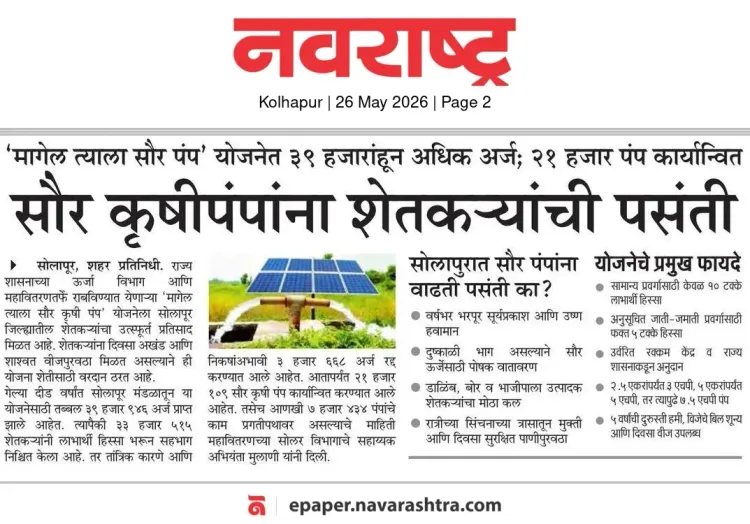
The Chief Minister's Office of Maharashtra posted on 26 May 2026 about farmer preference for solar pumps in Solapur district .
Solapur is a drought-prone, semi-arid district in western Maharashtra where irrigation access is a persistent challenge.
The central PM-KUSUM scheme (2019) provides subsidies for solar agricultural pumps, replacing diesel and grid-powered alternatives.
Maharashtra has been expanding solar pump programmes since 2018 to cut electricity subsidies and improve farm irrigation.
Solar pumps reduce recurring fuel costs for farmers and ease grid load on state electricity utilities.
State budget allocations and quarterly installation data will indicate the programme's next phase of scale-up.
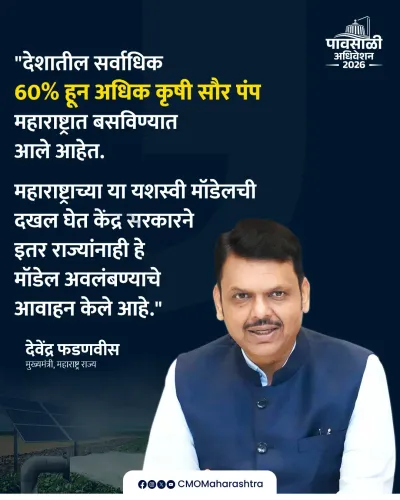
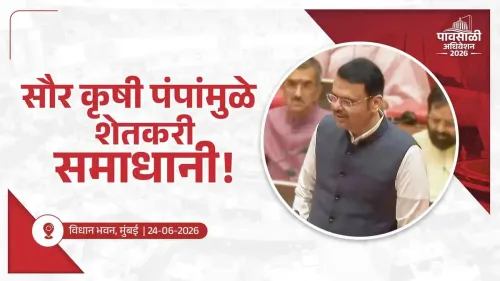
The Chief Minister's Office of Maharashtra on Tuesday, 26 May 2026, highlighted growing farmer preference for solar agricultural pumps in Solapur district, tagging Chief Minister Devendra Fadnavis in a post that underscores the state's push for decentralised renewable energy in agriculture.
The post, shared in Marathi, states: 'Solapoor jilhyat saur krushipampana shetkaryanche pasanti' — 'Farmers in Solapur district prefer solar agricultural pumps.' The brief but pointed message signals official acknowledgement of on-ground uptake of solar pump schemes in one of Maharashtra's most water-stressed regions.
Context
Solapur is a chronically drought-prone district in western Maharashtra, where reliable irrigation has long been a challenge for cultivators. Dependence on erratic grid power and costly diesel pumps has historically limited farmers' ability to irrigate during critical crop cycles. The shift toward solar-powered pumps addresses both energy access and water management in a single intervention. The post by the Chief Minister's Office of Maharashtra comes amid a broader state narrative around clean energy adoption in the farm sector, with CM Devendra Fadnavis having publicly championed renewable energy initiatives since assuming office.Policy Backdrop
The central government's PM-KUSUM (Pradhan Mantri Kisan Urja Suraksha evam Utthaan Mahabhiyan) scheme, launched in 2019, provides substantial subsidies for solar agricultural pumps, enabling farmers to replace diesel and grid-connected pumps with standalone solar units. Maharashtra has aligned state-level programmes with PM-KUSUM to accelerate installations, particularly in water-scarce districts. Since 2018, successive Maharashtra governments have expanded solar pump programmes with the dual objective of reducing the state's electricity subsidy burden and improving irrigation access in rain-shadow areas. Solapur, falling in the semi-arid Deccan plateau, has been a priority geography under these drives.Stakeholders and Impact
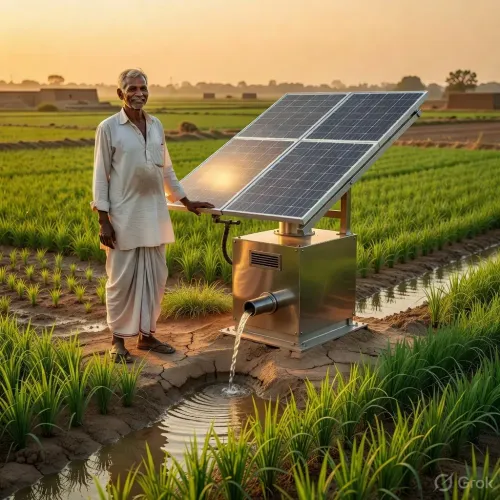
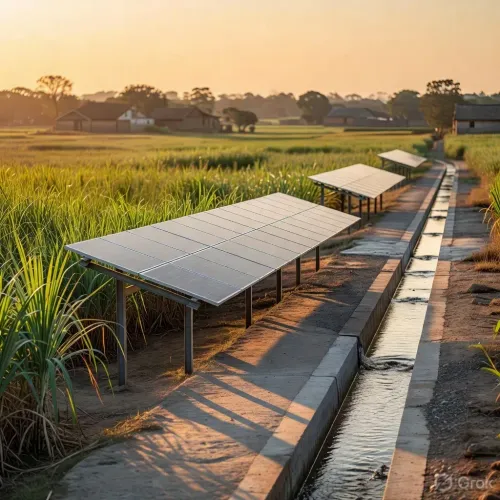
Farmers in Solapur district stand as the direct beneficiaries. Solar pumps eliminate recurring fuel costs and reduce dependence on an often-unreliable grid, offering a more predictable irrigation schedule. For smallholders cultivating sugarcane, pulses, and oilseeds — crops common in the region — consistent water access can meaningfully improve yields and income stability. The state electricity utility also benefits indirectly: each solar pump installation reduces the load on the agricultural feeder network, easing grid stress and trimming subsidy outflows. Renewable energy equipment suppliers and local installation contractors form another stakeholder layer that gains from scaled adoption.What's Next
The official acknowledgement of farmer preference in Solapur is likely a precursor to further policy announcements or budget allocations targeting solar pump expansion across similarly drought-prone districts in Maharashtra. Quarterly progress reports from the state energy and agriculture departments will be closely watched for installation targets and disbursement figures. With the state government publicly amplifying ground-level uptake, pressure may build to fast-track pending subsidy applications and resolve grid-connectivity bottlenecks that have slowed installations in some talukas. The trajectory of Maharashtra's solar agriculture programme will be a key indicator of how effectively India's largest state can marry agrarian welfare with its renewable energy commitments.Point of View
Where subsidy rationalisation and farm welfare are perennially in tension. Highlighting Solapur — a politically and agriculturally significant district — is not incidental; it frames renewable energy adoption as a farmer-driven demand rather than a top-down mandate. This framing strengthens the case for larger allocations under PM-KUSUM and state co-funding without attracting the political cost of cutting conventional power subsidies. The post fits a wider pattern of state governments using social media to build a public record of scheme success before formal policy announcements.
NationPress
10 Oct 2026
Frequently Asked Questions
What is the solar agricultural pump scheme for Maharashtra farmers?
Maharashtra farmers can access solar agricultural pumps primarily through the central PM-KUSUM scheme , which provides subsidies to replace diesel and grid-powered pumps with solar units, reducing energy costs and improving irrigation reliability.
Why is Solapur district important for solar pump schemes in Maharashtra?
Solapur is a drought-prone, semi-arid district in western Maharashtra where erratic rainfall and grid power make irrigation difficult, making solar pumps a practical and cost-effective solution for farmers there.
What is PM-KUSUM and when was it launched?
PM-KUSUM (Pradhan Mantri Kisan Urja Suraksha evam Utthaan Mahabhiyan) was launched by the central government in 2019 to subsidise solar pumps and small solar power plants for farmers across India.
How do solar pumps benefit farmers in Maharashtra?
Solar pumps eliminate recurring diesel costs, reduce dependence on an unreliable electricity grid, and provide a predictable irrigation schedule — directly improving crop yields and income for smallholder farmers.
What did CM Devendra Fadnavis say about solar energy in agriculture?
The Chief Minister's Office of Maharashtra posted on 26 May 2026 that farmers in Solapur district prefer solar agricultural pumps, with the post tagging CM Devendra Fadnavis and highlighting growing on-ground adoption.