CM Fadnavis Highlights Jalgaon's Solar Energy Leap
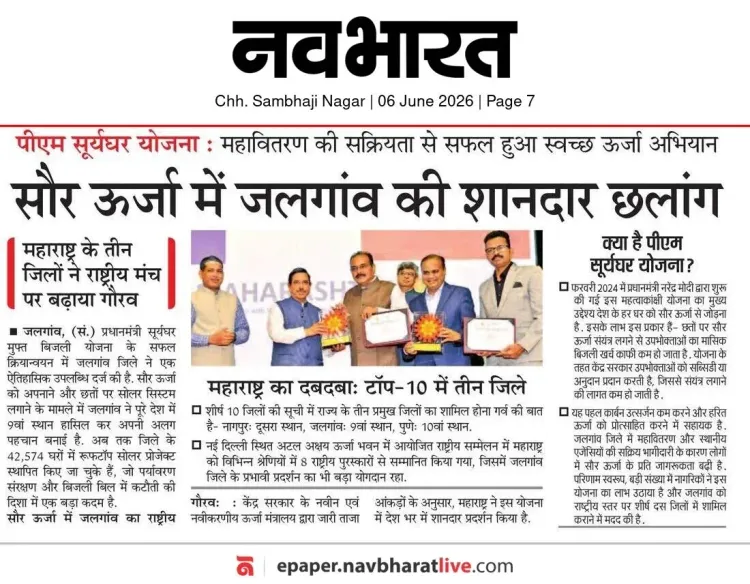
Synopsis
The Chief Minister's Office of Maharashtra on June 6, 2026, highlighted Jalgaon district's rapid solar energy growth, tagging CM Devendra Fadnavis. The post frames Jalgaon's progress as a 'spectacular leap,' reflecting the state's push to meet renewable targets under its solar policy and national 500 GW goals.
Key Takeaways
The Chief Minister's Office of Maharashtra on June 6, 2026 spotlighted Jalgaon district for rapid solar energy adoption.
CM Devendra Fadnavis was tagged in the post, signalling high-level political ownership of the renewable milestone.
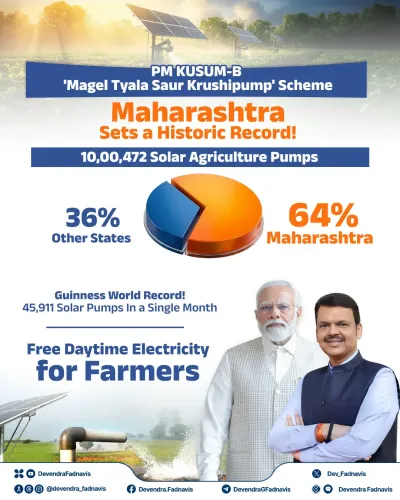
Maharashtra Solar Policy 2015 and the PM-KUSUM scheme (2019) form the policy backbone enabling district-level solar growth.
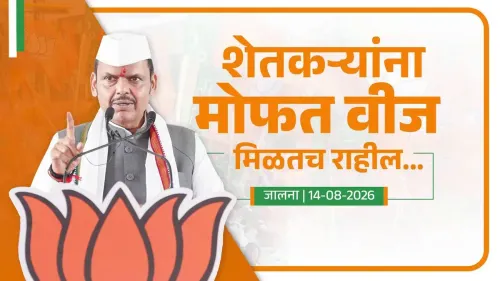
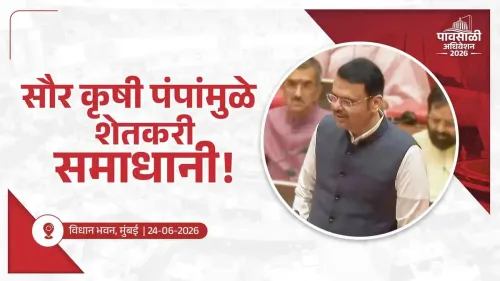
Jalgaon's farming community is a key beneficiary, with solar pumps reducing agricultural input costs.
District-level gains feed into India's national 500 GW non-fossil fuel capacity target by 2030 .
Next verified capacity data is expected from Maharashtra Energy Development Agency (MEDA) quarterly reports.
The Chief Minister's Office of Maharashtra on Saturday, June 6, 2026, spotlighted Jalgaon district's rapid strides in solar energy adoption, tagging Chief Minister Devendra Fadnavis in a post that described the development as a 'spectacular leap' (शानदार छलांग) in solar energy.
Context
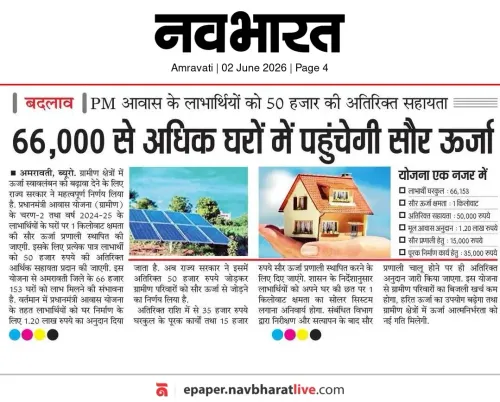
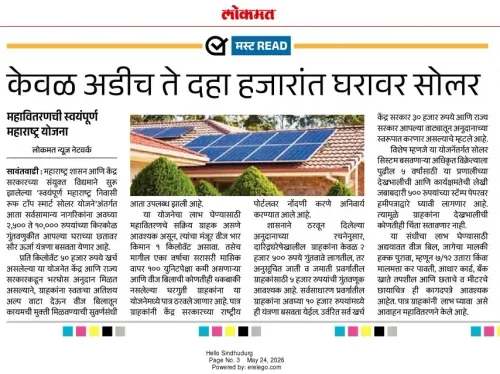
Jalgaon, a northern Maharashtra district long known for its banana cultivation and agricultural economy, is now drawing attention for its expanding solar energy footprint. The CMO's post, shared with the hashtags #Maharashtra and #DevendraFadnavis, signals the state government's intent to project district-level renewable gains as a visible policy win.
The phrase 'सौर ऊर्जा में जलगांव की शानदार छलांग' — 'Jalgaon's spectacular leap in solar energy' — frames the development as a milestone rather than incremental progress, consistent with the Fadnavis administration's broader push to highlight renewable achievements at the grassroots level.
Policy Backdrop
Maharashtra's renewable energy journey has been shaped by the Maharashtra Solar Policy 2015, which laid the groundwork for utility-scale and rooftop solar installations across the state's districts. The policy created a framework for private developers, cooperative societies, and individual farmers to participate in capacity addition.
At the national level, the PM-KUSUM scheme (2019) extended central government support for solar-powered agricultural pumps and decentralised plants, directly benefiting farming communities in districts like Jalgaon. The convergence of state and central schemes has enabled a mix of rooftop, pump-based, and solar park projects to take root in agrarian belts across western and central India.
Maharashtra is also bound by Renewable Purchase Obligations (RPOs) that require electricity distribution companies to source a defined share of power from renewables — creating sustained institutional demand for solar capacity addition at the district level.
Stakeholders and Impact
Jalgaon's farming community stands as a primary beneficiary of the solar expansion, with solar pumps reducing dependence on erratic grid power and diesel, thereby cutting input costs for agriculture. Renewable energy developers and equipment suppliers operating in the district also gain from the policy environment.
The broader pattern seen in Jalgaon mirrors progress in other agrarian districts of Maharashtra and neighbouring states, where district-level solar gains have accumulated through multiple smaller projects rather than single large installations. This decentralised model is increasingly seen as more resilient and equitable than mega-park approaches alone.
For the Maharashtra Energy Development Agency (MEDA), district-level successes like Jalgaon feed into the state's contribution toward India's national target of 500 GW of non-fossil fuel capacity by 2030.
What's Next
Attention will now turn to MEDA's quarterly renewable capacity reports, which will provide verified figures on how much installed solar capacity Jalgaon has added and its share in the state's overall renewable portfolio. New district solar park tenders from the Maharashtra government are also being watched by industry stakeholders.
CM Fadnavis has consistently used social media to amplify district-level infrastructure and energy milestones, and the Jalgaon solar highlight is likely part of a sustained communication strategy ahead of further policy announcements on Maharashtra's renewable roadmap. The spotlight on one district could foreshadow similar recognition for other high-performing districts in the state's solar programme.
Point of View
Tying the Chief Minister's identity to a tangible, grassroots renewable win. It fits a wider pattern under the Fadnavis administration of using district-level infrastructure milestones to build a governance narrative ahead of policy announcements. Jalgaon, an agrarian district, is a strategically chosen example: solar gains here speak to farmer welfare and energy security simultaneously, two themes with strong electoral resonance in Maharashtra. If verified capacity data backs the claim, it could accelerate similar district-focused solar pushes across the state.
NationPress
22 Oct 2026
Frequently Asked Questions
What is Jalgaon's role in Maharashtra's solar energy programme?
Jalgaon, a northern Maharashtra district, has emerged as a notable contributor to the state's solar capacity addition through a mix of rooftop installations, solar agricultural pumps under PM-KUSUM, and smaller solar parks. The CMO highlighted it as a district making a 'spectacular leap' in solar energy as of June 2026.
What is the PM-KUSUM scheme and how does it help Maharashtra farmers?
PM-KUSUM (Pradhan Mantri Kisan Urja Suraksha evam Utthaan Mahabhiyan), launched in 2019, provides central government support for solar-powered agricultural pumps and decentralised solar plants. In Maharashtra, it has helped farmers in districts like Jalgaon reduce dependence on grid power and diesel for irrigation.
What is Maharashtra's solar policy framework?
Maharashtra Solar Policy 2015 established the framework for utility-scale and rooftop solar capacity addition across the state, enabling participation by private developers, cooperatives, and individual farmers. It works alongside national schemes and Renewable Purchase Obligations to drive district-level solar growth.
Who is Devendra Fadnavis and what is his stance on renewable energy?
Devendra Fadnavis is the Chief Minister of Maharashtra and has consistently promoted the state's renewable energy expansion and infrastructure projects, using district-level milestones to highlight progress toward state and national clean energy targets.
What is India's 2030 renewable energy target and how does Maharashtra contribute?
India aims to achieve 500 GW of non-fossil fuel based electricity capacity by 2030. Maharashtra contributes through state-level solar and wind capacity additions, with district-level gains in places like Jalgaon accumulating toward the state's share of this national goal.