Sonowal: Indian Seafarers Up 155% in 12 Years, Women Lead
Synopsis
Union Minister Sarbananda Sonowal says Indian seafarers have more than doubled in 12 years with a 155% increase, and highlights significant growth in women seafarers as a marker of Nari Shakti at sea.
Key Takeaways
Indian seafarers have registered a 155 per cent increase over the last 12 years , more than doubling in number.
Minister Sarbananda Sonowal specifically highlighted a significant rise in women seafarers , calling it 'Nari Shakti leading at sea.' The Sagarmala Project (2015) and expansion of Directorate General of Shipping -approved training institutes are key policy drivers behind this growth.
India ratified the Maritime Labour Convention 2006 in 2015 , aligning domestic standards with international requirements and boosting competitiveness of Indian crew.
Maritime India Vision 2030 sets further targets for seafarer expansion and port modernisation as part of the blue economy strategy.
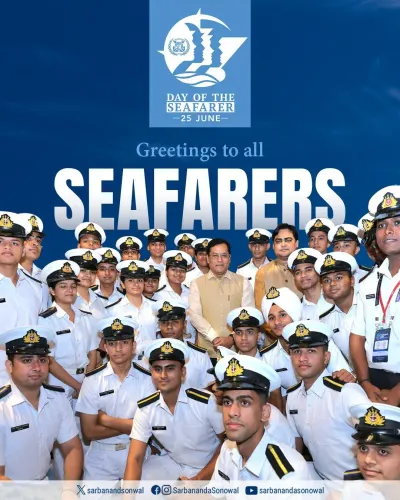
Union Minister of Ports, Shipping and Waterways Sarbananda Sonowal on Thursday, 25 June 2026 highlighted a landmark milestone in India's maritime workforce, stating that the number of Indian seafarers has more than doubled over the past 12 years, registering a 155 per cent increase.
Context
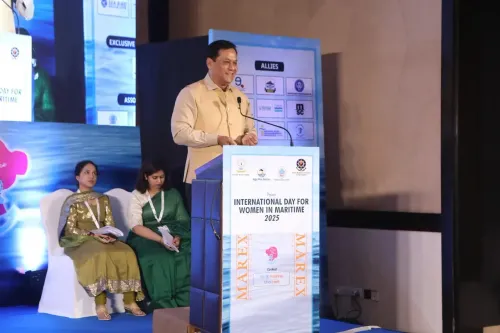
Responding to a post on X, Minister Sonowal noted that the surge in seafarer numbers also includes a 'significant growth in women seafarers,' which he described as 'true Nari Shakti leading at sea.' The remark underscores a dual achievement: raw numerical expansion of India's maritime workforce and the increasing participation of women in a profession historically dominated by men.
Policy Backdrop
The growth in seafarer numbers did not happen in isolation. The Sagarmala Project, launched in 2015, included dedicated components for maritime training institutes and seafarer skill upgradation, directly expanding the pipeline of certified professionals entering the sector. India's ratification of the Maritime Labour Convention 2006 in 2015 brought domestic seafarer standards in line with international requirements, making Indian crew more competitive for berths on globally operated vessels.
The Directorate General of Shipping expanded its network of approved maritime training institutes after 2014, increasing the volume of certified seafarers produced annually. The Maritime India Vision 2030, released in 2021, further codified targets for shipping capacity, port modernisation, and the enlargement of India's trained seafarer base as part of a long-term blue economy strategy.
Stakeholders and Impact
Indian seafarers are a significant source of foreign exchange earnings, serving aboard vessels operated by global shipping companies across international trade routes. A 155 per cent rise over 12 years positions India more prominently in the global seafarer supply market, where the country already ranks among the top crew-supplying nations. The growth reduces dependence on foreign crews for Indian-flagged and Indian-managed vessels, aligning with the broader Atmanirbhar Bharat push.
The specific mention of women seafarers reflects a parallel policy emphasis on increasing female workforce participation in non-traditional and technically demanding occupations. Women maritime professionals now form a visible segment of a sector that, even a decade ago, had negligible female representation at sea.
What's Next
The Ministry of Ports, Shipping and Waterways is expected to continue expanding the network of maritime training institutes under the targets set by Maritime India Vision 2030. Bilateral agreements on seafarer certification and welfare — which open new markets for Indian crew — remain an active area of diplomatic engagement. Further policy measures to support women seafarers, including dedicated training pathways and welfare frameworks, are likely to follow as the government looks to sustain and deepen the momentum highlighted by Minister Sonowal's post.
Point of View
Timed to project the BJP-led government's decade-long maritime policy as a measurable success story ahead of continued pushes under Maritime India Vision 2030. The 155 per cent figure, if sustained by official data, would represent one of the more tangible outcomes of the Sagarmala-era investment in training infrastructure. The specific callout of women seafarers is not incidental — it plugs the maritime sector into the government's wider Nari Shakti narrative, which has been a consistent political and policy theme across ministries. Taken together, the post positions India's blue economy ambitions as both an economic dividend and a social equity achievement, a framing that serves the ministry's legislative and budgetary interests going forward.
NationPress
25 Jun 2026
Frequently Asked Questions
How much have Indian seafarers grown in the last 12 years?
According to Union Minister Sarbananda Sonowal, the number of Indian seafarers has grown by 155 per cent over the last 12 years , more than doubling the total workforce.
What is Nari Shakti at sea in India?
'Nari Shakti at sea' refers to the growing participation of women in India's maritime profession. Minister Sonowal cited significant growth in women seafarers as part of the overall 155 per cent rise in Indian seafarers over 12 years.
What government schemes helped increase Indian seafarers?
The Sagarmala Project (2015) , expansion of Directorate General of Shipping -approved training institutes, and Maritime India Vision 2030 are the primary policy frameworks that expanded maritime training capacity and increased certified seafarer output.
What is Maritime India Vision 2030?
Maritime India Vision 2030 is a roadmap released in 2021 by the Ministry of Ports, Shipping and Waterways, outlining targets for shipping capacity, port modernisation, and expansion of India's trained seafarer base as part of the blue economy strategy.
Who is Sarbananda Sonowal?
Sarbananda Sonowal is India's Union Minister of Ports, Shipping and Waterways, a senior BJP leader, and a former Chief Minister of Assam. He has held the ports and shipping portfolio since July 2021 .