Sonowal: Maersk first global line to buy India-made EXIM Container
Synopsis
Maersk has become the first global shipping line to procure an Indian-manufactured EXIM container, Minister Sarbananda Sonowal announced on 3 July 2026, marking a milestone for Aatmanirbhar Bharat's maritime manufacturing push.
Key Takeaways
Maersk is the first international shipping line to procure an Indian-made EXIM container, according to Minister Sarbananda Sonowal .
The development was announced on 3 July 2026 and linked directly to PM Narendra Modi 's Aatmanirbhar Bharat self-reliance initiative.
The Aatmanirbhar Bharat package, launched in May 2020 , targeted domestic production of capital goods including transport and maritime equipment.
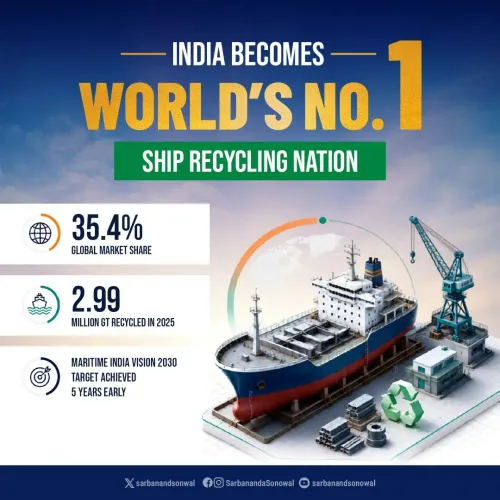
Maritime India Vision 2030 (released 2021 ) set goals for increasing India's share in global shipbuilding and container manufacturing.
India has historically been import-dependent for EXIM containers; Maersk's procurement signals a potential shift in global carrier sourcing behaviour.
Further capacity additions in domestic container manufacturing and possible procurement commitments by other global carriers are being closely watched.
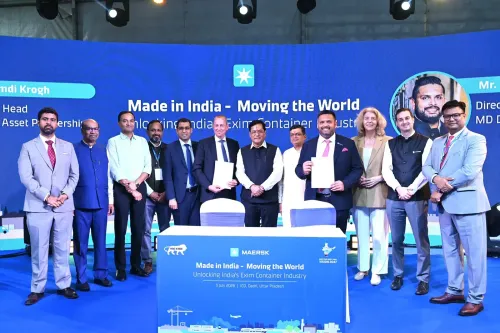
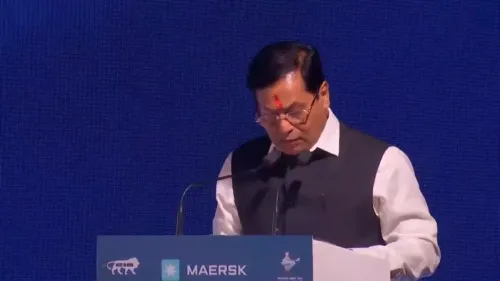
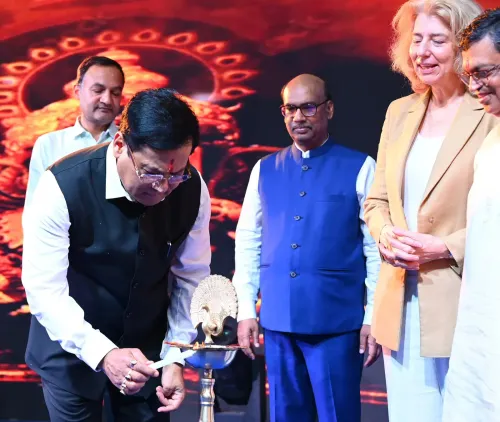
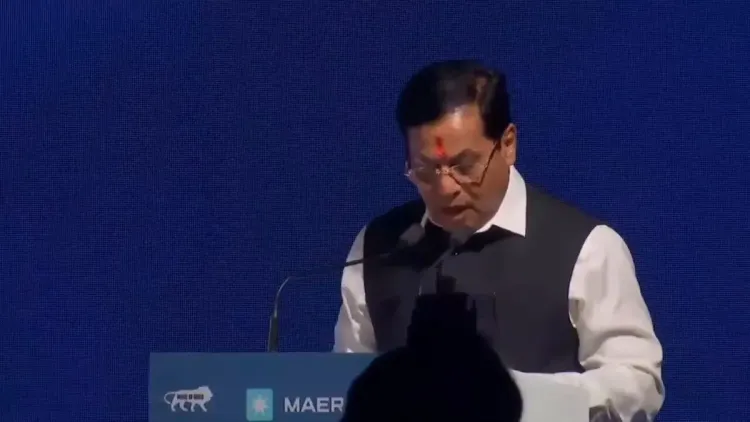
Union Minister of Ports, Shipping and Waterways Sarbananda Sonowal on Friday, 3 July 2026 hailed a landmark development in India's maritime sector, announcing that Maersk has become the first international shipping line to procure an Indian-manufactured EXIM container, calling it a realisation of Prime Minister Narendra Modi's Aatmanirbhar Bharat vision.
Context
Sonowal described the development as 'a milestone for India's maritime sector,' noting that Maersk — one of the world's largest container shipping lines — has sourced an EXIM (export-import) container made domestically in India. The minister linked the procurement directly to PM Modi's push for self-reliant manufacturing, framing it as evidence that the policy is yielding tangible commercial results in the logistics sector.
EXIM containers are the workhorses of international trade, used to move goods between ports across global supply chains. Until now, India's EXIM container supply has been heavily dependent on imports, making this procurement by a major global carrier a notable shift in sourcing behaviour.
Policy Backdrop
The development sits squarely within two overlapping policy frameworks. The Aatmanirbhar Bharat package, announced in May 2020, prioritised domestic production of capital goods and transport equipment, using production-linked incentives to reduce import dependence across strategic sectors.
Separately, the Maritime India Vision 2030, released in 2021, set an explicit target of increasing India's share in global shipbuilding and container manufacturing. Together, these frameworks have pushed port operators and global carriers operating in Indian waters to explore local sourcing options. India's approach mirrors import-substitution strategies already deployed in defence and railways.
Stakeholders and Impact
Maersk, a Danish conglomerate and one of the dominant players on India's EXIM trade routes, is the first international line to act on this policy direction by placing a procurement order for an Indian-made container. For domestic manufacturers, the move signals that global buyers are now willing to validate the quality and commercial viability of India-produced maritime equipment.
Indian manufacturers in the container-fabrication segment stand to benefit from the reputational and commercial boost that comes with a Maersk sourcing decision. Industry observers and other global shipping lines are likely to watch whether this procurement leads to repeat orders or triggers similar decisions by competing carriers operating in Indian ports.
What's Next
The government is expected to use this development to accelerate capacity additions in domestic container manufacturing, potentially backed by further production-linked incentives or port-level mandates that encourage international lines to source locally. Whether other major global carriers follow Maersk's lead will be a key indicator of whether this represents a one-off milestone or the beginning of a structural shift in India's container supply chain.
Analysts and stakeholders will also watch for any formal policy announcements from the Ministry of Ports, Shipping and Waterways that build on this momentum, including possible targets for the share of domestically manufactured containers in India's EXIM trade by 2030.
Point of View
Which has until now produced more visible results in defence and electronics than in maritime logistics. For the Ministry of Ports, Shipping and Waterways, this gives Sonowal a concrete, private-sector-validated win to display ahead of any Maritime India Vision 2030 mid-term review. The broader question is whether this is a pilot procurement or the start of a durable sourcing shift — the answer will depend on whether domestic manufacturers can match global price and quality benchmarks at scale. If other major carriers follow Maersk, it could meaningfully reduce India's container import bill and strengthen the case for deeper public investment in maritime manufacturing infrastructure.
NationPress
3 Jul 2026
Frequently Asked Questions
What is the significance of Maersk buying an Indian-made EXIM container?
Maersk is the first international shipping line to procure an Indian-manufactured EXIM container, marking a milestone for India's push to build domestic maritime manufacturing capacity under the Aatmanirbhar Bharat initiative.
What is an EXIM container?
An EXIM container is a standardised shipping container used for export-import trade, moving goods between ports across global supply chains. India has historically imported these containers rather than manufacturing them domestically.
What is Aatmanirbhar Bharat and how does it relate to shipping?
Aatmanirbhar Bharat, launched in May 2020, is PM Modi's self-reliance initiative that promotes domestic manufacturing across strategic sectors. In maritime logistics, it has encouraged Indian production of containers and shipping equipment to reduce import dependence.
What is Maritime India Vision 2030?
Maritime India Vision 2030, released in 2021, is a government roadmap targeting an increased Indian share in global shipbuilding and container manufacturing, alongside port modernisation and logistics improvements.
Will other shipping lines follow Maersk in buying Indian-made containers?
No official commitments from other global carriers have been announced yet. Industry observers are watching whether Maersk's procurement triggers similar sourcing decisions by competing lines operating on India's EXIM trade routes.