Sonowal Meets Nagaland CM, Dy CM on IWT Connectivity
Synopsis
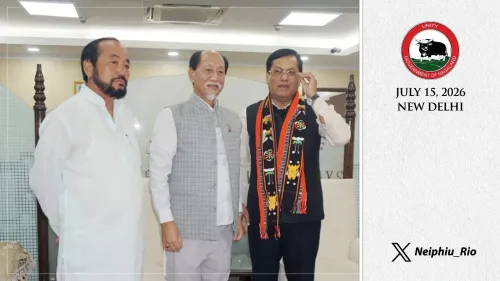
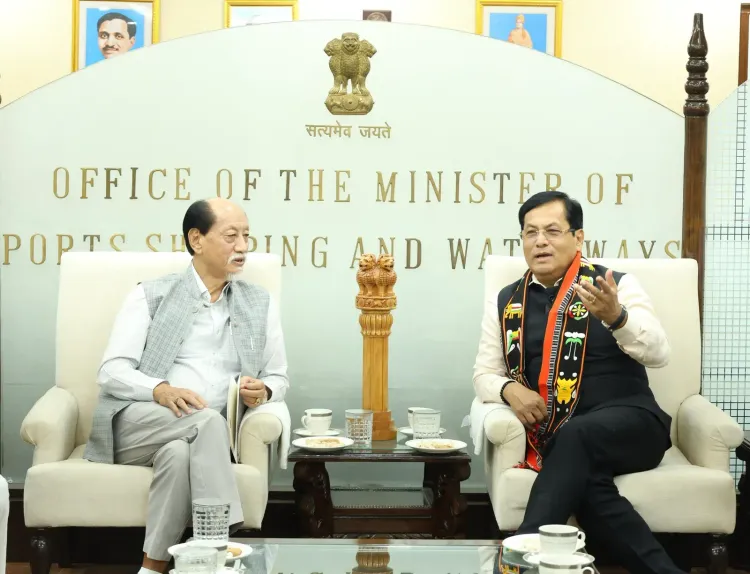
Union Minister Sarbananda Sonowal met Nagaland CM Neiphiu Rio and Deputy CM Yanthungo Patton in New Delhi on 15 July 2026, discussing inland waterway infrastructure to boost connectivity, commerce, and regional prosperity across the Ashtalakshmi States.
Key Takeaways
Union Minister Sarbananda Sonowal held talks with Nagaland CM Neiphiu Rio and Deputy CM Yanthungo Patton in New Delhi on 15 July 2026 .
Discussions focused on strengthening inland waterway transport (IWT) infrastructure in Nagaland to improve connectivity and commerce.
Nagaland is landlocked but has potential feeder linkages to the Brahmaputra tributary system under the national waterways grid.
The meeting aligns with the Centre's Ashtalakshmi States development framework and the PM Gati Shakti National Master Plan .
The National Waterways Act, 2016 declared 111 national waterways , including northeastern stretches, as part of multimodal connectivity goals.
Feasibility studies and pilot project announcements are expected through the North Eastern Council or the next Union Budget .
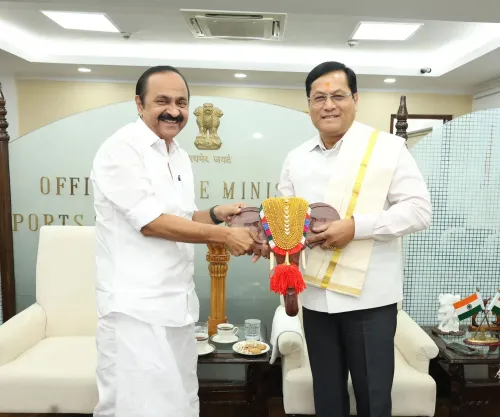
Union Minister of Ports, Shipping and Waterways Sarbananda Sonowal met Nagaland Chief Minister Neiphiu Rio and Deputy Chief Minister Yanthungo Patton in New Delhi on 15 July 2026 to discuss expanding inland waterway transport infrastructure in the landlocked northeastern state.
Context
The meeting centred on 'strengthening inland waterways and allied IWT infrastructure in Nagaland to create new avenues for connectivity, commerce and regional prosperity,' according to Sonowal's post on X. The deliberations reflect the Centre's push to extend multimodal connectivity to all eight Ashtalakshmi States, a term the central government uses collectively for India's northeastern region.
Nagaland is a landlocked state bordering Myanmar, with no direct river frontage, but potential feeder linkages exist via tributaries of the Brahmaputra system that could tie the state into the broader national waterways grid.
Policy Backdrop
The meeting sits within a layered policy architecture. The National Waterways Act, 2016 declared 111 waterways as national waterways, including stretches in the Northeast, to promote multimodal freight and passenger movement. Successive budgets have allocated funds for dredging and terminal construction along National Waterway-2 on the Brahmaputra since 2015.
The PM Gati Shakti National Master Plan, launched in 2021, integrates inland waterways with road and rail projects across the northeastern states, aiming to reduce logistics costs and open alternative trade corridors toward ASEAN markets under the Act East Policy. The Inland Waterways Authority of India (IWAI), the statutory body under Sonowal's ministry, is the implementing arm for these projects.
Sonowal, who served as Chief Minister of Assam before taking charge of the ports and waterways portfolio in 2021, has consistently championed Northeast connectivity as a personal and ministerial priority, giving the discussions added political weight.
Stakeholders and Impact
Nagaland CM Neiphiu Rio, who leads the Nationalist Democratic Progressive Party and has long advocated for greater central investment in northeastern connectivity, and Deputy CM Yanthungo Patton, a BJP leader overseeing state development priorities, both participated in the talks. Their presence signals alignment between the state and central governments on the infrastructure agenda.
The primary beneficiaries of improved IWT infrastructure would be Northeast traders and inland water transport operators, who currently face high logistics costs due to the region's limited connectivity. Any feeder waterway network linking Nagaland to the Brahmaputra corridor could reduce dependence on congested road networks and lower freight rates for goods moving in and out of the state.
What's Next
Concrete project announcements, feasibility studies, or pilot stretch identifications are likely to surface through the North Eastern Council or in the next Union Budget cycle, which are the standard channels through which northeastern infrastructure proposals move toward sanction and execution. The IWAI would be expected to conduct technical assessments of viable waterway alignments given Nagaland's challenging topography.
The broader pattern of the Centre integrating all eight Ashtalakshmi States into the national waterways grid — even those with indirect river access — suggests that Nagaland's inclusion is a matter of sequencing rather than feasibility. How quickly feasibility studies translate into funded projects will be the key metric to watch.
Point of View
The BJP-led government is reinforcing a political identity for the Northeast that ties development delivery to a single federal narrative. Nagaland's inclusion is notable precisely because its topography makes waterway connectivity the hardest to engineer, signalling ambition over convenience. The pace at which feasibility studies and IWAI assessments follow will determine whether this meeting is remembered as a policy milestone or a routine courtesy call.
NationPress
15 Jul 2026
Frequently Asked Questions
What did Sarbananda Sonowal discuss with Nagaland CM Neiphiu Rio?
Sonowal met Nagaland CM Neiphiu Rio and Deputy CM Yanthungo Patton in New Delhi on 15 July 2026 to discuss strengthening inland waterway transport infrastructure in Nagaland to improve connectivity, commerce, and regional prosperity.
What are the Ashtalakshmi States?
The Ashtalakshmi States is a term used by the central government to refer collectively to India's eight northeastern states — Assam, Arunachal Pradesh, Manipur, Meghalaya, Mizoram, Nagaland, Sikkim, and Tripura — as part of a coordinated infrastructure and development framework.
Does Nagaland have inland waterways?
Nagaland is a landlocked state with no direct river frontage, but it has potential connectivity to the national waterways grid through feeder linkages via tributaries of the Brahmaputra system, which is being explored under central government infrastructure plans.
What is the National Waterways Act 2016?
The National Waterways Act, 2016 declared 111 waterways across India as national waterways, including stretches in the northeastern region, to promote multimodal freight and passenger movement and reduce logistics costs.
What is PM Gati Shakti and how does it relate to the Northeast?
PM Gati Shakti is a National Master Plan launched in 2021 that integrates inland waterways with road and rail infrastructure projects. It includes northeastern states as a priority zone to lower logistics costs and create trade corridors toward ASEAN markets under the Act East Policy.