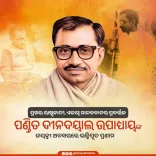
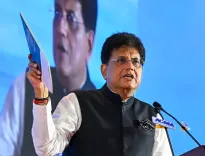
Sonowal pays tribute to Deendayal Upadhyay on his birth anniversary
Synopsis
Union Minister Sarbananda Sonowal honoured Pandit Deendayal Upadhyay on his birth anniversary, reaffirming the BJP's ideological roots in Antyodaya — the principle of uplifting society's last person — and Integral Humanism.
Key Takeaways
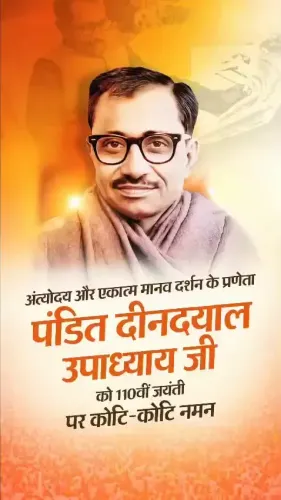
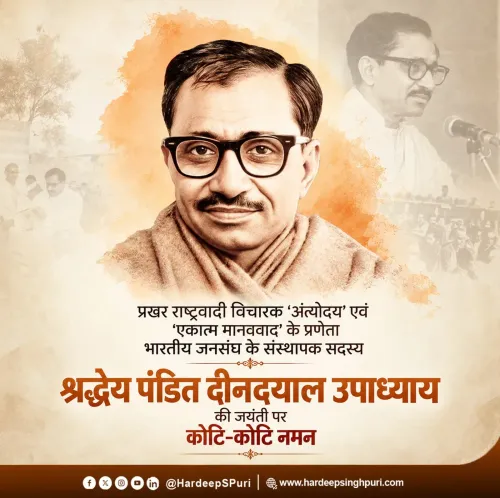
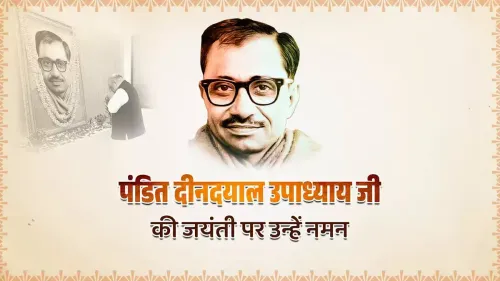
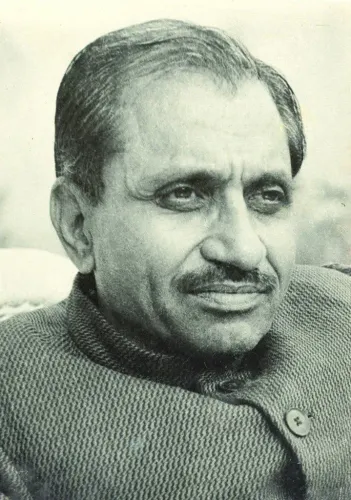
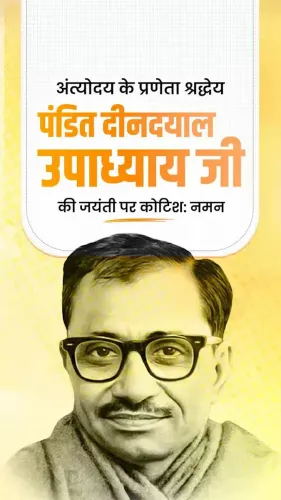
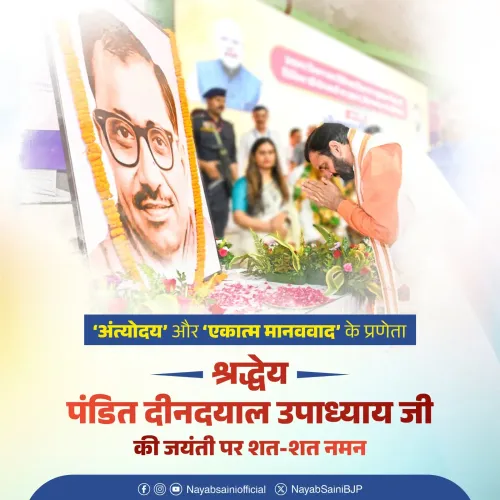
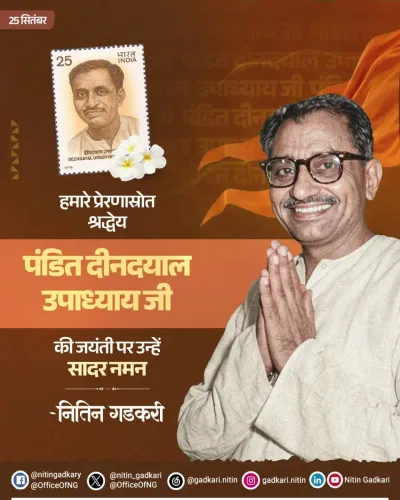
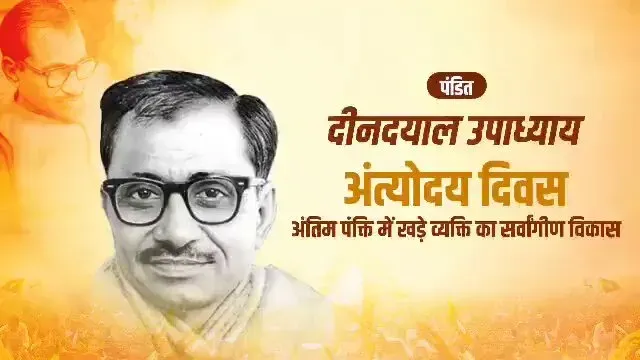
25 September is the birth anniversary of Pandit Deendayal Upadhyay , the founding ideologue of the Bharatiya Jana Sangh and forefather of the BJP.
Union Minister Sarbananda Sonowal paid tribute on X , describing Upadhyay as a great thinker and visionary dedicated to national service and the uplift of the weakest.
Upadhyay's Antyodaya principle — measuring progress by the condition of the most marginalised — has directly influenced welfare schemes, including the Antyodaya Anna Yojana of 2000 .
His complementary philosophy of Integral Humanism remains the stated ideological foundation of BJP governance.
Senior BJP leaders, including cabinet ministers, follow an annual commemorative tradition on 25 September to reaffirm the party's philosophical lineage.
On the birth anniversary of Pandit Deendayal Upadhyay, Union Minister of Ports, Shipping and Waterways Sarbananda Sonowal on Friday, 25 September 2026 offered a respectful tribute to the ideologue whose philosophy of service to the weakest continues to shape the BJP's governing creed.
Posting in Hindi, Sonowal described Upadhyay as a 'mahaan chintак evam yugadrashta' — a great thinker and visionary of the age — and saluted his lifelong commitment to national service and people's welfare. 'His dedication to the nation, the spirit of upliftment of the last person in society, and the feeling of service to humanity will always guide all of us,' the minister wrote, invoking themes that sit at the core of Upadhyay's celebrated Antyodaya philosophy.
Who was Pandit Deendayal Upadhyay?
Pandit Deendayal Upadhyay was one of independent India's most original political thinkers — an organiser, editor, and eventually president of the Bharatiya Jana Sangh, the ideological predecessor of the BJP. He articulated the twin pillars of Integral Humanism and Antyodaya: the idea that a nation's true progress must be measured not by aggregate wealth but by the condition of its most marginalised citizen. Those pillars remain the declared philosophical foundation of BJP governance today.
Antyodaya's long shadow over welfare policy
Upadhyay's Antyodaya concept has had concrete policy afterlives. The Antyodaya Anna Yojana, launched in 2000, channelled subsidised food grain specifically to the poorest of the poor — a direct legislative echo of his core principle. BJP governments at the Centre have repeatedly invoked Antyodaya framing in welfare announcements, making Upadhyay's birth anniversary on 25 September a ritual reaffirmation of that ideological continuity. Senior party leaders, ministers, and chief ministers issue tributes annually to signal that the philosophical thread runs unbroken from Upadhyay's writing desk to the current dispensation's policy table.
For Sonowal — a former Chief Minister of Assam now steering one of India's most strategically significant infrastructure ministries — the tribute is both a personal act of reverence and a public signal: the port and waterway ambitions his ministry pursues are framed, at least in rhetoric, within the same idea of national service that Upadhyay preached.
Every September, the tribute cycle restarts. The question the anniversary always poses is the same one Upadhyay spent his life asking: is the last person in the line being lifted? That question has not gone away.
Point of View
Whose ministry handles large-ticket infrastructure, invoking Antyodaya subtly frames developmental spending as moral obligation rather than mere policy. The consistency of this commemorative cycle across decades reveals how the BJP manages to keep a pre-Independence thinker relevant to contemporary governance debates. Whether that framing translates into measurable outcomes for the 'last person' Upadhyay spoke of remains the sharpest test of its sincerity.
NationPress
25 Sept 2026
Frequently Asked Questions
When is Pandit Deendayal Upadhyay's birth anniversary?
Pandit Deendayal Upadhyay's birth anniversary falls on 25 September every year. It is observed by the BJP and affiliated organisations as a day of ideological reflection and tribute.
What is the Antyodaya philosophy of Deendayal Upadhyay?
Antyodaya is the principle articulated by Upadhyay that a society's true progress should be measured by the welfare of its most marginalised member — the 'last person in line'. It has since inspired welfare schemes like the Antyodaya Anna Yojana .
What is Integral Humanism and who proposed it?
Integral Humanism is a political philosophy proposed by Pandit Deendayal Upadhyay that argues for a holistic approach to the individual, society, nature, and the cosmos — as opposed to purely materialist Western ideologies. It became the BJP's official ideology.
Who is Sarbananda Sonowal and what ministry does he head?
Sarbananda Sonowal is a senior BJP leader, former Chief Minister of Assam , and currently the Union Minister of Ports, Shipping and Waterways in the Government of India.
What was the Antyodaya Anna Yojana?
The Antyodaya Anna Yojana , launched in 2000 , was a Government of India scheme that provided highly subsidised food grain to the poorest households — directly inspired by Upadhyay's Antyodaya principle of uplifting the weakest sections of society.