CM Sukhu adds 46 rapid response vehicles to HP Fire Services
Synopsis
Himachal Pradesh CM Sukhvinder Singh Sukhu announced the addition of 46 rapid response vehicles to the state fire services on 11 August 2026, aiming to boost emergency response speed and coverage across the disaster-prone hill state.
Key Takeaways
46 rapid response vehicles are being inducted into the Himachal Pradesh Fire Services fleet.
The announcement was made by CM Sukhvinder Singh Sukhu on 11 August 2026 .
Himachal Pradesh faces recurring natural disasters — floods, landslides, forest fires — making fast emergency response critical.
Fleet modernisation for fire services has been a recurring priority for successive HP governments due to the state's challenging terrain.
District-wise deployment details and budget allocations for the vehicles are yet to be announced.
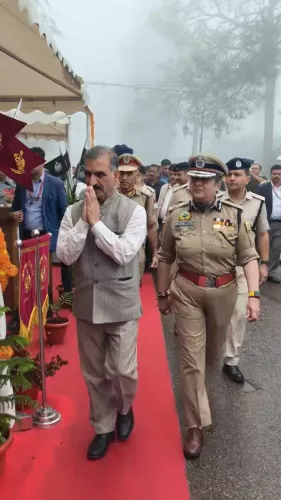
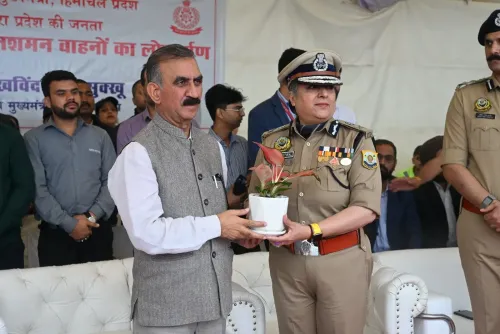
When disaster strikes in the mountains, seconds are the difference between rescue and tragedy. Himachal Pradesh Chief Minister Sukhvinder Singh Sukhu announced on Tuesday, 11 August 2026, that 46 rapid response vehicles are being inducted into the state's fire services fleet — a direct reinforcement of emergency capacity in one of India's most disaster-prone states.
Posting in Hindi, CM Sukhu said: 'In every moment of crisis, our firefighters stand ready to protect people with courage and dedication. The addition of 46 rapid response vehicles will give their service greater speed and strength. Protecting every life is our resolve, and standing firm against every challenge is our duty.'
Why Himachal's terrain makes speed everything
Himachal Pradesh sits at the intersection of multiple hazard zones — flash floods, cloudbursts, landslides, earthquakes, and seasonal forest fires are not exceptional events here; they are annual realities. Emergency vehicles must navigate steep gradients, narrow mountain roads, and stretches that are routinely cut off by debris. In that context, response time is not a bureaucratic metric — it is a life-or-death variable.
The Himachal Pradesh Fire Services has historically struggled with ageing fleet capacity relative to the geographic spread of districts it must cover. Modernisation of fire and rescue fleets has been a recurring priority for successive state governments precisely because remote communities have the least margin for delayed response.
46 vehicles and the push to close the coverage gap
The induction of 46 quick-reaction vehicles continues a pattern of incremental but consequential infrastructure upgrades. Each addition to the fleet theoretically shortens the radius any single unit must cover, compressing the time between an emergency call and boots on the ground. How these vehicles are distributed across districts — whether concentrated in high-risk zones like Kullu, Mandi, Shimla, or spread evenly — will determine how much of that theoretical gain translates into real-world impact.
The deployment schedule and district-wise allocation will be the next detail to watch, alongside whether the upgrade is backed by matching allocations in the state's disaster management budget.
Point of View
Tangible, and hard to oppose politically. For Sukhu, who has governed through a turbulent legislative period, fleet modernisation for fire services is low-controversy but high-visibility governance. The real test will be in the district-level deployment: whether high-risk, remote constituencies receive priority or whether the vehicles are spread thin for political optics. Broader disaster management reform — early warning systems, trained personnel strength — remains the larger unfinished agenda this announcement does not address.
NationPress
26 Sept 2026
Frequently Asked Questions
How many rapid response vehicles did CM Sukhu add to Himachal Pradesh Fire Services?
46 rapid response vehicles are being added to the Himachal Pradesh Fire Services fleet, as announced by Chief Minister Sukhvinder Singh Sukhu on 11 August 2026 .
Why does Himachal Pradesh need more fire and emergency response vehicles?
Himachal Pradesh faces frequent natural disasters including flash floods, landslides, forest fires, and earthquakes due to its mountainous terrain. Remote areas have long suffered from slow emergency response times because of inadequate fleet coverage.
What did CM Sukhu say about the new fire service vehicles?
CM Sukhu said the new vehicles will give firefighters 'greater speed and strength' in serving people, adding that 'protecting every life is our resolve and standing firm against every challenge is our duty.'
Which districts in Himachal Pradesh will get the new rapid response vehicles?
The district-wise distribution of the 46 vehicles has not yet been officially announced. Deployment details and allocation across high-risk zones are expected to follow the initial announcement.
Who is Sukhvinder Singh Sukhu?
Sukhvinder Singh Sukhu is the Chief Minister of Himachal Pradesh and an Indian National Congress leader. He has held the office since December 2022 .