Surat gets ₹108 crore rural infra push, e-Kaksha bus to bring digital classrooms to villages
Synopsis
Surat's rural belt gets a dual push: 143 infrastructure projects worth ₹108 crore covering roads, irrigation and Anganwadi centres — and an e-Kaksha bus, a Toyota CSR-funded mobile computer lab that will reach 10–15 government schools a month across five blocks. It is one of the more concrete examples of a private-public model taking digital education to villages that currently have no such access.
Key Takeaways
Gujarat Deputy CM Harsh Sanghavi launched 143 rural development projects worth ₹108 crore in Surat on 16 October 2026 .
Foundation stones were laid for 104 projects (₹100 crore) ; 39 works (₹8 crore) were inaugurated on the same day.
Projects cover roads, irrigation for more than 60 villages , Anganwadi centres and other public amenities.
The e-Kaksha bus , a mobile computer laboratory built with Toyota Kirloskar CSR funds, will serve 10–15 government schools per month across 5 blocks of Surat district.
The state is prioritising housing upgrades — RCC slabs over sheet roofing — for scheme beneficiaries, with a focus on the Halpati community .
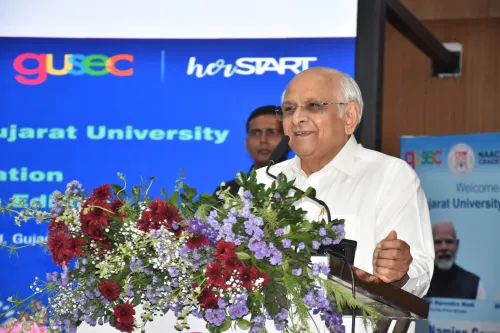
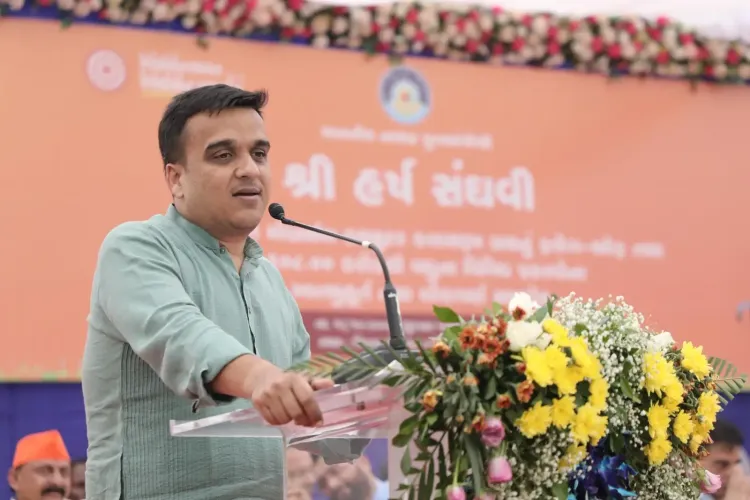
Surat district is set to receive a significant infrastructure upgrade through 143 development projects worth ₹108 crore, alongside the launch of the 'e-Kaksha bus' — a mobile computer laboratory designed to deliver digital education to government school students in remote villages. Gujarat Deputy Chief Minister Harsh Sanghavi unveiled both initiatives at the Surat District Panchayat premises on 16 October 2026.
Key Developments at the Launch
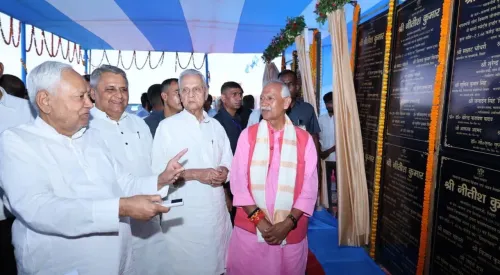
Sanghavi laid the foundation stones for 104 projects worth ₹100 crore and inaugurated 39 completed works costing ₹8 crore at the event. Minister of State for Health Praful Panseriya also attended the ceremony.
The infrastructure portfolio covers roads linking rural areas, irrigation schemes benefiting more than 60 villages, new Anganwadi centres, and assorted public amenities. The district panchayat said the works would measurably improve access to essential services across Surat's rural belt.
The e-Kaksha Bus: Digital Classrooms on Wheels
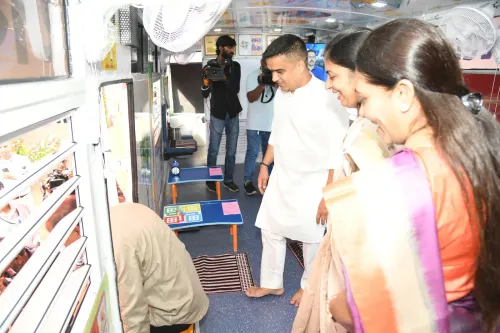
The headline initiative was the flagging off of the e-Kaksha bus, a mobile computer laboratory developed by the Surat District Panchayat in collaboration with Toyota Kirloskar under its 'Digital Classrooms on Wheels' programme. The bus is funded through Toyota's corporate social responsibility (CSR) allocation.
Each month, the bus will cover students from 10 to 15 government schools spread across five blocks of Surat district, providing computer education and digital literacy to children in villages that currently lack such infrastructure.
Flagging off the vehicle, Sanghavi urged village leaders and school authorities to ensure full seat occupancy on every visit. 'The administration is working under Chief Minister Bhupendra Patel's leadership to extend facilities to people in remote areas and improve opportunities for rural children and women,' he said.
Housing, Community Infrastructure and Navratri Economy
Sanghavi praised local representatives for proposing reinforced cement concrete (RCC) slabs over sheet roofing for beneficiaries of government housing schemes — a structural improvement that officials say will raise durability. He also highlighted the administration's ongoing work to secure permanent houses for families from the Halpati community.
The Deputy Chief Minister also pointed to the economic spillover from Navratri, noting that the state government's policy permitting garba celebrations to continue late into the night had generated business and employment for small traders, street vendors and restaurant operators. He commended the Gujarat Police for maintaining security through the festivities.
Sanghavi urged citizens to treat public infrastructure — including Anganwadi centres, panchayat buildings and bus stations — as shared community assets and take responsibility for their upkeep.
State's Broader Rural Development Push
Panseriya framed the day's announcements within the state's Antyodaya approach — a policy lens centred on reaching the most disadvantaged communities first. He said investments in rural schools and healthcare centres were strengthening basic infrastructure and cited Gujarat's progress in efforts to eliminate tuberculosis, address malnutrition, and reduce maternal and child mortality.
Panseriya also drew a line from current rural growth back to the development model initiated by Prime Minister Narendra Modi during his tenure as Gujarat's chief minister beginning in 2001.
Surat District Panchayat president Samirbhai Modi said the projects would improve both road access and healthcare facilities in rural pockets, and thanked Toyota Kirloskar for backing the e-Kaksha initiative.
With sectoral works now formally launched, implementation timelines and contractor accountability will be the key metrics to watch in the months ahead.
Point of View
And a mobile unit is cheaper than retrofitting hundreds of classrooms. The Toyota CSR partnership is a model worth watching, but its impact depends entirely on visit frequency and curriculum quality, neither of which has been publicly benchmarked. The broader ₹108 crore infrastructure package is significant for Surat's rural belt, but foundation-stone events in Indian state politics often outpace actual completion. Independent monitoring of project delivery timelines would be the real test of the administration's Antyodaya intent.
NationPress
16 Oct 2026
Frequently Asked Questions
What is the e-Kaksha bus launched in Surat?
The e-Kaksha bus is a mobile computer laboratory developed by the Surat District Panchayat in collaboration with Toyota Kirloskar under the 'Digital Classrooms on Wheels' initiative, funded through Toyota's CSR budget. It will visit 10 to 15 government schools per month across five blocks of Surat district to provide computer education and digital literacy to children in remote villages.
What infrastructure projects were launched in Surat on 16 October 2026?
Deputy Chief Minister Harsh Sanghavi laid foundation stones for 104 projects worth ₹100 crore and inaugurated 39 completed works costing ₹8 crore — a combined package of 143 projects totalling ₹108 crore. The works cover rural roads, irrigation schemes for more than 60 villages, new Anganwadi centres and other public amenities.
Who launched the Surat rural development projects?
Gujarat Deputy Chief Minister Harsh Sanghavi launched the projects at the Surat District Panchayat premises on 16 October 2026. Minister of State for Health Praful Panseriya also attended the event.
How is the e-Kaksha bus funded?
The e-Kaksha bus is funded through the corporate social responsibility (CSR) funds of Toyota Kirloskar, in collaboration with the Surat District Panchayat. There is no state government budgetary outlay reported for the bus itself.
Which communities are the Surat development projects targeting?
The projects broadly target rural residents across Surat district, with specific mention of families from the Halpati community for permanent housing upgrades and children in remote villages for digital education through the e-Kaksha bus. The state's stated approach is Antyodaya — prioritising the most disadvantaged sections.