Tejasvi Surya slams Opposition with Gen Z 'delulu' jibe in paper leak debate
Synopsis
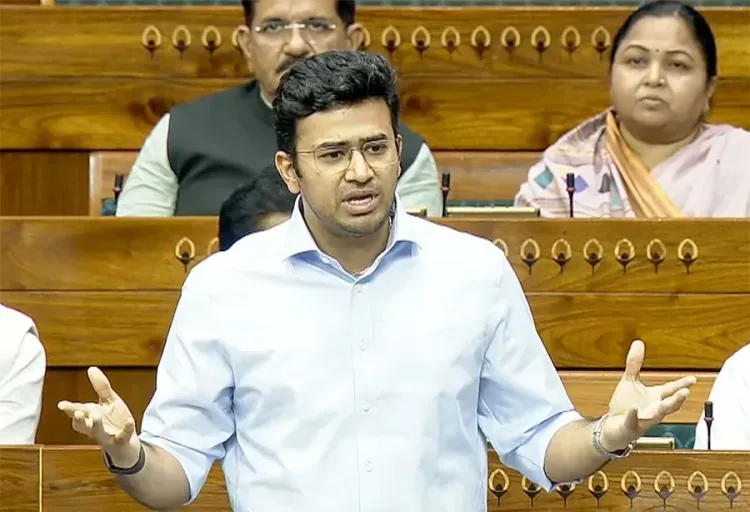
BJP MP Tejasvi Surya took the Lok Sabha floor on 28 July and weaponised Gen Z vocabulary — 'delulu', 'FOMO', 'source code' — to dismantle the Opposition's claim to youth support on the paper leak issue. The debate over the Public Examinations Amendment Bill, 2026 turned into a generational culture-war skirmish, with Surya arguing the Congress spent 34 years not fixing what this bill now attempts to address.
Key Takeaways
BJP MP Tejasvi Surya attacked the Opposition on 28 July during the Lok Sabha debate on the Public Examinations (Prevention of Unfair Means) Amendment Bill, 2026 .
Surya called it the 'greatest delulu' to think the youth side with opposition parties over the exam paper leak issue.
He argued that no convictions in paper leak cases occurred because no special law existed — a gap the UPA did not fill despite its time in power.
He accused Rahul Gandhi of 'FOMO' and alleged the Samajwadi Party had 'institutionalised malpractice' by repealing an anti-copying law in Uttar Pradesh .
Surya credited the National Education Policy 2020 with transforming an education system he said had been stagnant for 34 years .
If passed, the bill would be the first dedicated law against examination malpractice in India's history, according to Surya's floor remarks.
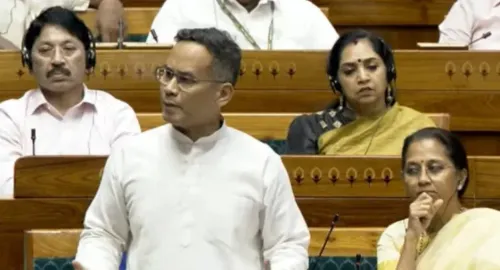
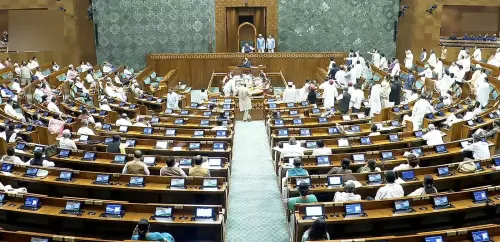
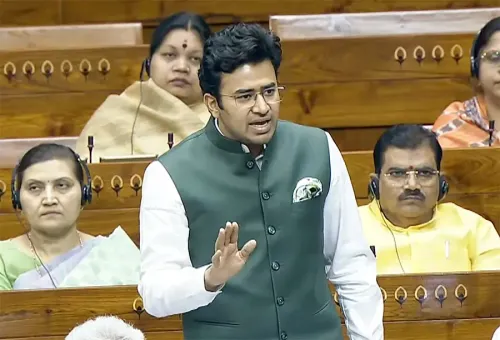
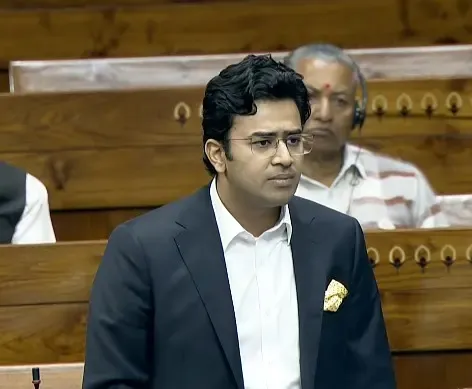
Bharatiya Janata Party (BJP) MP Tejasvi Surya on Tuesday, 28 July launched a sharp attack on the Opposition in the Lok Sabha during the debate on the Public Examinations (Prevention of Unfair Means) Amendment Bill, 2026, deploying Gen Z slang to argue that it is the 'greatest delulu' — internet shorthand for delusional thinking — to believe the youth of India sides with opposition parties on the exam paper leak issue.
Key Developments in the Lok Sabha Debate
Surya's remarks came as the House debated legislation aimed at curbing malpractice in public examinations. Earlier in the session, fellow BJP MP Bansuri Swaraj had also invoked Gen Z language, saying Prime Minister Narendra Modi 'clocked it by providing a legislative solution.' Surya built on that framing, telling the House: 'The student needs solution, not slogans and this Bill provides the solution. It is 30 years late, but first time in the country's history such a law is being passed.'
Surya's Broadside Against Congress
Responding directly to Congress MP Priyanka Gandhi Vadra's question on the absence of convictions in paper leak cases, Surya argued that prosecutions had not materialised because 'there was no special law to deal with this.' He pointed out that the United Progressive Alliance (UPA) government had not enacted comparable legislation despite being in power, including in 2010 when a similar opportunity arose.
Surya also turned on Priyanka Gandhi's criticism of the education system, saying: 'You did not implement the National Education Policy (NEP) for the past 34 years...this is the old education system which did not produce any original thinking.' He asserted that rote learning had become entrenched in India's education system, but argued that the National Education Policy 2020 was now transforming it 'root and branch.'
Attack on Rahul Gandhi and Samajwadi Party
Surya also took aim at Lok Sabha Leader of Opposition Rahul Gandhi, accusing him of having 'FOMO' — Fear of Missing Out — over student protests. 'He went to stage a sit-in near Prime Minister Narendra Modi's residence to come into the spotlight,' Surya alleged. The BJP MP questioned Gandhi's absence from actual student demonstrations, framing it as political opportunism.
Targeting Samajwadi Party MP Akhilesh Yadav, Surya referred to an anti-copying law introduced by the Rajnath Singh-led BJP government in Uttar Pradesh during its tenure between 2000 and 2002. He alleged that the Samajwadi Party had opposed the law and repealed it after returning to power, saying: 'They had institutionalised malpractice.'
The 'Source Code' Argument
Using a coding metaphor aimed at younger audiences, Surya framed his argument in tiers: 'Fixing the examination system is only fixing the big, fixing the education system is fixing the source code and fixing the source code is root and branch reform of our education system.' The rhetorical flourish drew attention for its deliberate alignment with the vocabulary of India's digitally-native generation.
He also criticised the previous Congress government in Rajasthan over the alleged REET paper leak, stressing that examination integrity — whether at the national or state level — carries equal weight for students across India.
What Comes Next
The Public Examinations (Prevention of Unfair Means) Amendment Bill, 2026 remains under parliamentary debate. If passed, it would mark the first dedicated legislative framework of its kind in India's history, according to Surya's remarks on the floor. The bill's passage will be closely watched by student groups and civil society organisations that have long demanded accountability in competitive examination administration.
Point of View
Not just rhetorical colour — the BJP is signalling that it, not the Opposition, speaks the language of India's largest electoral cohort. But the more substantive claim deserves scrutiny: if the absence of a special law explains the lack of convictions, why did the NDA government take until 2026 to introduce one? The bill's passage will matter less than its enforcement architecture, and on that, the floor debate has so far produced more slogans than specifics. The Opposition's credibility gap on paper leaks is real — but the government's own record on exam integrity is not unblemished.
NationPress
27 Oct 2026
Frequently Asked Questions
What is the Public Examinations (Prevention of Unfair Means) Amendment Bill, 2026?
It is a legislative proposal being debated in the Lok Sabha that aims to create a dedicated legal framework to curb malpractice in public examinations. BJP MP Tejasvi Surya described it as the first law of its kind in India's history, introduced to address a gap that previous governments did not fill.
What did Tejasvi Surya mean by calling the Opposition 'delulu'?
'Delulu' is Gen Z internet slang for delusional. Surya used the term on 28 July in the Lok Sabha to argue that the Opposition is mistaken in believing India's youth supports them over the exam paper leak issue, framing their position as out of touch with student sentiment.
Why does Surya say there have been no convictions in paper leak cases?
Surya argued on the Lok Sabha floor that convictions did not occur because no special law existed to deal with examination malpractice. He said this gap was not addressed by the UPA government, including in 2010, and that the current Amendment Bill is designed to close it.
What did Surya allege against Rahul Gandhi and the Samajwadi Party?
Surya accused Lok Sabha Leader of Opposition Rahul Gandhi of having 'FOMO' — Fear of Missing Out — over student protests, alleging he staged a sit-in near the Prime Minister's residence for publicity rather than genuine solidarity. He also alleged that the Samajwadi Party had repealed an anti-copying law in Uttar Pradesh after coming to power, claiming they 'institutionalised malpractice.'
What is the BJP's position on the National Education Policy 2020?
Surya credited the National Education Policy 2020 with reforming an education system he said had been stagnant for 34 years under successive governments. He argued the NEP is dismantling rote-learning culture and represents a 'root and branch' transformation that the Congress failed to deliver during its tenures in power.