Swamy Slams Modi's Foreign Policy as US-China-Russia Huddle Excludes India
Synopsis
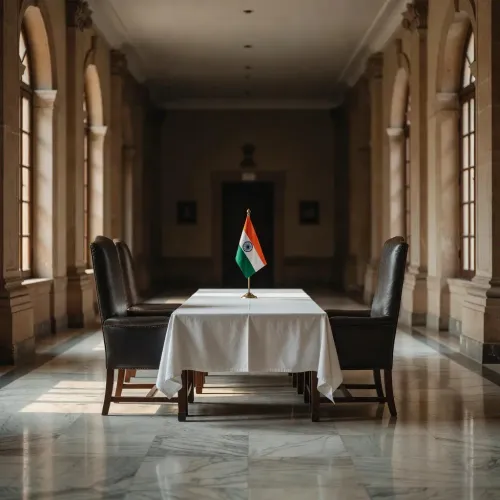
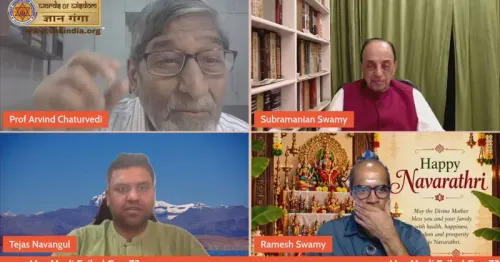
Veteran politician Dr. Subramanian Swamy has alleged that leaders of the US, China and Russia met and excluded India, using the claim to attack what he called Prime Minister Modi's 'boot-licking' foreign policy that he says has failed to earn Bharat genuine global standing.
Key Takeaways
Subramanian Swamy posted on November 16, 2026 alleging top leaders of the US , China , and Russia met and chose not to invite India .
He described Modi's engagement with foreign leaders as 'boot-licking' that yields no real status for Bharat .
The specific trilateral meeting referenced remains unverified ; India's Ministry of External Affairs has not responded.
India pursues a multi-alignment strategy — Quad with the US , energy ties with Russia , and co-membership with China in BRICS and SCO .
Critics of multi-alignment argue it risks leaving India outside every major great-power inner circle at decisive moments.
India remains a long-standing aspirant for a permanent seat on the UN Security Council , a goal still unresolved.
A sharp rebuke of Prime Minister Narendra Modi's foreign policy landed on Monday, November 16, 2026, when veteran politician Dr. Subramanian Swamy alleged that the top leaders of the United States, China, and Russia had met and collectively decided against inviting India — a pointed indictment of what he called the futility of 'boot-licking of foreign leaders.'
The Accusation: Great Powers Huddle, India Left Outside
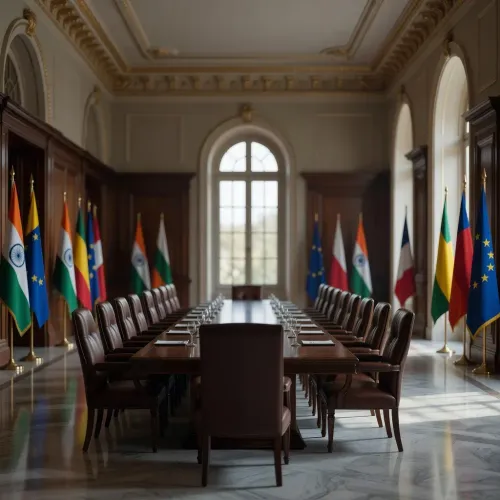
Dr. Swamy posted bluntly: 'The top leaders of US, China, and Russia met and decided not to invite Modi's India to join. We Indians should know that boot-licking of foreign leaders does not give any status to Bharat.' The charge is stark — that India's much-celebrated multi-alignment diplomacy has yielded not a seat at the most consequential table, but a closed door.
The specific trilateral meeting Dr. Swamy references has not been independently confirmed, and India's Ministry of External Affairs has not issued any official response as of publication. The claim, however, draws on a real and enduring anxiety in India's strategic community: does balancing mean belonging to no one's inner circle?
The Multi-Alignment Bet and Its Critics
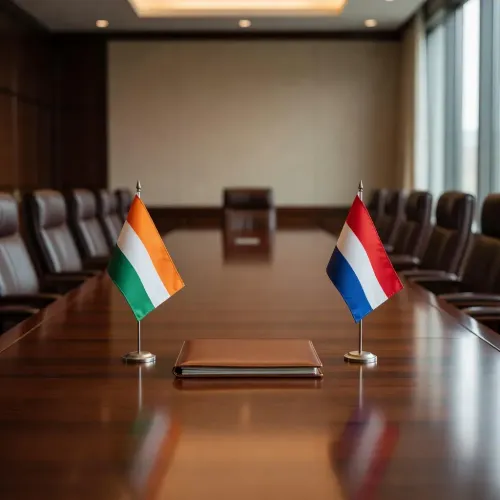
India has spent two decades threading a diplomatic needle — Quad membership with the US since 2007, annual summits with Moscow, co-membership with Beijing in BRICS and the Shanghai Cooperation Organisation, and a high-profile G20 presidency in 2023. The strategy earned New Delhi praise for 'strategic autonomy.' Critics have always argued the other side: that hedging everywhere means leverage nowhere.
Dr. Swamy has been among the most persistent of those critics. His framing — that personal rapport-building by Modi with foreign heads of state has not translated into hard strategic gains — echoes a school of thought that argues India needs structural power, not photo-opportunity diplomacy. The use of the word Bharat (the constitutional Hindi name for India) is deliberate, invoking civilisational dignity to sharpen the contrast with perceived diplomatic subservience.
Why the US-China-Russia Triangle Matters for India
The triangular dynamic among Washington, Beijing, and Moscow has been one of the defining fault-lines of 21st-century geopolitics. For India, sitting equidistant — buying Russian oil under Western sanctions, maintaining US defence ties, navigating an unresolved border dispute with China — has carried both opportunity and risk. Any trilateral coordination among all three that sidelines New Delhi would represent a significant recalibration of that balance.
Whether or not the specific meeting Dr. Swamy describes occurred as stated, the underlying question he raises — whether India's diplomatic style earns it genuine great-power recognition — is one that foreign policy analysts have debated through every multilateral summit from BRICS to G20 to the UN Security Council reform process, where India remains a permanent-seat aspirant without resolution.
India's foreign policy establishment now faces a question it cannot defer indefinitely: in a world where the three largest military powers are actively coordinating, is multi-alignment a strategy — or a waiting room?
Point of View
Making the question of where India sits in that geometry more urgent than at any point since the Cold War. The 'Bharat' framing signals an appeal to civilisational pride, a rhetorical move designed to make the foreign policy debate feel like a matter of national honour rather than technocratic strategy. If the MEA stays silent, the opposition and strategic commentators will ensure the question does not go away.
NationPress
16 Nov 2026
Frequently Asked Questions
What did Subramanian Swamy say about Modi's foreign policy?
Dr. Swamy alleged on November 16, 2026 that the leaders of the US, China, and Russia met and decided not to invite India, adding that 'boot-licking of foreign leaders does not give any status to Bharat.'
Did the US, China and Russia really hold a meeting excluding India?
The specific trilateral meeting Dr. Swamy references has not been independently verified. India's Ministry of External Affairs has not confirmed or denied the claim.
What is India's multi-alignment foreign policy?
India's multi-alignment strategy involves maintaining simultaneous strategic ties with the US through the Quad, Russia through defence and energy partnerships, and China through BRICS and SCO — avoiding binding alliances with any single power.
Why does being excluded from a US-China-Russia meeting matter for India?
Any direct coordination among the world's three largest military powers without India would signal that New Delhi's balancing act has not earned it a seat at the most consequential decision-making table, challenging the core premise of its multi-alignment doctrine.
Is India a permanent member of the UN Security Council?
No. India has long sought a permanent seat on the UN Security Council as part of its push for greater global status, but the reform process remains unresolved.