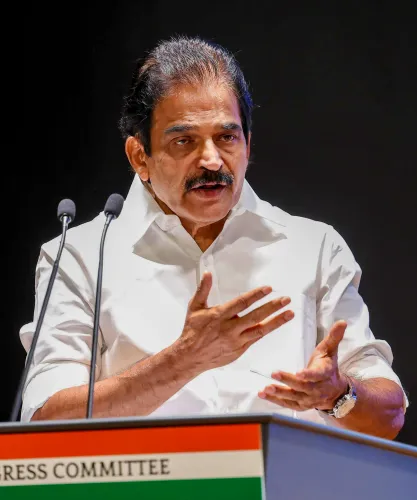
India-Gulf airfares soar: Congress MP Vivek Tankha urges Centre to act

Synopsis
With India-Gulf airfares outpacing employer travel allowances by more than half, Congress MP Vivek Tankha has taken the rare step of writing simultaneously to three Union ministers — Finance, External Affairs, and Civil Aviation — demanding temporary subsidies and more budget airline flights before the June-August peak season. Over one crore Indian workers and their families are caught in the squeeze.
Key Takeaways
Vivek Tankha (Rajya Sabha, Congress) wrote to Nirmala Sitharaman , S.
Jaishankar , and Kinjarapu Ram Mohan Naidu on 23 May 2025 over surging India-Gulf airfares.
Employer-provided Fixed Travel Allowances (FTA) of around AED 1,000 now cover less than half the cost of a ticket on India-Gulf routes.
More than one crore Indians live and work in Gulf countries, most from middle and lower-middle income backgrounds.
Tankha has demanded temporary fare subsidisation on Gulf routes during June–August 2025 and increased budget airline frequency.
The three ministries have not yet issued a formal response to the letter.
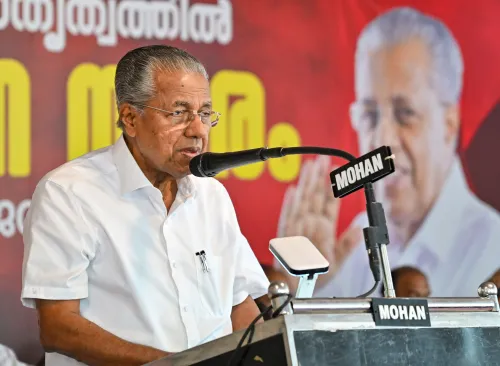
Rajya Sabha Congress MP Vivek Tankha has written to three Union ministers seeking immediate government intervention to rein in surging airfares on India-Gulf routes, warning that over one crore Indian expatriates and their families back home are bearing the brunt of ticket prices that have outpaced employer travel allowances. The letter, sent on Friday, 23 May 2025, was addressed to Finance Minister Nirmala Sitharaman, External Affairs Minister S. Jaishankar, and Civil Aviation Minister Kinjarapu Ram Mohan Naidu.
What Tankha Has Demanded
Tankha urged the Civil Aviation Ministry to review fare structures on India-UAE and other Gulf corridors during the peak summer travel window of June to August. He specifically called for temporary fare subsidisation and an increase in the frequency of budget airline services on Gulf routes to provide near-term relief to passengers.
The Scale of the Problem
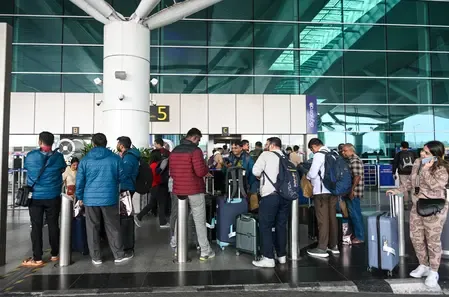
According to Tankha, airfares on India-Gulf sectors have climbed so steeply that the Fixed Travel Allowance (FTA) provided by Gulf employers — typically around AED 1,000 — no longer covers even half the cost of a return ticket. The senior Congress leader said the majority of Indian workers in the Gulf belong to middle and lower-middle income groups, and that many families are now being forced to postpone or cancel their annual summer visits entirely.
'Over one crore Indians live and work across the Gulf region. The vast majority of them are middle-class workers whose livelihoods sustain millions of families back home in India,' Tankha said.
The Human Cost
Tankha framed the issue as more than an economic grievance, describing the annual summer trip as 'not a luxury but a necessity' for migrant workers whose only opportunity to reunite with family comes once a year. 'The human cost of prolonged separation, of children growing up without a parent present and the quiet toll it takes, is equally significant,' he said.
Context and Background
The India-Gulf air corridor is one of the busiest in the world, driven by a diaspora of over one crore workers concentrated in the UAE, Saudi Arabia, Kuwait, Qatar, Bahrain, and Oman. Summer travel demand spikes sharply between June and August, when school holidays align with annual leave cycles, creating conditions that airlines have historically used to push fares higher. Critics argue that the concentration of routes among a small number of carriers limits competitive pressure. This is not the first time parliamentarians have raised the issue — similar concerns were voiced during the post-pandemic travel surge — but the combination of a weak rupee and elevated fuel costs has made the current season particularly acute, according to reports.
What Happens Next
The three ministries have not yet issued a formal response to Tankha's letter. Any corrective action would likely require coordination between the Directorate General of Civil Aviation (DGCA), bilateral air services agreements, and potentially the airlines themselves. Industry observers note that temporary fare caps or subsidies on international routes are administratively complex and have rarely been implemented in India's aviation history.
Point of View
External Affairs, and Civil Aviation signals that he sees this as a multi-ministry failure, not a narrow aviation policy gap. The structural problem is real: India-Gulf routes are dominated by a handful of carriers operating under bilateral agreements that cap competition, and summer demand spikes are entirely predictable. The Centre has had the data and the advance notice for years. Temporary subsidies are administratively messy and set awkward precedents, but the alternative — over one crore workers priced out of seeing their families — carries its own political and social cost that no ministry can afford to ignore ahead of an election cycle.
NationPress
24 Sept 2026
Frequently Asked Questions
Why are India-Gulf airfares rising so sharply in 2025?
Airfares on India-Gulf routes have surged due to a combination of peak summer demand, elevated fuel costs, a weaker rupee, and limited carrier competition on bilateral routes. The June-to-August window sees a sharp spike as school holidays and annual leave cycles coincide, giving airlines pricing power.
What has Vivek Tankha specifically asked the government to do?
Tankha has urged the Civil Aviation Ministry to review fare structures on India-UAE and other Gulf corridors, explore temporary fare subsidisation between June and August 2025, and increase the frequency of budget airline services on Gulf routes.
How does the airfare hike affect Indian workers in the Gulf?
Employer-provided Fixed Travel Allowances of around AED 1,000 now cover less than half the cost of a ticket, according to Tankha. This is forcing many middle and lower-middle income workers to postpone or cancel their only annual trip home to reunite with family.
Which ministers did Vivek Tankha write to?
Tankha addressed his letter to Finance Minister Nirmala Sitharaman, External Affairs Minister S. Jaishankar, and Civil Aviation Minister Kinjarapu Ram Mohan Naidu on 23 May 2025.
How many Indians live and work in Gulf countries?
According to Tankha's letter, over one crore Indians live and work across Gulf nations including the UAE, Saudi Arabia, Kuwait, Qatar, Bahrain, and Oman, with the majority belonging to middle and lower-middle income groups.