Delimitation Bill 2026: Congress MP Tewari warns of harm to border states
Synopsis
Congress MP Manish Tewari's warning cuts to the heart of India's most contentious federal debate: a delimitation exercise that could redraw political power away from border states toward Central India. His call to delink women's reservation from delimitation adds a second pressure point on a government already struggling to build consensus after the Bill's April failure.
Key Takeaways
Congress MP Manish Tewari on 9 August warned that the proposed delimitation exercise would harm states in North India , South India , and the Northeast .
Tewari argued the exercise would disproportionately benefit Central India at the expense of border states.
The Constitution (131st Amendment) Bill and Delimitation Bill, 2026 failed to pass the Lok Sabha during the Budget Session in April .
Tewari called for immediate implementation of women's reservation across the existing 543 Lok Sabha seats , without waiting for delimitation.
Southern states fear population-based seat redistribution will penalise them for successfully controlling population growth over decades.
The Centre maintains delimitation is needed to align constituencies with current population data ahead of the 2029 general elections .
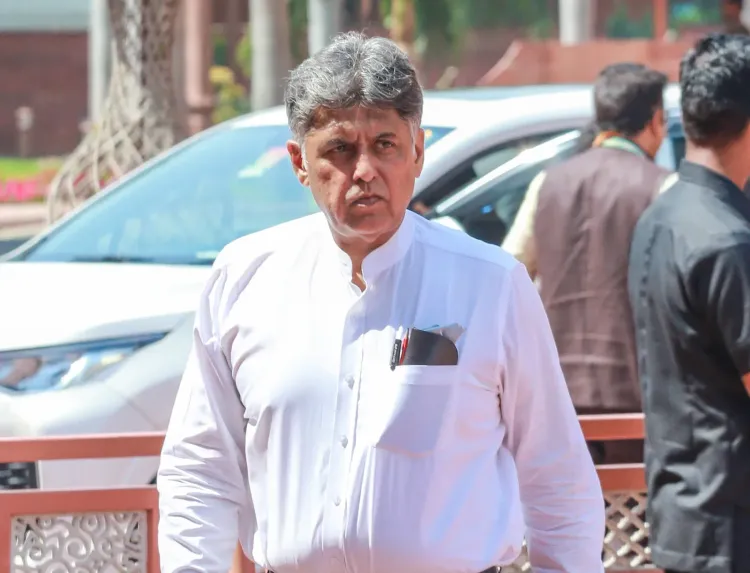
Congress MP Manish Tewari on Sunday, 9 August issued a sharp warning against the proposed delimitation exercise, arguing it would adversely affect states in North India, South India, and the Northeast — many of which share international borders — while disproportionately benefiting Central India. Tewari called for a serious review of the proposal before any legislative action is taken.
What Tewari Said
Speaking to reporters, Tewari said the concerns of border states in northern and northeastern India must be addressed before the delimitation process moves forward. He argued the exercise would tilt political representation in favour of the country's central regions at the expense of strategically sensitive frontier states.
'The basic thing is that when I had a debate in the Lok Sabha on the delimitation Bill in April, I had also said that this delimitation will cause harm to North India, South India and Northeast India. If anyone benefits from this delimitation, it will only benefit Central India,' Tewari said.
He added: 'For the states that are on the border, in North India or Northeast India, this is not in their interest, and that is why this point needs to be considered very seriously.'
The Legislative Background
The remarks come amid renewed political debate over the Constitution (131st Amendment) Bill and the Delimitation Bill, 2026. The proposed legislation seeks to amend provisions connected with the already-enacted Women's Reservation Act, 2023, and is aimed at expanding the strength of the Lok Sabha and revising seat allocation ahead of the 2029 general elections. Notably, the Bill failed to secure passage in the Lok Sabha during the Budget Session in April, prompting the Centre to seek fresh political consensus.
Congress Position on Women's Reservation
Tewari also took direct aim at the government's decision to link women's reservation to the delimitation process. He argued that the Women's Reservation Act, already passed by Parliament, should be implemented immediately using the existing 543 Lok Sabha seats rather than waiting for a fresh delimitation exercise to conclude.
'The government is talking about the women's reservation, then why not implement it in the current number of seats? Why not give one-third of the reservation to women from these 543 seats? It was the Congress party which brought in the women's reservation Bill, and if they truly want to implement it, then do it with these 543 seats,' he said.
Broader Concerns Over Federal Equity
The delimitation debate has exposed a deeper fault line in Indian federalism. Southern states and other regions that successfully implemented population-control measures over decades fear that a population-based seat redistribution would reward states with faster population growth — effectively penalising demographic responsibility. Critics argue this could see progressive states lose relative representation in Parliament even as their contribution to national economic output remains disproportionately high.
The Centre maintains that the delimitation exercise is intended to modernise democratic representation and align parliamentary constituencies with the country's current population distribution. With the 2029 general elections on the horizon, the political stakes of any seat reallocation are significant, and the search for consensus is expected to intensify in the months ahead.
Point of View
Cornering the BJP on both fronts. But the deeper issue his remarks surface is one that mainstream coverage underplays: delimitation is not merely a technical exercise but a potential rebalancing of India's political centre of gravity, with lasting consequences for border-state security representation and southern states' fiscal leverage. The government's insistence on tying women's reservation to delimitation has given the opposition a readymade argument that the ruling side is using a rights-expansion measure as cover for a power-redistribution exercise. Until the Centre publishes a transparent seat-allocation model, that charge will be difficult to rebut.
NationPress
23 Sept 2026
Frequently Asked Questions
What is the Delimitation Bill 2026 and why is it controversial?
The Delimitation Bill, 2026, along with the Constitution (131st Amendment) Bill, seeks to expand the Lok Sabha's strength and revise parliamentary seat allocation ahead of the 2029 general elections. It is controversial because states in South India, North India, and the Northeast fear that a population-based redistribution will reduce their relative representation, particularly penalising states that successfully controlled population growth.
What specifically did Manish Tewari say about the delimitation exercise?
Tewari said the delimitation exercise would cause harm to North India, South India, and Northeast India, and that the only beneficiary would be Central India. He argued that border states' concerns must be taken seriously before any decision is made, and called for the Women's Reservation Act to be implemented immediately on the existing 543 Lok Sabha seats.
Why did the Delimitation Bill fail in April 2025?
The Bill failed to secure passage in the Lok Sabha during the Budget Session in April, reportedly due to insufficient political consensus. The Centre is now seeking broader agreement across party lines before reintroducing the legislation.
Why are southern states particularly opposed to delimitation?
Southern states argue that a population-based seat redistribution would disadvantage them because they successfully implemented population-control measures over decades. States with faster population growth could gain more parliamentary seats, while states that stabilised their populations could see their relative representation in the Lok Sabha decline.
What is Congress's position on women's reservation and delimitation?
Congress argues that the Women's Reservation Act, already passed by Parliament, should be implemented immediately using the existing 543 Lok Sabha seats, without being made contingent on a new delimitation exercise. Tewari stressed that it was the Congress party that originally introduced the women's reservation legislation.