Telangana TGCSB busts ₹4.70 crore WhatsApp Boss fraud, 2 arrested
Synopsis
A cybercriminal impersonated a company's Managing Director on WhatsApp and tricked an employee into transferring ₹4.70 crore. Telangana's TGCSB has now arrested two mule account suppliers whose bank accounts were used to launder the funds — and the trail stretches across Maharashtra, Rajasthan, and Tamil Nadu.
Key Takeaways
The Telangana Cyber Security Bureau (TGCSB) cracked a ₹4.70 crore WhatsApp Boss fraud in Hyderabad .
A fraudster impersonated a company's Managing Director via a fake WhatsApp profile to authorise fund transfers.
Two accused — Dosapati Krishna Sai and Mandavally Shiva Nagaraju , both from Sathupally, Khammam — were arrested for supplying mule bank accounts.
The accused received approximately ₹4 lakh in commission; ₹1.80 crore of the fraud proceeds passed through Nagaraju's account.
Suspicious transactions of over ₹2.49 crore in the same account are linked to cybercrime complaints in Maharashtra , Rajasthan , and Tamil Nadu .
Both accused have been remanded to judicial custody ; remaining accused are still at large.
The Telangana Cyber Security Bureau (TGCSB) has dismantled a ₹4.70 crore WhatsApp Boss fraud in Hyderabad, arresting two mule account holders who supplied bank accounts to cybercriminals impersonating a company's Managing Director. The arrests mark a significant breakthrough in one of Telangana's larger corporate impersonation fraud cases this year.
How the Fraud Unfolded
An unidentified fraudster created a WhatsApp profile using the name and photograph of the victim company's Managing Director, then sent messages directing an employee to transfer funds. Believing the instructions to be genuine, the complainant transferred a total of ₹4.70 crore to bank accounts specified by the fraudster. The scheme exploits a well-documented vulnerability: WhatsApp profiles carry no verification mechanism, making impersonation straightforward.
Who Was Arrested
Technical analysis and bank account verification led investigators to Dosapati Krishna Sai, a resident of Sathupally, Khammam district, and Mandavally Shiva Nagaraju, a resident of Kothapet, Hyderabad, originally from Sathupally, Khammam district. They are listed as accused numbers five and six in the case, indicating that the broader network remains active.
Role of Mule Accounts
According to the TGCSB, both accused knowingly procured and supplied active current bank accounts to cybercriminals in exchange for a commission. Together, they received approximately ₹4 lakh in commission, which they shared between themselves. Of the total defrauded amount, ₹1.80 crore was credited directly to Nagaraju's account, which he then routed to the fraudsters through co-accused Krishna Sai.
A deeper audit of the account revealed suspicious credit transactions totalling more than ₹2.49 crore. The account was also found to be linked to multiple cybercrime complaints registered across Maharashtra, Rajasthan, and Tamil Nadu, suggesting the mule network was operational well beyond Telangana.
Legal Action and Charges
The case was registered under Sections 318(4) and 319(2) of the Bharatiya Nyaya Sanhita (BNS), along with Section 66D of the Information Technology (IT) Act. Both accused were produced before a court and remanded to judicial custody. The TGCSB said further investigation is underway to identify and apprehend the remaining absconding accused and to trace and recover the remaining proceeds of crime.
Safety Advisory from TGCSB
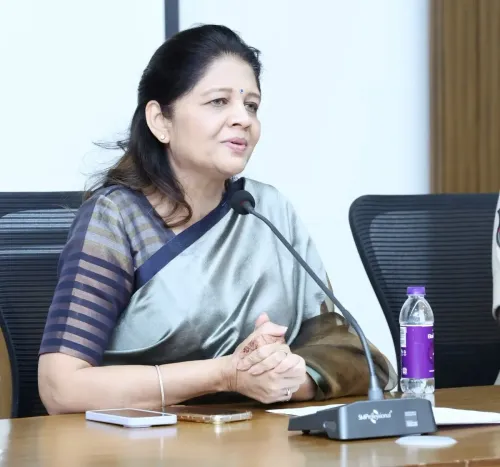
TGCSB Director Shikha Goel urged the public not to trust a WhatsApp profile solely because it displays the name or photograph of a known person, noting that such details can be easily copied and misused. She cautioned that any sudden request for urgent or confidential fund transfers — particularly to a new bank account — via WhatsApp should be treated with suspicion, and advised that financial transactions should never be authorised on the basis of WhatsApp messages alone.
With the investigation still active and several accused still at large, further arrests in this case are expected in the coming days.
Point of View
Low-overhead fraud model that is outpacing corporate awareness. What this case reveals is the infrastructure beneath: a network of mule account suppliers operating across state lines, with a single account in Hyderabad linked to complaints in three other states. The ₹4 lakh commission these two accused earned to facilitate a ₹4.70 crore fraud underscores how cheaply the criminal ecosystem can be staffed. The real accountability question is for India's banking system: how are current accounts being opened and operated with such volume and impunity before a fraud complaint triggers scrutiny?
NationPress
7 Oct 2026
Frequently Asked Questions
What is the WhatsApp Boss fraud arrested in Telangana?
It is a cyber fraud in which an unidentified criminal created a fake WhatsApp profile using a company Managing Director's name and photograph, then instructed an employee to transfer ₹4.70 crore to fraudulent bank accounts. The Telangana Cyber Security Bureau (TGCSB) arrested two mule account suppliers linked to the case.
Who were arrested in the Telangana WhatsApp fraud case?
Dosapati Krishna Sai of Sathupally, Khammam district, and Mandavally Shiva Nagaraju of Kothapet, Hyderabad — originally also from Sathupally — were arrested. They are accused numbers five and six, indicating more suspects remain at large.
What is a mule account and why does it matter in this case?
A mule account is a bank account knowingly provided by an individual to cybercriminals to receive and route stolen funds, in exchange for a commission. In this case, the two accused supplied current accounts that were used to launder ₹4.70 crore, earning roughly ₹4 lakh in commission.
What charges have been filed in the Telangana WhatsApp fraud case?
The case was registered under Sections 318(4) and 319(2) of the Bharatiya Nyaya Sanhita (BNS) and Section 66D of the Information Technology (IT) Act. Both arrested accused have been remanded to judicial custody.
How can people protect themselves from WhatsApp impersonation fraud?
TGCSB Director Shikha Goel advised the public never to trust a WhatsApp profile solely because it shows a known person's name or photo, as these can be easily copied. Any urgent request for fund transfers via WhatsApp — especially to a new account — should be independently verified through a direct phone call before any money is moved.