Tripura CM Manik Saha cuts convoy by 50% after Modi's fuel conservation call
Synopsis
Tripura's CM and three cabinet ministers have put numbers to PM Modi's fuel conservation call — halving convoys, ditching escort vehicles, and cycling to work. It is one of the most concrete state-level responses to a PM public appeal in recent memory, and it arrives just as Middle East tensions keep global energy markets on edge.
Key Takeaways
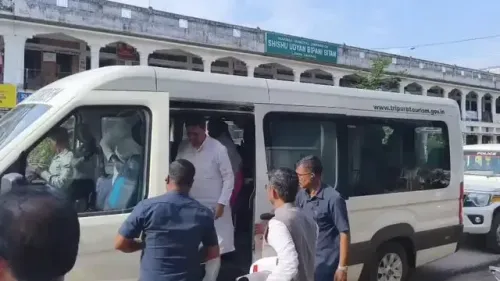
Tripura CM Manik Saha reduced his security convoy from 8 vehicles to 4 effective Thursday, 14 May .
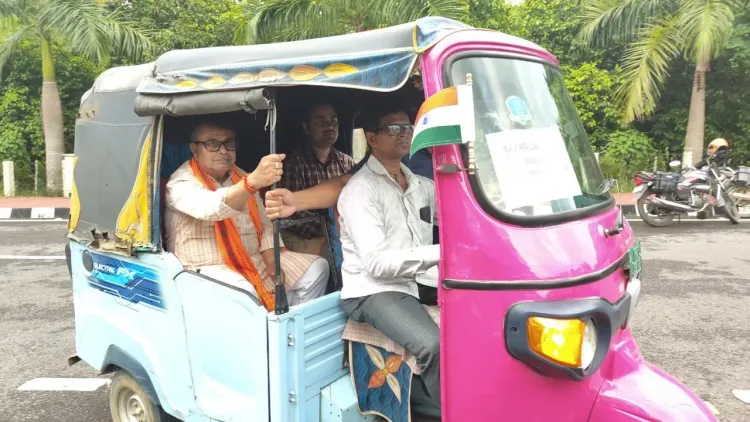
Minister Ratan Lal Nath commuted to the Civil Secretariat by bicycle and auto-rickshaw, dropping his escort vehicle entirely.
Minister Sushanta Chowdhury cut his escort fleet from 4 to 2 vehicles and chaired a meeting to secure uninterrupted fuel supply across Tripura.
Minister Animesh Debbarma curtailed his convoy and directed all departments under him to follow suit.
The moves follow PM Narendra Modi 's appeal in Hyderabad last week for fuel conservation, public transport use, and reduced gold purchases amid the West Asia crisis.
Multiple state governments have announced similar austerity measures on security and foreign travel since Modi's remarks.
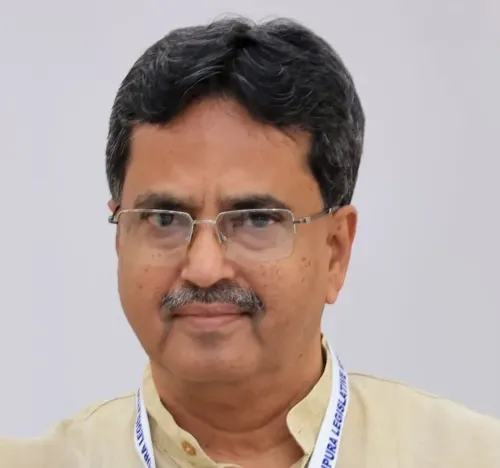
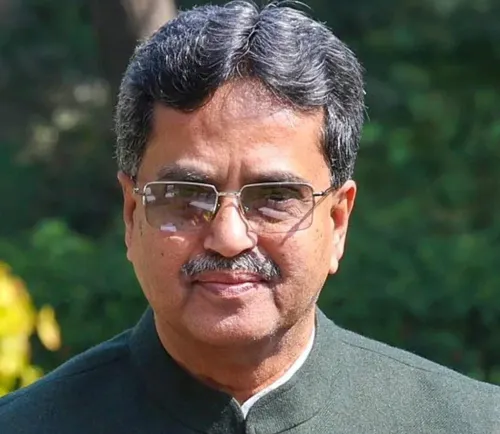
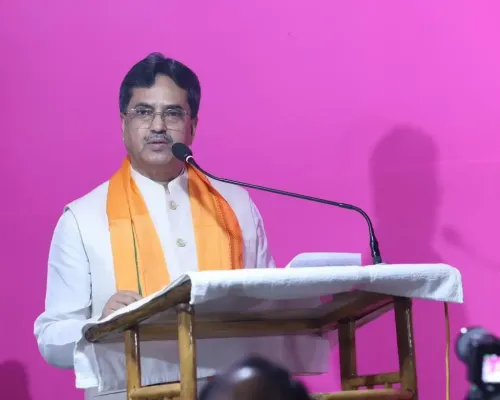
Tripura Chief Minister Manik Saha slashed his official security convoy by 50 per cent from Thursday, 14 May, responding to Prime Minister Narendra Modi's appeal for fuel conservation and greater use of public transport. Several state cabinet ministers have followed suit, signalling a coordinated austerity push across the ruling establishment in Agartala.
Chief Minister's Convoy Halved
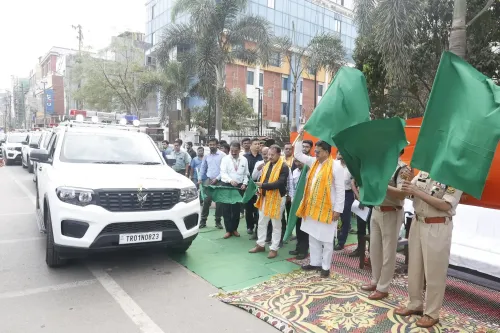
A senior official from the Chief Minister's Office confirmed that the convoy, which previously comprised at least eight vehicles including the CM's official car, has been trimmed to four vehicles effective Thursday. Saha had flagged the move a day earlier, telling reporters he had always preferred leaner security arrangements but had faced resistance from police officials on safety grounds.
'If there is no security-related problem, then we have no objection to reducing the number of vehicles, and it should be done as well. I always wanted to use fewer vehicles and security personnel, but the police officials were not allowing it,' Saha said. He added that he would consult Director General of Police Anurag to ensure security considerations were not compromised.
Ministers Lead by Example
Power, Agriculture and Parliamentary Affairs Minister Ratan Lal Nath — the second-ranking member of the state cabinet — took arguably the most visible step, commuting to the Civil Secretariat in the Capital Complex on the outskirts of Agartala by bicycle and auto-rickshaw on Wednesday. In a Facebook post, Nath said he had stopped using his escort vehicle entirely and would rely on a bicycle for short-distance travel and public outreach 'as far as possible.'
Nath framed the gesture in broader terms, saying nation-building is shaped 'not only by grand announcements but also by simple personal commitments.' He described cycling in the morning breeze as a nostalgic experience that also kept him connected to ordinary citizens, and appealed to the public to become more conscious of saving fuel and protecting nature.
Food, Civil Supplies and Transport Minister Sushanta Chowdhury announced through a social media post on Thursday that he had reduced his escort vehicles from four to two. Separately, Chowdhury chaired a high-level meeting at the Civil Secretariat to ensure uninterrupted supply of petrol, diesel, and LPG cylinders across the state amid concerns stemming from the ongoing situation in the Middle East. 'All necessary measures are being taken to prevent any disruption in the availability of essential fuel supplies,' he said.
Forest, Environment and Climate Change Minister Animesh Debbarma also posted on social media that he had curtailed his official convoy and directed all departments under his charge to adopt similar measures.
Modi's Appeal: The Trigger
The chain of announcements follows Prime Minister Modi's remarks during his visit to Hyderabad last week, where he urged citizens to reduce fuel dependence, use public transport including Metro services and carpooling, adopt electric vehicles, cut gold purchases, and prioritise domestic travel over foreign trips. The appeal came against the backdrop of an escalating crisis in West Asia that has stoked global energy market concerns.
Tripura is not alone — chief ministers and ministers from multiple states have announced expenditure cuts spanning security arrangements and foreign travel in the days since Modi's remarks.
What This Signals
The moves carry both symbolic and practical weight. Symbolically, they project alignment with the Centre's frugality messaging ahead of what could be a prolonged period of elevated global energy prices. Practically, reduced convoy sizes lower daily fuel consumption by government fleets — though the aggregate saving at the state level is modest compared with systemic fuel subsidies. Notably, this is one of the rare instances where state-level ministers have responded to a PM's public appeal with measurable, named commitments rather than general statements of support.
How long the convoy reductions are maintained — and whether they outlast the immediate media cycle — will be the real test of institutional intent.
Point of View
But the substance is thin. Trimming a CM's convoy from eight to four vehicles saves a few litres of fuel per day — negligible against Tripura's total petroleum consumption. The real signal here is political: BJP-governed states are racing to demonstrate fealty to a PM messaging pivot that links personal austerity with national resilience. What is missing is any structural commitment — a fleet electrification timeline, a public transport investment announcement, or a measurable state-level fuel reduction target. Without those, this risks being a one-week photo opportunity rather than a policy shift.
NationPress
26 Sept 2026
Frequently Asked Questions
Why did Tripura CM Manik Saha reduce his security convoy?
Saha reduced his convoy from eight to four vehicles on 14 May in direct response to PM Narendra Modi's appeal for fuel conservation and greater use of public transport. He had earlier told reporters he personally favoured leaner security arrangements, subject to no compromise on safety.
Which Tripura ministers have cut their convoys or escort vehicles?
At least three ministers have announced reductions: Ratan Lal Nath dropped his escort vehicle and began cycling to work; Sushanta Chowdhury cut his escort fleet from four to two vehicles; and Animesh Debbarma curtailed his convoy and directed his departments to do the same.
What did PM Modi say to trigger these changes?
During a visit to Hyderabad last week, Modi urged citizens to reduce fuel dependence, use public transport including Metro and carpooling, adopt electric vehicles, limit gold purchases, and prefer domestic travel over foreign trips. The appeal came amid escalating tensions in West Asia affecting global energy markets.
Is Tripura the only state responding to Modi's fuel conservation appeal?
No. Chief ministers and ministers from multiple states have announced expenditure cuts — including on security convoys and foreign travel — since Modi's remarks. Tripura's response is among the more detailed and publicly quantified.
What steps are being taken to ensure fuel supply in Tripura?
Minister Sushanta Chowdhury chaired a high-level meeting at the Civil Secretariat on Thursday to ensure uninterrupted supply and distribution of petrol, diesel, and LPG cylinders across the state, with officials stating that all necessary measures are in place to prevent disruption.