Tripura CM Manik Saha urges Centre to lift EAP borrowing ceiling for Northeast
Synopsis
Tripura's GSDP has nearly doubled and capital spending has grown five-fold — yet the state says a fixed EAP borrowing ceiling imposed since 2023-24 is capping its infrastructure ambitions. Chief Minister Manik Saha's demand to replace rigid caps with performance-based limits could reshape how the Centre funds development across the entire Northeast.
Key Takeaways
Tripura CM Manik Saha urged the Centre on 19 June to remove the EAP borrowing ceiling imposed since 2023-24 for Northeastern states.
Tripura's GSDP has nearly doubled from ₹55,984 crore in 2019-20 to ₹1,00,795 crore in 2025-26.
Annual capital expenditure surged from ₹2,079 crore in 2021-22 to a record ₹10,478 crore in 2025-26.
The effective Centre-State funding ratio on EAPs is closer to 60:40 due to land, forest, and utility costs borne by states, against the stated 80:20 structure.
Tripura is currently implementing eight major EAPs across infrastructure, tourism, climate resilience, and Scheduled Tribe development.
Saha also sought enhanced allocations under the 'Pride of Hills' initiative and raised concerns over discontinuation of the Revenue Gap Grant .
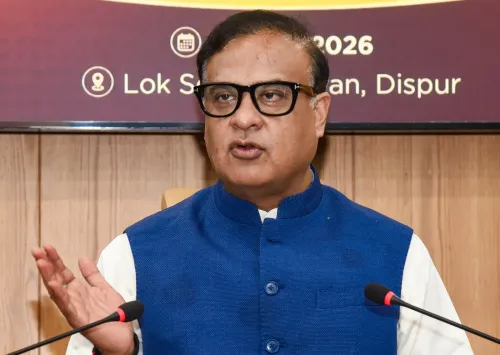
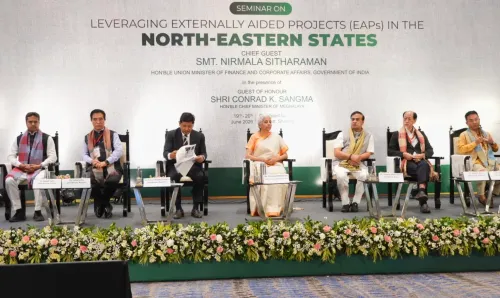
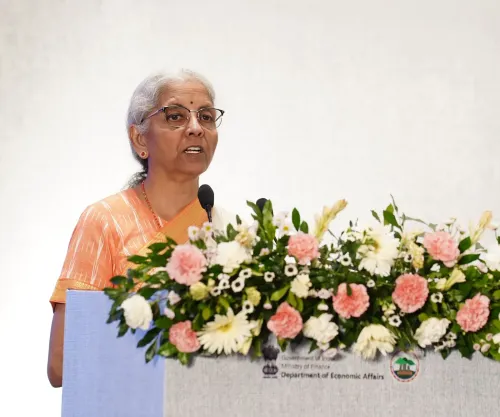
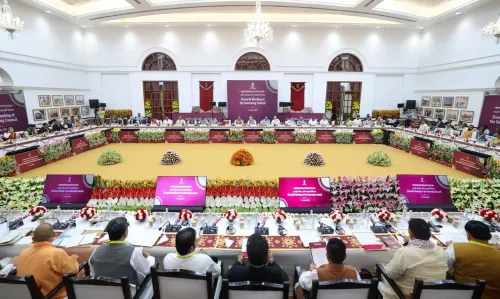
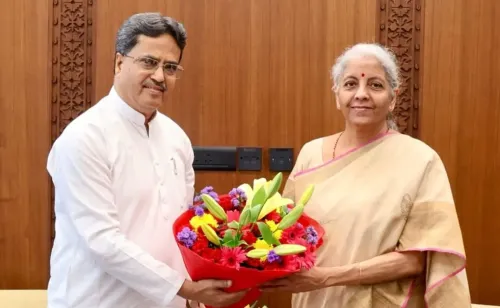
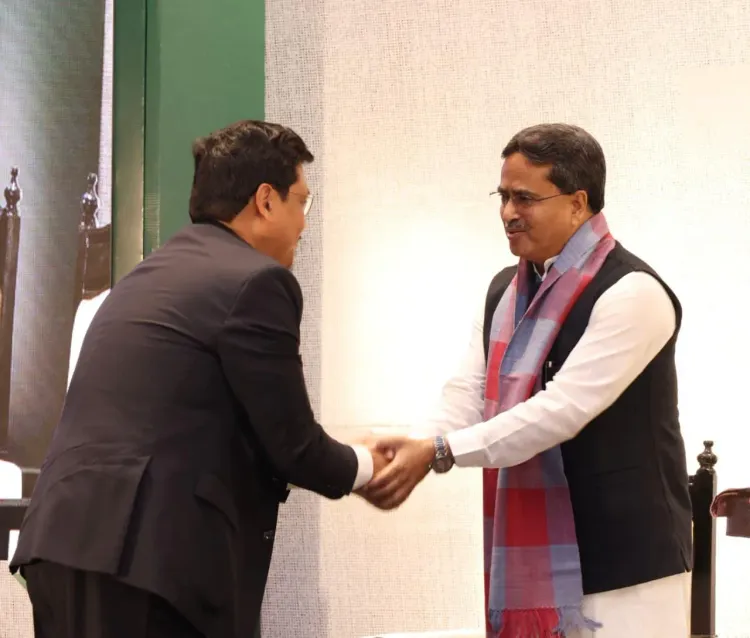
Tripura Chief Minister Manik Saha on Friday, 19 June called on the Central Government to remove the ceiling on Externally Aided Project (EAP) borrowings for Northeastern states, arguing that fixed caps are throttling infrastructure investment and slowing economic growth across the region. Saha made the appeal at a seminar titled 'Leveraging Externally Aided Projects in the North Eastern States' held in Shillong, in the presence of Union Finance Minister Nirmala Sitharaman.
Tripura's EAP Track Record
Saha positioned Tripura as one of the most effective utilisers of externally aided funding in the country. Over the past two decades, the state has partnered with international development agencies including the World Bank, the Asian Development Bank (ADB), Indo-German Development Cooperation, and the Japan International Cooperation Agency (JICA). These collaborations, he noted, have advanced socio-economic progress while simultaneously building administrative and institutional capacity.
Tripura is currently executing eight major EAPs spanning industrial infrastructure, urban development, tourism, climate resilience, and the socio-economic advancement of Scheduled Tribes. The state's strategic partnership with the ADB — particularly through the North East Economic Corridor Study — has mapped significant investment potential across road connectivity, power, healthcare, and urban development.
Economic Growth and Capital Spending
Saha cited Tripura's economic trajectory to underscore the state's capacity to absorb larger development funds. The state's Gross State Domestic Product (GSDP) has nearly doubled, rising from ₹55,984 crore in 2019-20 to ₹1,00,795 crore in 2025-26. Annual capital expenditure has grown even more sharply — from ₹2,079 crore in 2021-22 to a record ₹10,478 crore in 2025-26, a nearly five-fold increase that officials argue demonstrates strong fund absorption efficiency.
The Funding Gap Problem
The Chief Minister flagged a structural concern with how EAPs are actually financed on the ground. While projects are formally structured on an 80:20 Centre-State funding ratio, states are separately required to bear costs related to land acquisition, forest land diversion, and utility shifting. These additional outlays, Saha said, effectively push the real state contribution closer to a 60:40 split — a significant burden for a smaller Northeastern state.
He urged the Centre to scrap the EAP ceiling that has been in place since 2023-24 and replace it with a dynamic borrowing framework based on a state's administrative capability, project implementation capacity, and fund absorption efficiency rather than rigid fixed caps.
Other Demands: Revenue Gap Grant and 'Pride of Hills'
Saha also raised concerns over the discontinuation of the Revenue Gap Grant following recommendations of the 16th Finance Commission. While acknowledging Central support through the 'Pride of Hills' initiative, he requested enhanced allocations under the scheme to adequately cover the state's committed expenditure requirements.
He expressed gratitude to Prime Minister Narendra Modi and Finance Minister Sitharaman for sanctioning several externally aided projects that have contributed to Tripura's development, while reiterating the state's commitment to infrastructure building, employment generation, and industrial growth with continued Central support.
Broader Context for the Northeast
The seminar brought together senior policymakers, financial experts, and government representatives from across the Northeastern states, focusing on strategies to maximise EAP utilisation region-wide. Saha's push to link borrowing limits to performance metrics rather than fixed caps aligns with the broader thrust of the Government of India's Act East Policy, which prioritises accelerated development of the Northeastern frontier. Notably, this is not the first time Northeastern chief ministers have collectively pressed the Centre on EAP constraints — the demand has gained fresh urgency as the region's infrastructure ambitions outpace current funding ceilings.
Point of View
It means the Centre's 80:20 headline is misleading, and smaller states are quietly cross-subsidising Union infrastructure priorities. The 16th Finance Commission's move to discontinue the Revenue Gap Grant adds further fiscal pressure. Without a structural fix to both the EAP ceiling and the grant architecture, Tripura's impressive GSDP growth could stall precisely when its investment pipeline is at its most ambitious.
NationPress
18 Sept 2026
Frequently Asked Questions
What is the EAP borrowing ceiling that Tripura wants removed?
The EAP borrowing ceiling is a cap imposed by the Centre since 2023-24 that limits how much Northeastern states can borrow under Externally Aided Projects. Tripura CM Manik Saha has urged the Centre to replace this fixed cap with a dynamic limit based on each state's administrative capability and fund absorption efficiency.
Why does Tripura say the 80:20 EAP funding ratio is misleading?
While EAPs are officially structured on an 80:20 Centre-State funding pattern, states must separately bear costs for land acquisition, forest land diversion, and utility shifting. These additional outlays push the effective state contribution closer to 40%, making the real ratio approximately 60:40 according to Chief Minister Saha.
How much has Tripura's economy grown in recent years?
Tripura's GSDP has nearly doubled from ₹55,984 crore in 2019-20 to ₹1,00,795 crore in 2025-26. Annual capital expenditure has grown nearly five-fold, from ₹2,079 crore in 2021-22 to a record ₹10,478 crore in 2025-26.
Which international agencies fund Tripura's externally aided projects?
Tripura has partnered with the World Bank, the Asian Development Bank (ADB), Indo-German Development Cooperation, and the Japan International Cooperation Agency (JICA) over the past two decades. The state is currently implementing eight major EAPs across infrastructure, urban development, tourism, climate resilience, and Scheduled Tribe development.
What is the 'Pride of Hills' initiative and why did Saha raise it?
'Pride of Hills' is a Government of India scheme that provides support to hill states. Saha requested enhanced allocations under the initiative to meet Tripura's committed expenditure requirements, while also raising concerns about the discontinuation of the Revenue Gap Grant following the 16th Finance Commission's recommendations.