Tripura agarwood hub: ₹2,000 crore sector targets 15,000 farming families
Synopsis
Tripura is making a calculated bet on agarwood — a critically endangered, globally coveted aromatic tree — to diversify beyond rubber and bamboo. With North Tripura holding 90-95% of the state's output, 1.13 crore trees, and an ₹80-crore processing cluster already underway, the sector could generate ₹2,000 crore annually and reshape livelihoods for 15,000 farming families within four years.
Key Takeaways
North Tripura district accounts for 90 to 95 per cent of Tripura's agarwood output and holds approximately 1.13 crore agar trees.
Around 15,000 families in North Tripura are engaged in agarwood cultivation and processing.
DoNER Minister Jyotiraditya Scindia has laid the foundation stone for an ₹80-crore Agarwood Cluster Processing Centre at Uttar Fulbari village .
The sector is projected to generate an annual turnover of ₹2,000 crore and boost production capacity by 50 per cent within 3 to 4 years .
Nearly 90 per cent of India's estimated 150 million agarwood trees are concentrated in the Northeast, with Tripura as a leading producer.
Tripura is already India's second-largest natural rubber producer , generating 1,02,989 tonnes worth ₹1,620 crore annually.
Tripura is steadily positioning itself as a national hub for agarwood cultivation and processing, with officials projecting an annual sector turnover of ₹2,000 crore and a 50 per cent boost in production capacity within the next three to four years. The northeastern state, already recognised for natural rubber and bamboo, is now banking on agarwood — one of the world's most prized aromatic commodities — to diversify its economy and absorb thousands of rural livelihoods.
High-Level Visit to North Tripura
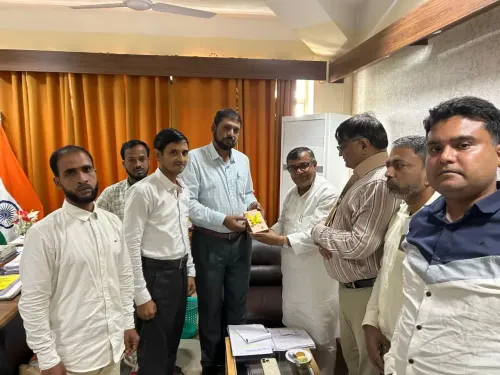
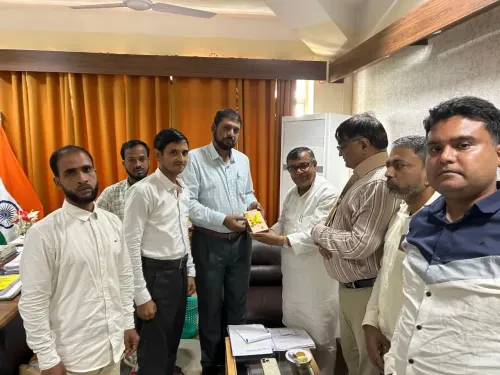
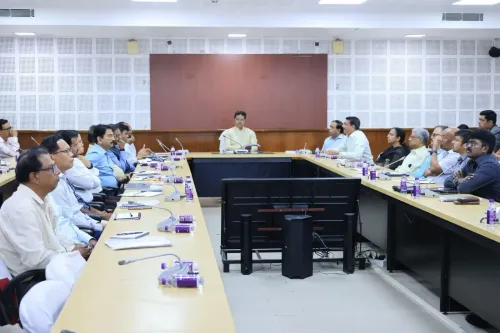
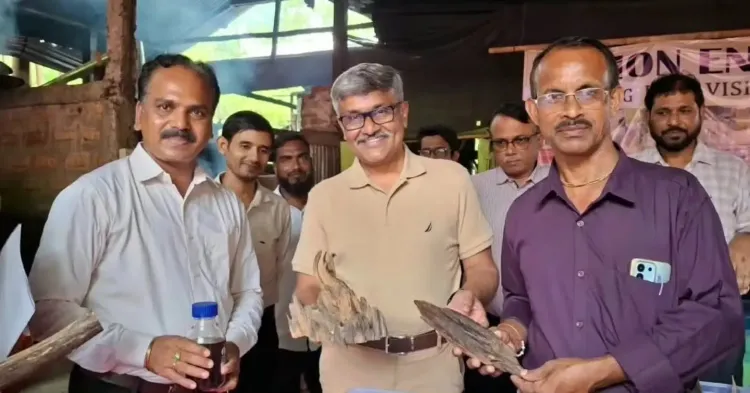
Union Ministry of Development of North Eastern Region (DoNER) Secretary Srinivas Katikithala visited the Uttar Fulbari agarwood village, plantation and processing unit in North Tripura district on 18 September 2026. He urged growers and processing unit workers to scale up operations both for personal prosperity and broader state economic growth.
The Secretary was accompanied by DoNER Joint Secretary Angshuman Dey, North Tripura District Magistrate Chandni Chandran, and agarwood growers during the visit, according to officials of the state's Industry and Commerce Department.
Why North Tripura Dominates the Sector
North Tripura district, which shares inter-state borders with Assam and Mizoram, accounts for an estimated 90 to 95 per cent of agarwood industry output within Tripura, making it the state's single largest producer. The district hosts approximately 1.13 crore agar trees — the highest concentration in the state — with Kadamtala block identified as a particularly significant production zone. Its soil composition and climatic conditions are considered especially well suited to the critically endangered agar tree.
Around 15,000 families across North Tripura are currently engaged in agarwood cultivation and processing. Officials note that the crop demands low management input, is not site-specific, and adapts readily to intercropping — characteristics that could make it a preferred cash crop for smallholder farmers in the region.
₹80-Crore Cluster Centre and the Policy Framework
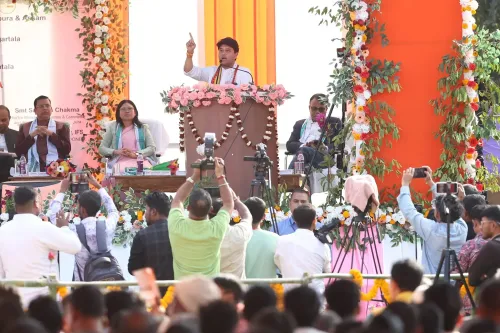
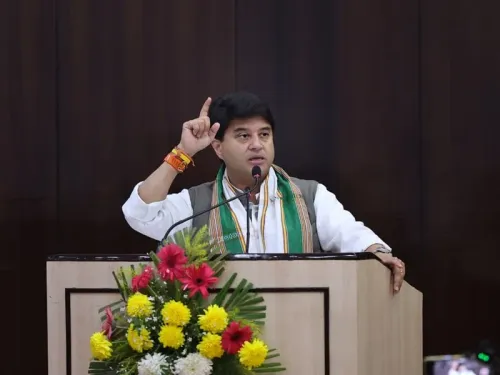
DoNER Minister Jyotiraditya Scindia earlier this year laid the foundation stone for an ₹80-crore Agarwood Cluster Processing Centre at Uttar Fulbari village in North Tripura. The minister linked the initiative to Prime Minister Narendra Modi's 'Vocal for Local' and 'One District One Product' (ODOP) frameworks, describing it as an effort to promote local industries at a global scale.
Backing the infrastructure push, the state government has already formulated a dedicated agarwood policy covering cultivation, sustainable harvesting, processing, transit, and trade. The policy also prioritises ease of doing business for agarwood-based industries and aims to create structured market linkages for growers.
Notably, nearly 90 per cent of India's estimated 150 million agarwood trees are found in the Northeast, with Tripura accounting for a commanding share — underscoring the region's strategic importance to the national industry.
Tripura's Wider Forestry Economy
Agarwood development comes against a backdrop of an already diversified forestry sector. Natural rubber is cultivated across 97,171.93 hectares in Tripura; the state is the second-largest rubber producer in India after Kerala, generating 1,02,989 tonnes annually, valued at approximately ₹1,620 crore. Additionally, 44 per cent of the state's geographical area falls under bamboo coverage, and the government is exploring high-value bamboo applications including renewable energy and bio-ethanol production.
What Comes Next
With the ₹80-crore processing cluster underway and direct access to global agarwood markets projected within the next three to four years, Tripura's ambition is to convert its natural endowment into a structured export value chain. The scale of that ambition — ₹2,000 crore in annual turnover — would represent a significant leap for a state whose total forestry economy is still maturing, and will depend on how quickly processing infrastructure, market linkages, and farmer capacity can be scaled simultaneously.
Point of View
Yet global market penetration has historically been limited by fragmented processing and weak market linkages, gaps the ₹80-crore cluster centre is explicitly designed to address. The ₹2,000-crore turnover target is ambitious relative to the current base, and its credibility will hinge on how quickly the processing infrastructure absorbs the 15,000 families already in the supply chain rather than creating parallel capacity that bypasses smallholders. The DoNER visit signals central government attention, but sustained follow-through — on market access, certification standards, and fair pricing — is what will determine whether Tripura becomes a genuine global agarwood source or another well-funded regional commodity ambition that stalls at scale.
NationPress
18 Sept 2026
Frequently Asked Questions
Why is Tripura emerging as an agarwood hub?
Tripura, particularly North Tripura district, has the country's highest concentration of agar trees — approximately 1.13 crore — along with soil and climatic conditions ideal for cultivation. North Tripura alone contributes 90 to 95 per cent of the state's agarwood output, making it the natural centre of India's growing agarwood industry.
What is the ₹80-crore Agarwood Cluster Processing Centre?
It is a government-backed processing facility being set up at Uttar Fulbari village in North Tripura district, with an outlay of ₹80 crore. DoNER Minister Jyotiraditya Scindia laid its foundation stone earlier this year; the centre is expected to boost Tripura's agarwood production capacity by 50 per cent and enable direct access to global markets within three to four years.
How many families depend on agarwood in Tripura?
Around 15,000 families across North Tripura district are currently engaged in agarwood cultivation and processing. The crop's low management requirement and adaptability to intercropping make it an attractive livelihood option for smallholder farmers in the region.
What is Tripura's agarwood policy?
The state government has formulated a dedicated agarwood policy covering sustainable cultivation, harvesting, processing, transit, and trade. The policy aims to encourage plantation expansion, ensure ease of doing business for agarwood-based industries, and create structured market linkages for growers.
How does agarwood fit into Tripura's broader forestry economy?
Tripura already has a strong forestry base: it is India's second-largest natural rubber producer after Kerala, generating over 1,02,989 tonnes annually worth ₹1,620 crore, and 44 per cent of its land is under bamboo coverage. Agarwood is positioned as the next high-value crop in this diversified portfolio, with a projected annual sector turnover of ₹2,000 crore.