Tripura ordinance to repeal archaic laws in ease of doing business push
Synopsis
Tripura is set to leapfrog its own reform record — the state already climbed from 29th to the top of the national reform rankings, and now a December Cabinet proposal and subsequent ordinance aim to repeal or amend over a dozen more archaic laws, covering everything from agriculture markets to fire services, in one of the Northeast's most ambitious regulatory overhauls.
Key Takeaways
Tripura will promulgate an ordinance to amend and repeal archaic laws after Cabinet approval expected in the second week of December 2026 .
Second-phase amendments target 7 key Acts including the Tripura Agricultural Produce Market Act , Municipal Act , and VAT Act ; 4 Acts are proposed for full repeal.
In the first phase, the state had already repealed 6 Acts and amended 4 others .
Tripura improved its national reform ranking from 29th position to 1st , according to Industries Department Secretary Kiran Gitte .
Reforms have drawn 41 educational institutions to the state, including in medicine, pharmacy, and nursing.
DPIIT Director Rakesh Kumar Prajapati cited mobile phone exports rising from ₹1,500 crore to ₹2 lakh crore in 2024–25 as evidence of what business-friendly policy can achieve.
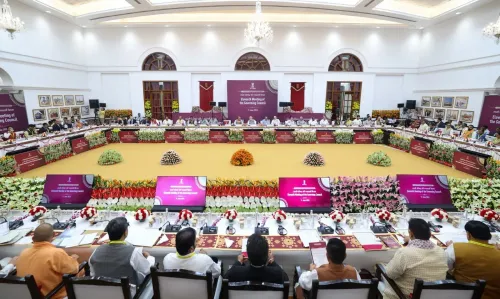
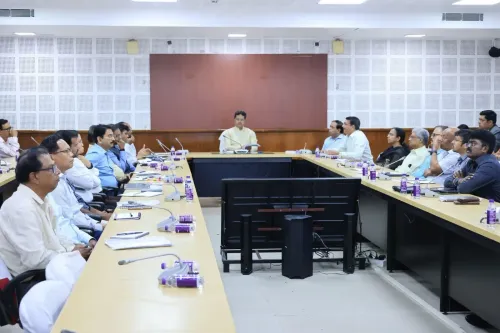
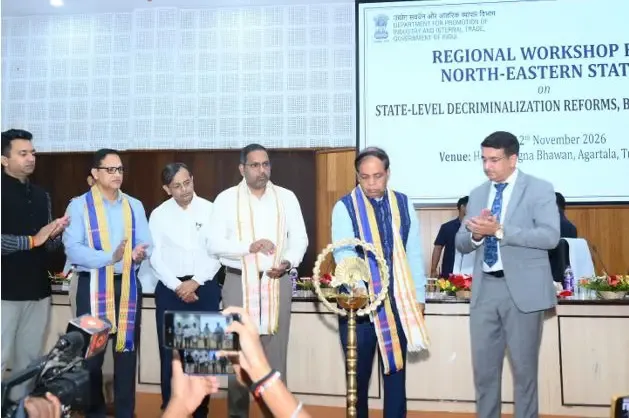
The Tripura government is set to promulgate an ordinance to amend and repeal several archaic laws as part of a broader drive to promote decriminalisation and improve the ease of doing business in the state. The move was announced on Thursday, 12 November 2026, at the inaugural session of a regional workshop on decriminalisation reforms for Northeastern states held in Agartala.
What the Ordinance Covers
Industries Department Secretary Kiran Gitte said a proposal to amend and repeal several Acts would be placed before the state Cabinet in the second week of December. Following Cabinet approval, an ordinance would be promulgated to give effect to the proposed changes.
Among the key legislations earmarked for amendment in the second phase of reforms are the Tripura Agricultural Produce Market Act, Tripura Housing Board Act, Municipal Act, Tripura Panchayat Act, VAT Act, Fire and Emergency Services Act, and the Tripura Jal Board Act, among others. Additionally, four Acts — three under the Education Department and one under the Agriculture Department — are proposed for outright repeal to simplify the existing legal and regulatory framework.
Building on Phase One
Gitte noted that in the first phase of the exercise, the state government had already repealed six Acts and amended four others. The proposed second phase would further expand the scope of reforms by addressing outdated provisions across a wider range of sectors.
The impact has been measurable: Tripura has moved from the 29th rank to the top position in the country's reform rankings, according to Gitte. He also said accelerated business reforms had contributed to attracting as many as 41 educational institutions to the state, including those in medicine, pharmacy, and nursing.
DPIIT's National Perspective
Rakesh Kumar Prajapati, Director of the Department for Promotion of Industry and Internal Trade (DPIIT) under the Union Ministry of Commerce and Industry, told participants that despite economic reforms introduced in 1991, the manufacturing sector had remained far short of its growth potential in the absence of a comprehensive ease of doing business policy.
He said the reform agenda launched in 2014–15 had brought significant changes to India's industrial landscape. Citing the mobile phone sector as an example, Prajapati noted that mobile phone exports had risen from around ₹1,500 crore to ₹2 lakh crore in 2024–25 — a transformation he attributed to policy reforms and an improved business environment.
Who Was Present
The regional workshop brought together senior officials and representatives from various departments to deliberate on decriminalisation measures and regulatory simplification across the Northeastern states. Tripura Chief Secretary J.K. Sinha, Secretaries Abhishek Singh, Prashant Kumar Goyal, Milind Ramteke, and K. Shashi Kumar, along with Inspector General of Police (Law and Order) Manchak Ipper, were among those present.
What Happens Next
The Cabinet is expected to clear the proposal in the second week of December, after which the ordinance will be formally promulgated. If the second phase proceeds as planned, Tripura will join a growing list of states that have undertaken systematic legislative housekeeping to create more business-friendly regulatory environments — a trend that DPIIT has been actively encouraging across all regions, with particular focus on Northeastern states.
Point of View
But the real test lies in whether legislative housekeeping translates into on-the-ground business activity beyond educational institutions. The Northeast has historically struggled to convert regulatory improvements into manufacturing investment, given infrastructure constraints and connectivity gaps that no ordinance can address alone. The DPIIT's presence at the workshop signals that the Centre is nudging the region, but state-level reforms will need complementary capital and logistics upgrades to become more than a ranking exercise.
NationPress
13 Nov 2026
Frequently Asked Questions
What is Tripura's ordinance on archaic laws about?
The Tripura government plans to promulgate an ordinance that will amend and repeal several outdated laws to improve ease of doing business in the state. A Cabinet proposal is expected in the second week of December 2026, after which the ordinance will come into effect.
Which laws are proposed to be amended or repealed in Tripura?
Key Acts proposed for amendment include the Tripura Agricultural Produce Market Act, Housing Board Act, Municipal Act, Panchayat Act, VAT Act, Fire and Emergency Services Act, and Tripura Jal Board Act. Four additional Acts — three under the Education Department and one under the Agriculture Department — are proposed for full repeal.
How has Tripura performed on ease of doing business rankings?
According to Industries Department Secretary Kiran Gitte, Tripura has moved from the 29th rank to the top position in the country's reform rankings. The state had already repealed six Acts and amended four others in the first phase of reforms.
Why is the DPIIT involved in Tripura's reform workshop?
The Department for Promotion of Industry and Internal Trade (DPIIT), under the Union Ministry of Commerce and Industry, has been actively promoting ease of doing business reforms nationwide, with a focus on Northeastern states. DPIIT Director Rakesh Kumar Prajapati attended the Agartala workshop to share national-level context on decriminalisation and manufacturing growth.
When will Tripura's new ordinance take effect?
The proposal is scheduled to go before the state Cabinet in the second week of December 2026. The ordinance will be promulgated after Cabinet approval, though a precise implementation date has not yet been announced.