Twisha death case: CBI FIR reveals 54-minute timeline, dowry angle
Synopsis
In just 54 minutes on the night of 12 May, Twisha's family went from a WhatsApp call to four words — 'She is no more.' The CBI FIR now documents that timeline in detail, notes multiple antemortem blunt-force injuries alongside the hanging, and records dowry harassment allegations. With the CBI recording statements from the in-laws in Bhopal, the central question is whether this was suicide — or something else.
Key Takeaways
CBI has taken over the Twisha death case and begun recording statements of in-laws Giribala Singh and Samarth Singh in Bhopal .
The CBI FIR documents a 54-minute window between Twisha's last WhatsApp call at 9.41 pm and the death notification at 10.35 pm on 12 May .
Post-mortem report cited in the FIR records death by antemortem hanging along with multiple antemortem blunt-force injuries .
Samarth Singh told doctors at AIIMS Bhopal that his wife had committed suicide at around 10.20 pm .
Twisha's family has alleged dowry harassment ; if proven, Samarth Singh faces a minimum of 7 years rigorous imprisonment under dowry death provisions.
The case is registered as FIR No.
133/2026 at Police Station Katara Hills , Bhopal.
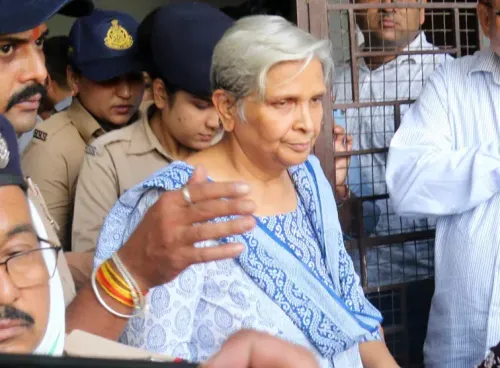
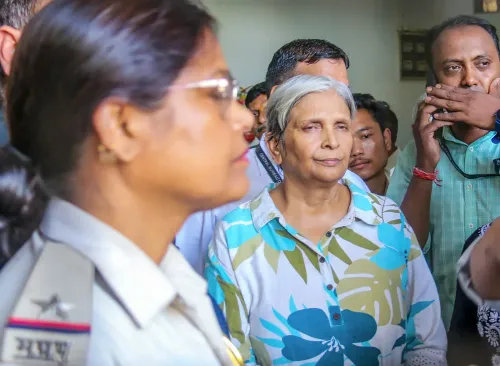
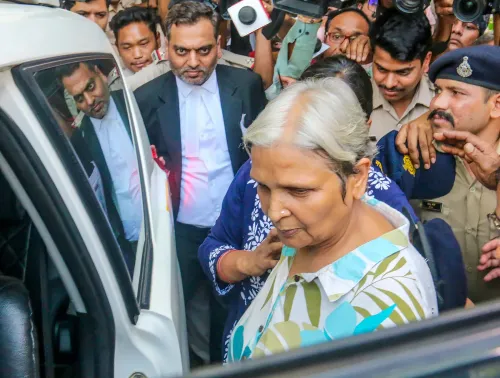
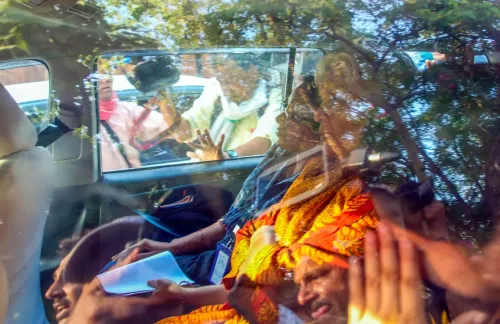
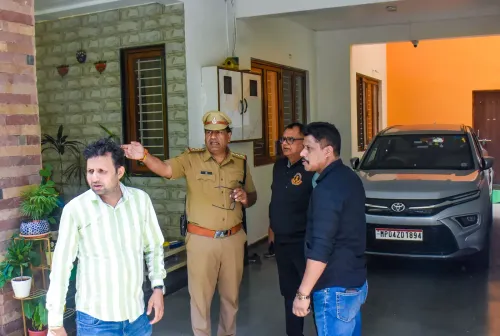
The Central Bureau of Investigation (CBI) has recorded a chilling 54-minute timeline in its First Information Report in the Twisha death case, detailing how the former actor-model's family lost contact with her on the evening of 12 May — ending with four words from her mother-in-law: 'She is no more.' The CBI took over the case and began recording statements of the deceased's in-laws, Giribala Singh and Samarth Singh, in Bhopal on Monday.
The 54-Minute Window
According to the CBI FIR, Twisha spoke to her mother over a WhatsApp call at 9.41 pm on 12 May. During that call, her husband reportedly shouted in the background, demanding to know who she was speaking to and asking her to produce documents. After that exchange, Twisha's phone went silent for 20 minutes — all attempts by family members to reach her on her personal number failed.
In desperation, her sister-in-law Rashi dialled Giribala Singh's number. When Rashi asked to speak to Twisha, Giribala Singh cut the call with a brief message: 'She is no more.' It was 10.35 pm — just 54 minutes after Twisha's last known conversation with her mother.
What the FIR Records
The contents of FIR No. 133/2026, registered at Police Station Katara Hills in Bhopal, state that Samarth Singh rushed Twisha to AIIMS Bhopal for treatment and informed the attending doctor that she had committed suicide at around 10.20 pm. She was declared dead on medical inspection.
Doctor Kartik of the hospital informed police at 12.05 am about Samarth Singh's statement regarding his wife's alleged suicide, according to the Bhopal Police FIR. The CBI FIR also notes that Twisha had spoken to her father several times on his phone on the same day.
Post-Mortem Findings
The short post-mortem report of Twisha, as cited in the CBI FIR, states: 'Death is due to antemortem hanging by ligature. Multiple antemortem injuries (simple in nature, possible by blunt force over other parts of the body) have been noted.' Antemortem hanging refers to the act of hanging while the victim is still alive. The presence of multiple blunt-force injuries has drawn scrutiny from investigators.
Under Indian law, an inquest into the death of a newlywed within seven years of marriage under suspicious or unnatural circumstances is a mandatory, legally mandated investigation — overseen by Executive or Judicial Magistrates under Section 174 and Section 176 of the Code of Criminal Procedure (CrPC) / Bharatiya Nagarik Suraksha Sanhita (BNSS).
Dowry Harassment Allegations
Twisha's family has alleged dowry harassment. Under Indian law, if a woman dies an unnatural death within seven years of marriage and faced prior dowry harassment, the husband faces charges for dowry death — carrying a minimum sentence of 7 years rigorous imprisonment, extendable to life imprisonment.
The CBI's recording of statements from Giribala Singh and Samarth Singh in Bhopal marks a significant escalation in the investigation. The family's formal statements to Bhopal Police, which include the account of the background shouting during the final WhatsApp call, have been incorporated into the CBI's case file.
What Happens Next
With the CBI now leading the investigation, the focus will be on reconciling the post-mortem findings — particularly the multiple antemortem blunt-force injuries — with the husband's account of suicide. The mandatory magisterial inquest, combined with the CBI's expanded probe, is expected to determine whether the death is classified as suicide, accident, or homicide. The family's dowry harassment allegations add a further legal dimension that investigators are obligated to examine.
Point of View
And the husband's account of suicide does not automatically provide one. The 54-minute gap, the switched-off phone, and the background shouting during the final call together form a circumstantial chain that investigators cannot dismiss. Dowry death cases in India have a troublingly low conviction rate; the real test here is whether the CBI pursues the forensic evidence with the rigour the family's allegations demand — or whether this becomes another case where the FIR is stronger than the follow-through.
NationPress
10 Oct 2026
Frequently Asked Questions
What does the CBI FIR reveal about Twisha's death?
The CBI FIR documents a 54-minute timeline on 12 May, from Twisha's last WhatsApp call with her mother at 9.41 pm to her mother-in-law Giribala Singh informing the family of her death at 10.35 pm. The post-mortem report cited in the FIR records death by antemortem hanging along with multiple antemortem blunt-force injuries.
Who are Giribala Singh and Samarth Singh in the Twisha case?
Giribala Singh is Twisha's mother-in-law and Samarth Singh is her husband. The CBI began recording their statements in Bhopal on Monday as part of its takeover of the investigation from Bhopal Police.
What did Samarth Singh tell doctors at AIIMS Bhopal?
According to FIR No. 133/2026, Samarth Singh brought Twisha to AIIMS Bhopal and informed the attending doctor that she had committed suicide at around 10.20 pm on 12 May. She was declared dead on medical inspection.
What are the dowry death provisions applicable in this case?
Under Indian law, if a woman dies an unnatural death within seven years of marriage and had faced prior dowry harassment, the husband can be charged with dowry death. The punishment is rigorous imprisonment for a minimum of 7 years, which can extend to life imprisonment.
Why is a magisterial inquest mandatory in Twisha's case?
Indian law under Section 174 and Section 176 of the CrPC / Bharatiya Nagarik Suraksha Sanhita mandates an inquest into any newlywed woman's unnatural or suspicious death within seven years of marriage. The inquiry, overseen by an Executive or Judicial Magistrate, must determine whether the death was a suicide, accident, or homicide.