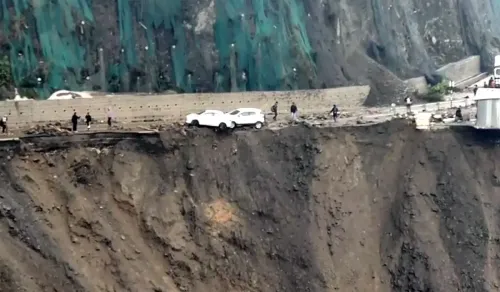
Two killed in Ramban road accident on Jammu-Srinagar National Highway

Synopsis
A vehicle carrying nine people plunged off the Jammu-Srinagar National Highway in Ramban district on 8 October, killing the driver and a passenger and injuring seven others. The accident renews focus on one of India's deadliest mountain corridors, where human error, overloading, and treacherous terrain combine to make fatalities a recurring tragedy.
Key Takeaways
A vehicle skidded off the Jammu-Srinagar National Highway in Ramban district on 8 October 2026 .
Two persons killed: driver Vijay Singh and passenger Sunil Singh , aged 26 .
Seven others were injured; one referred to Jammu, six to Government Medical College and Hospital, Anantnag .
The vehicle was carrying nine persons in total and was travelling towards Chunthan when it went out of control.
Ramban section is among the most accident-prone stretches of the highway, with causes ranging from over-speeding to rockfalls and adverse weather.
Two persons died and seven others were injured on 8 October 2026 when a vehicle skidded off the Jammu-Srinagar National Highway in Ramban district, officials confirmed. The accident, one of several to have struck the strategically critical mountain corridor this season, once again underscored the lethal risks of driving on one of India's most treacherous highway stretches.
What Happened
The vehicle, carrying nine persons in total, was travelling towards Chunthan late on Thursday when the driver lost control and the vehicle left the road. Officials identified the deceased as the driver, Vijay Singh, and passenger Sunil Singh, aged 26. The remaining seven occupants sustained injuries.
Condition of the Injured
Of the seven injured, one was referred to a hospital in Jammu — indicating a more critical condition — while the remaining six were transferred to the Government Medical College and Hospital in Anantnag. The precise nature of their injuries was not immediately disclosed by officials.
Why the Jammu-Srinagar Highway Remains Deadly
The Jammu-Srinagar National Highway, which serves as the primary land artery connecting Jammu and Kashmir (J&K) to the rest of India, passes through some of the country's most demanding terrain. According to reports from the Ministry of Road Transport and Highways and local traffic authorities, road fatalities in J&K arise from a combination of human error, difficult topography, and vehicular factors.
Over-speeding, reckless overtaking on narrow mountain corridors, and sharp curves that force vehicles close to gorge edges are among the leading behavioural causes. Low seat-belt and helmet usage rates are reported to significantly worsen injury severity, with the majority of fatalities linked to head trauma. Overloading in public transport and commercial carriers further strains vehicle stability on steep gradients, while drunk or impaired driving compounds reaction-time failures.
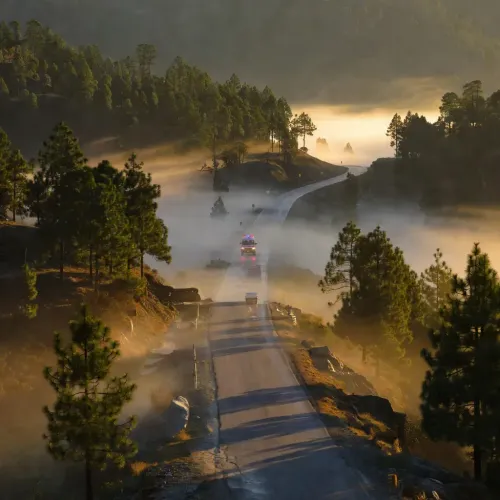
The terrain itself adds another layer of danger: rockfalls, black-spot zones, and narrow road widths leave little margin for error. Seasonal hazards — including heavy rainfall, snowfall, fog, and black ice — periodically reduce visibility and braking efficiency, making the highway particularly perilous during winter and the monsoon months.
A Recurring Pattern
This is not an isolated incident. The Ramban section of the highway, which traverses sharp bends and steep gradients through the Banihal range, is one of the most accident-prone stretches in the entire J&K road network. Accidents here frequently involve loss of vehicle control on the curves, with vehicles veering into gorges. Authorities have repeatedly called for stricter enforcement of speed limits and overloading norms, though implementation remains uneven, according to officials familiar with the matter.
With winter approaching, conditions on the highway are expected to deteriorate further, raising the likelihood of additional incidents unless enforcement and road safety measures are reinforced urgently.
Point of View
Yet overloading enforcement and speed monitoring on the mountain stretches remain lax. What is missing is not awareness of the problem — the Ministry of Road Transport and Highways has documented every causal factor — but the administrative will to act on it before the winter season turns a bad stretch into an annual killing ground.
NationPress
8 Oct 2026
Frequently Asked Questions
What happened in the Ramban road accident on 8 October 2026?
A vehicle carrying nine persons lost control and skidded off the Jammu-Srinagar National Highway in Ramban district late on 8 October, killing two people and injuring seven. The deceased were identified as driver Vijay Singh and passenger Sunil Singh, aged 26.
Where were the injured taken after the Ramban highway accident?
Seven survivors sustained injuries in the crash. One of the critically injured was referred to a hospital in Jammu, while the remaining six were transported to the Government Medical College and Hospital in Anantnag.
Why is the Jammu-Srinagar National Highway prone to accidents?
According to the Ministry of Road Transport and Highways and local traffic authorities, accidents on the highway stem from a mix of over-speeding, dangerous overtaking, overloading, low seat-belt usage, and the region's challenging mountain terrain — compounded by seasonal hazards like fog, black ice, and rockfalls.
Which section of the Jammu-Srinagar highway is most accident-prone?
The Ramban section, which traverses sharp bends and steep gradients through the Banihal range, is one of the most accident-prone stretches of the entire highway network in Jammu and Kashmir. Vehicles frequently lose control on tight curves, sometimes plunging into gorges.
Is the Jammu-Srinagar highway safe to travel in winter?
Winter conditions significantly increase risk on the highway. Snowfall, black ice, and thick fog reduce visibility and braking efficiency, according to reports from traffic and transport authorities. Travellers are advised to check road conditions and avoid night driving on mountain stretches during the season.