Uttarakhand CMO: Women becoming self-reliant in Pauri Garhwal
Synopsis
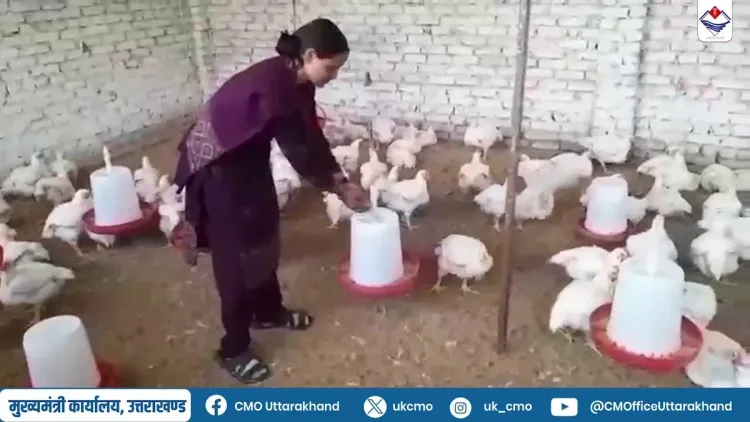
The Chief Minister's Office of Uttarakhand said on 25 November 2026 that state support is making women self-reliant, tagging Pauri Garhwal. The claim fits a longer hill-state push of self-help groups and micro-enterprises aimed at rural women and out-migration.
Key Takeaways
The Chief Minister's Office of Uttarakhand posted on 25 November 2026 that women in the state are becoming self-reliant with government support.
The post highlighted Pauri Garhwal through hashtags.
Pauri Garhwal is a Garhwal-division district where rural women are heavily engaged in agriculture and household economies.
State rural-development work since the mid-2010s has expanded self-help groups, skill training, credit linkage and local micro-enterprises.
The post did not name a specific scheme, beneficiary count or event.
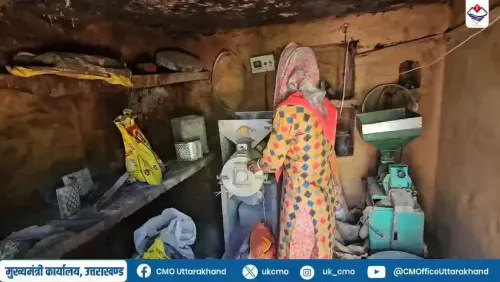
On the terraced slopes of Pauri Garhwal, the Chief Minister's Office of Uttarakhand on 25 November 2026 put a simple claim at the centre of the day's message: women in the hill state are turning self-reliant with government support. The official post tagged the Garhwal district, framing household-level enterprise as a live welfare story rather than a distant target.
The Hindi post said women in Uttarakhand are becoming atmanirbhar (self-reliant) with the cooperation of the state government. Hashtags #PauriGarhwal and #Uttarakhand pointed the claim at a district where rural women still carry much of the farm and household economy.
Pauri Garhwal's women and the village economy
Pauri Garhwal sits in Uttarakhand's Garhwal division. Its rural female workforce is heavily tied to agriculture and small household production. For more than a decade, state rural-development work has tried to convert that labour into organised income through self-help groups, skill training, credit linkage and local micro-enterprises.
The same pitch has been used across Garhwal and Kumaon: if women can earn at home, the household is less likely to empty out when men leave for plains jobs. That is the broader pattern behind a short official post — not a new scheme launch, but a reminder of an ongoing hill-state welfare bet.
The next test is district data, not a hashtag
The post did not name a scheme, a beneficiary count or a specific event. What to watch next is whether Pauri Garhwal publishes district-level progress on women's enterprise support, and whether budget lines for those programmes keep pace with the rhetoric.
In a state still wrestling with out-migration, self-reliance is not a slogan if the next set of village numbers do not move. Pauri is where that claim will be measured first.
Point of View
Not a launch. The Uttarakhand CMO is tying an old rural-development toolkit — self-help groups, credit and local enterprise — to the politically live problem of hill out-migration, and locating it in Pauri Garhwal rather than in a generic statewide slogan. The arc is continuity across administrations: women as the household economic backbone when men leave for the plains. The sharp test is delivery. Without district numbers, the message remains a mood, not a milestone.
NationPress
25 Nov 2026
Frequently Asked Questions
What did the Uttarakhand Chief Minister's Office post about women?
On 25 November 2026 it said that with state government support, women in Uttarakhand are becoming self-reliant, highlighting Pauri Garhwal.
Why was Pauri Garhwal tagged in the Uttarakhand CMO post?
Pauri Garhwal is a Garhwal-division district with a large rural female population engaged in agriculture and household economies, a typical focus area for women's livelihood programmes.
Which programmes help women become self-reliant in Uttarakhand?
State rural development work since the mid-2010s has expanded self-help groups, skill training, credit linkage and local micro-enterprise support. The post itself did not name a specific scheme.
How is women's self-reliance linked to migration in Uttarakhand?
Administrations have framed women's household enterprises as a way to keep income in hill villages and reduce the impact of out-migration.
Did the Uttarakhand CMO share beneficiary numbers for Pauri Garhwal?
No. The official message did not cite scheme names, beneficiary counts or a specific event.