Uttarakhand CM announces Rs 3 lakh interest-free farm loans

Synopsis
The Uttarakhand Chief Minister announced that the state government is providing interest-free agricultural loans of up to Rs 3 lakh to farmers, framing the measure as a state-level complement to Prime Minister Narendra Modi's central agricultural policies including PM-KISAN and the Kisan Credit Card scheme.
Key Takeaways
The Uttarakhand government is providing interest-free agricultural loans of up to Rs 3 lakh to farmers in the state.
The Chief Minister attributed the broader agricultural reform push to Prime Minister Narendra Modi 's central government.
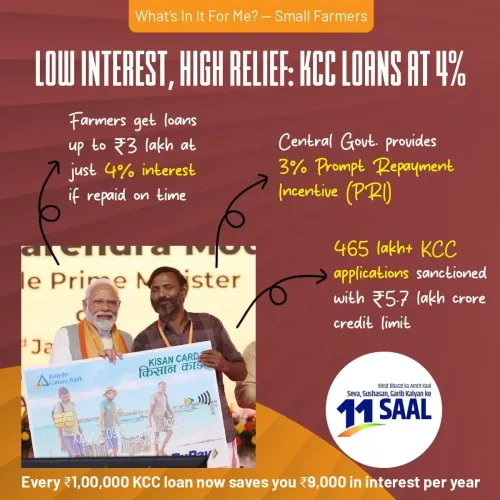
The central Kisan Credit Card scheme offers a 2 percent interest subvention plus 3 percent for timely repayment on short-term crop loans.
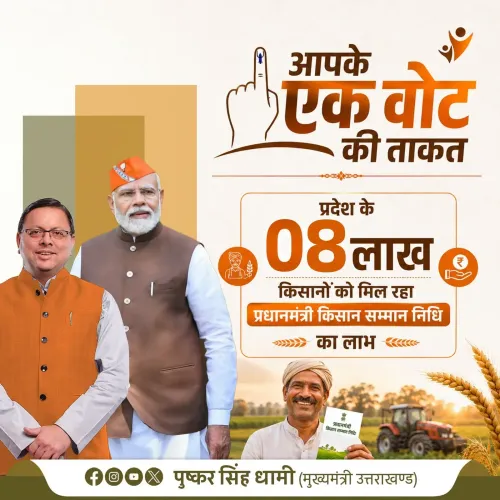
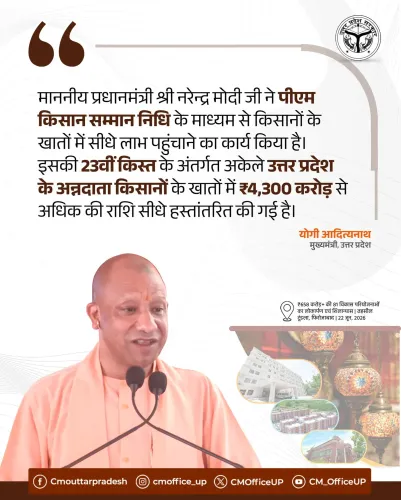
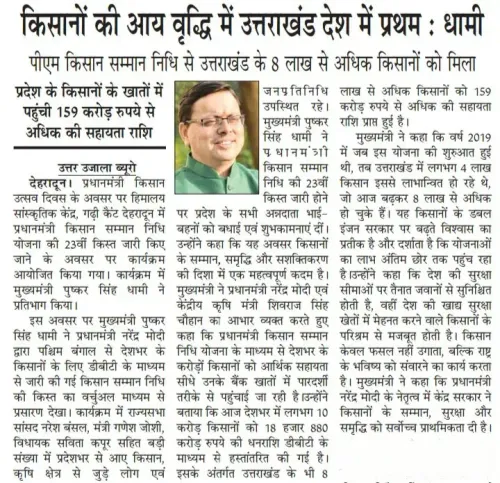
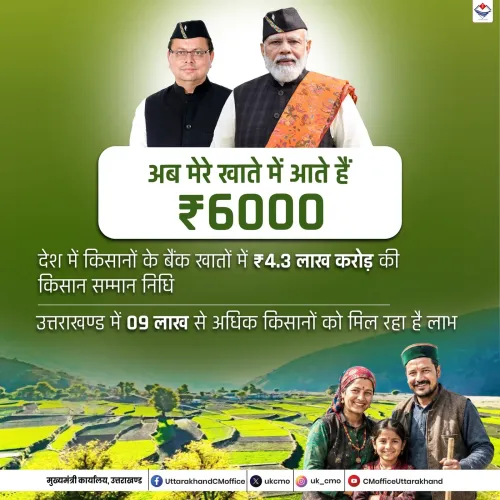
The PM-KISAN scheme provides Rs 6,000 per year in direct income support to eligible landholding farmers nationwide.
Uttarakhand's scheme targets small and marginal farmers in a hilly terrain where formal credit access has historically been limited.
The announcement was made on 26 June 2026 via the official Chief Minister's Office account on X.
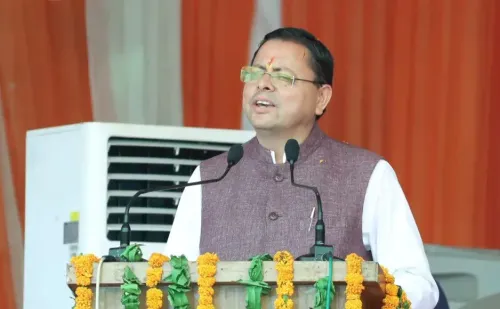
The Chief Minister's Office of Uttarakhand shared remarks by the state's Chief Minister on Friday, 26 June 2026, highlighting a key credit measure for farmers: the state government is providing interest-free agricultural loans of up to Rs 3 lakh to cultivators across Uttarakhand.
Context
The Chief Minister stated that the central government, under the leadership of Prime Minister Narendra Modi, has taken several 'historic decisions' (ऐतिहासिक निर्णय) to strengthen the agricultural sector. The state's interest-free loan scheme is positioned as a complementary measure built on that central policy foundation.
The announcement underscores the Uttarakhand government's intent to reduce the financial burden on farmers by eliminating interest costs on short-term crop credit up to the Rs 3 lakh ceiling — a significant relief in a largely rain-fed, small-holding agricultural economy.
Policy Backdrop
At the central level, the Kisan Credit Card (KCC) scheme has long provided short-term crop loans with interest subvention. Since 2018, the central government has offered a 2 percent interest subvention on such loans, with an additional 3 percent incentive for timely repayment — effectively bringing the cost of credit to near-zero for punctual borrowers.
The PM-KISAN scheme, launched in 2019, supplements credit access with direct income support of Rs 6,000 per year to eligible landholding farmers. Uttarakhand's state-level interest-free loan scheme layers an additional concession on top of these central instruments, addressing local credit-access gaps in a hilly, terrain-constrained state.
Stakeholders and Impact
The primary beneficiaries are Uttarakhand's farming households, many of whom operate small and marginal holdings across the state's hill districts. Access to formal, low-cost credit is critical in such geographies where informal moneylenders historically charged high rates.
By offering loans up to Rs 3 lakh at zero interest, the state government aims to bring more cultivators into the formal credit system, reduce indebtedness, and improve investment capacity for inputs such as seeds, fertilisers, and equipment. This approach mirrors similar zero-interest or subsidised-loan schemes adopted by other state governments as part of cooperative federalism in agriculture.
What's Next
Attention will now turn to state budget allocations that underpin the interest-free loan programme, and whether the Rs 3 lakh ceiling will be enhanced in future policy reviews. Any expansion of the Kisan Credit Card coverage at the central level could further amplify the scheme's reach in Uttarakhand.
Observers will also watch for data on actual loan disbursal volumes and farmer enrolment figures, which will determine the on-ground impact of this credit relief measure on agricultural productivity and rural household incomes in the state.
Point of View
The Chief Minister signals political alignment with the ruling dispensation at the Centre while also claiming credit for a tangible state-level benefit. For a hill state with fragmented landholdings and limited banking penetration, zero-interest formal credit can be a genuine game-changer — but the real test will be disbursal reach and whether the ceiling keeps pace with rising input costs. The broader pattern suggests state governments across India are competing on farmer welfare metrics, using credit subsidies as a visible, politically salient instrument.
NationPress
26 Jun 2026
Frequently Asked Questions
What is the Uttarakhand interest-free farm loan scheme?
The Uttarakhand government is providing agricultural loans of up to Rs 3 lakh at zero interest to eligible farmers in the state, aimed at reducing the cost of formal credit and encouraging farmers to borrow from banks rather than informal lenders.
Who announced the Rs 3 lakh interest-free loan for Uttarakhand farmers?
The announcement was made by the Chief Minister of Uttarakhand, as shared by the official Chief Minister's Office account on X on 26 June 2026.
How does this relate to the Kisan Credit Card scheme?
The Kisan Credit Card is a central government scheme that offers interest subvention on short-term crop loans. Uttarakhand's interest-free loan is a state-level addition on top of such central frameworks, designed to further reduce the effective interest burden on farmers.
What is PM-KISAN and how does it help farmers?
PM-KISAN, launched in 2019, is a central government scheme that provides direct income support of Rs 6,000 per year to eligible landholding farmers across India, complementing credit-based schemes like the Kisan Credit Card.
Which farmers in Uttarakhand are eligible for the interest-free loan?
The Chief Minister's statement indicates the scheme covers farmers in Uttarakhand broadly, though specific eligibility criteria such as land-holding size or crop type were not detailed in the announcement.