Trump Puts American Farmers First in Food Security Push
Synopsis
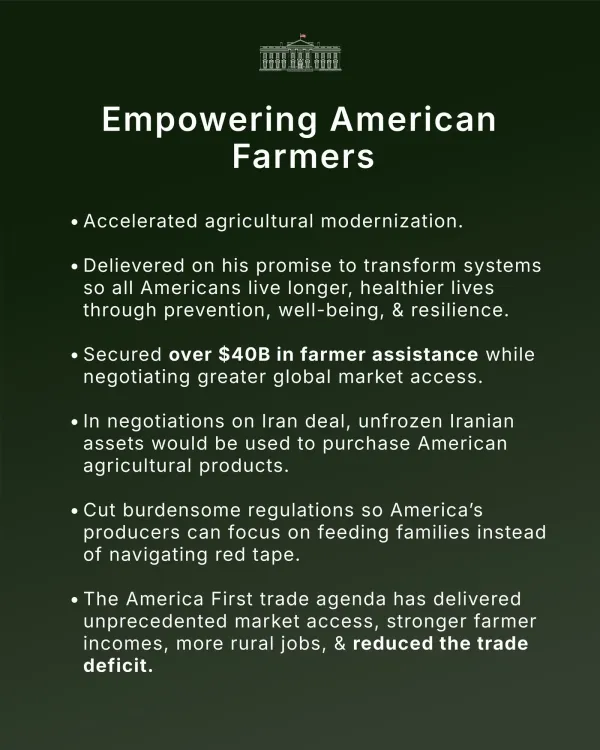
The White House announced on June 26, 2026, that President Donald J. Trump is prioritising American farmers, vowing to make the US food supply the strongest, healthiest, most plentiful, and most affordable on Earth — continuing an 'America First' agricultural agenda rooted in subsidies, trade deals, and protectionist policy.
Key Takeaways
The White House declared on June 26, 2026 that President Trump is putting American farmers 'FIRST' in national policy priorities.
The administration pledges to make the US food supply the strongest, healthiest, most plentiful, and most affordable on Earth.
In his first term, Trump signed the Agricultural Improvement Act (2018) and disbursed roughly $28 billion in direct farmer aid during the US-China trade dispute.
The USMCA trade agreement, negotiated under Trump , was positioned as a key win for American agricultural exporters.
The next Farm Bill reauthorisation in Congress will be the critical test of whether these commitments become lasting policy.
Shifts in US farm subsidies and export incentives can affect global commodity prices, with downstream implications for markets including India .
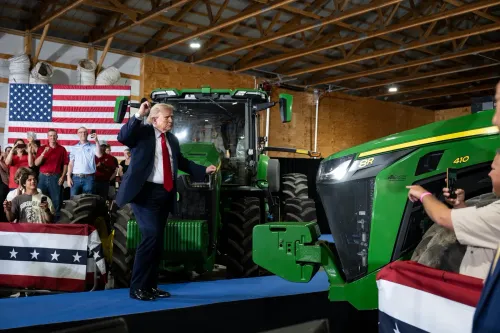
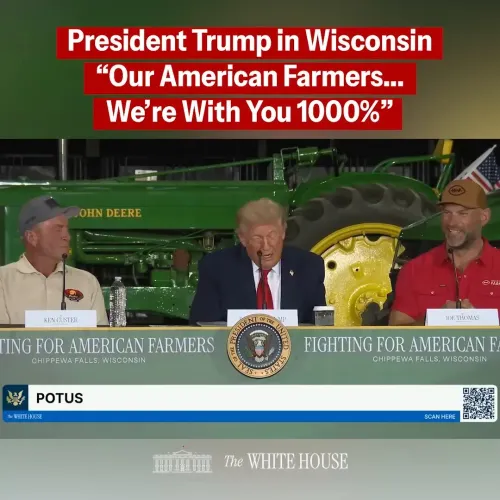
The White House declared on Friday, June 26, 2026, that President Donald J. Trump is prioritising American farmers above all else, pledging to make the United States' food supply 'the strongest, healthiest, most plentiful, and most affordable on Earth.'
Context
The official White House post on X states that President Trump is 'putting American farmers FIRST,' framing agricultural policy as a matter of national strength and food security. The declaration comes as the administration continues to advance an 'America First' economic agenda that places domestic production at the centre of trade and supply-chain strategy.
The statement does not detail specific legislative or executive measures announced on this date, but it signals a continued emphasis on the farm sector as a pillar of national resilience.
Policy Backdrop
The Trump administration's agricultural posture has deep roots in its first term (2017–2021). In 2018, President Trump signed the Agricultural Improvement Act, reauthorising crop insurance, conservation programmes, and support for specialty crops — a broad safety net for American growers.
Between 2018 and 2019, the administration disbursed roughly $28 billion in direct aid to farmers to offset losses caused by retaliatory tariffs during the US-China trade dispute. The administration also renegotiated the USMCA trade agreement, which it positioned as a win for American agricultural exporters over the older NAFTA framework.
Now in his second term, Trump is extending that protectionist and food-security framing, situating farm support within a broader effort to reduce import dependence and maintain US export competitiveness amid persistent global supply-chain pressures.
Stakeholders and Impact
American farmers and US agricultural exporters stand as the most direct beneficiaries of the administration's stated priorities. Row-crop producers, livestock operators, and specialty-crop growers have historically been both the targets of trade-war crossfire and the recipients of federal relief packages designed to cushion those losses.
For Indian observers, US agricultural policy carries significant implications: America is a major exporter of commodities such as soybeans, pulses, and cotton — crops that compete with or complement Indian supply chains. Any shift in US farm subsidies or export incentives can ripple through global commodity prices, affecting import costs and farmer incomes in India.
Consumers in the United States are also a stated stakeholder, with the White House framing the push as one that will deliver more affordable food at home.
What's Next
The immediate legislative flashpoint is the next Farm Bill reauthorisation cycle in Congress, which will determine the contours of crop insurance, subsidy levels, and conservation spending for the years ahead. The outcome of those negotiations will test whether the administration's rhetorical commitment to farmers translates into durable statutory support.
Trade enforcement actions and any new or expanded tariff-relief packages affecting row crops and livestock will also be closely watched. How the administration balances protectionist tariffs — which can invite retaliation against farm exports — with direct aid to farmers remains the central tension in its agricultural strategy.
Point of View
Reinforcing the 'America First' brand with a constituency — farmers — that has been both a key electoral base and a casualty of first-term trade battles. By framing agricultural policy through the language of national strength and affordability, the administration is pre-empting criticism that its tariff agenda harms the very producers it claims to champion. The emphasis on food supply security also taps into a broader global anxiety about supply-chain fragility that gained salience after pandemic-era disruptions. Whether the rhetoric translates into concrete Farm Bill provisions or new trade relief packages will determine its credibility with the farming community ahead of the next electoral cycle.
NationPress
26 Jun 2026
Frequently Asked Questions
What is Trump's agricultural policy in 2026?
The White House states that President Trump's agricultural policy in 2026 centres on putting American farmers first, with a goal of making the US food supply the strongest, healthiest, most plentiful, and most affordable in the world. Specific new measures tied to this June 2026 announcement have not yet been publicly detailed.
How much aid did Trump give farmers during the trade war?
Between 2018 and 2019, the Trump administration disbursed roughly $28 billion in direct aid to American farmers to compensate for losses caused by retaliatory tariffs during the US-China trade dispute.
What is the US Farm Bill and when is it up for renewal?
The Farm Bill is a major piece of US legislation that governs crop insurance, agricultural subsidies, conservation programmes, and food assistance. It requires periodic reauthorisation by Congress, and the next reauthorisation cycle is a key legislative priority being watched in 2026.
How does US farm policy affect India?
The United States is a major global exporter of commodities like soybeans, pulses, and cotton. Changes in US agricultural subsidies or export incentives can shift global commodity prices, affecting both import costs and the competitiveness of Indian farmers in international markets.
What was the Agricultural Improvement Act signed by Trump?
The Agricultural Improvement Act, signed by President Trump in 2018, reauthorised a wide range of federal farm programmes including crop insurance, conservation initiatives, and support for specialty crops, providing a broad safety net for American agricultural producers.