Uttarakhand CM Office: Self-Employment Schemes Strengthening Animal Herders
Synopsis
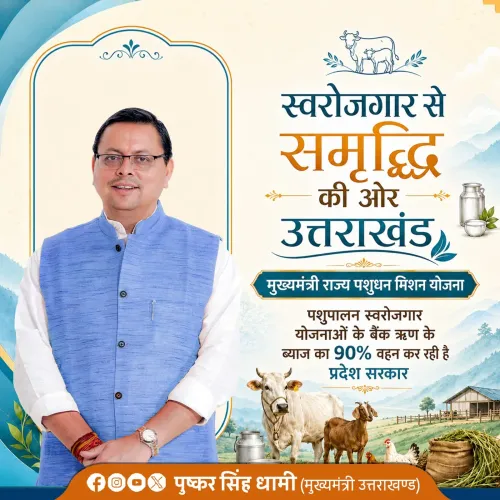
The Uttarakhand Chief Minister's Office says government self-employment schemes are strengthening the economic condition of animal herders in Almora district, pointing to livestock-linked enterprise support under frameworks like the Mukhyamantri Swarozgar Yojana as a tool against rural out-migration.
Key Takeaways
The Uttarakhand CMO posted on October 15, 2026 highlighting improved economic conditions for animal herders in the state.
Almora district in the Kumaon region is specifically cited, where animal husbandry is a primary rural livelihood.
The Mukhyamantri Swarozgar Yojana , launched in 2020 , provides subsidies, credit linkage, and training to rural entrepreneurs including livestock farmers.
The scheme targets out-migration from hill districts by making home-based enterprises economically viable.
State schemes are often aligned with central programmes like the National Livestock Mission to support dairy, goatery, and poultry units.
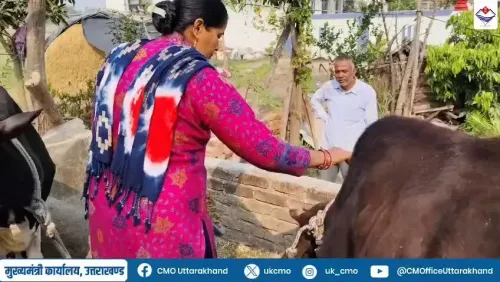
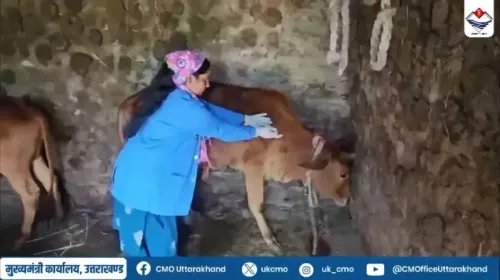
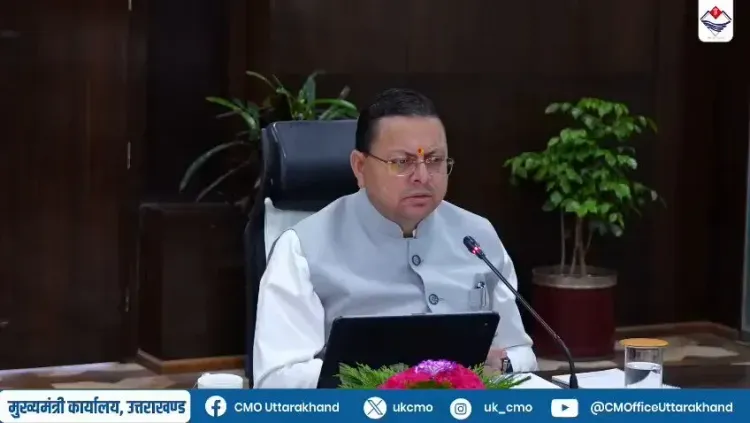
In Uttarakhand's rugged hill districts, a quiet economic shift is under way — and the Chief Minister's Office says animal herders are at its centre. The Chief Minister's Office of Uttarakhand posted on X on Thursday, October 15, 2026, highlighting that state-run self-employment schemes are strengthening the financial standing of livestock farmers (pashupalakon) across the state, with Almora district named as a focal point.
The post, in Hindi, states: 'The government's schemes promoting self-employment are strengthening the economic condition of animal herders in Uttarakhand.' The hashtags #Almora and #Uttarakhand anchor the claim to a specific, historically underserved hill district in the Kumaon region.Mukhyamantri Swarozgar Yojana and the Livestock Link
The scheme most directly in frame is the Mukhyamantri Swarozgar Yojana, launched by the Uttarakhand government in 2020 to stem the tide of out-migration from hill districts. It offers subsidies, credit linkage, and skill training to rural entrepreneurs — including those running dairy units, goat farms, and poultry operations. Almora, a district where animal husbandry sits alongside agriculture as a primary rural livelihood, has been a key target geography for such interventions.
The broader logic is straightforward: when hill families can earn reliably from livestock at home, the pull toward seasonal migration to the plains weakens. State schemes often layer on top of central programmes like the National Livestock Mission, creating a web of subsidised credit and technical support for small-scale herders who would otherwise lack access to formal finance.
Why Almora, and Why Now
Almora is not a random pin on the map. Its hilly terrain makes large-scale agriculture difficult, making allied activities — dairy, goatery, wool production — structurally important to household incomes. For decades, the district has seen significant male out-migration in search of urban wages, leaving women and the elderly to manage farms and livestock. Schemes that make animal husbandry economically viable directly address this demographic pressure.
Indian hill states have increasingly recognised that diversifying rural income through allied agriculture is more sustainable than purely agricultural support. Uttarakhand's approach — combining local subsidies with central programme convergence — reflects that broader pattern visible across Himachal Pradesh, parts of the Northeast, and Uttarakhand's own Garhwal region.
The numbers behind the claim — how many herders have been reached, what income gains look like — are not specified in the post. What the government is signalling, however, is directional: the self-employment framework is producing tangible results in livestock country, and Almora is the proof point it has chosen to put on record.
For Uttarakhand's hill communities, every herder who stays — and earns — is a village that does not hollow out.
Point of View
And showcasing grassroots economic gains in livestock — a sector dominated by women and marginal farmers — is both substantive policy and effective optics. The Mukhyamantri Swarozgar Yojana has served as a flagship since 2020, and periodic amplification of district-level impact helps sustain its political salience ahead of budget cycles. What remains the harder test is whether scheme reach translates into measurable income data that independent assessments can verify.
NationPress
16 Oct 2026
Frequently Asked Questions
What is the Mukhyamantri Swarozgar Yojana in Uttarakhand?
The Mukhyamantri Swarozgar Yojana is a self-employment scheme launched by the Uttarakhand government in 2020 to provide subsidies, credit linkage, and training to rural entrepreneurs — including animal herders and dairy farmers — to reduce out-migration from hill districts.
How are Uttarakhand schemes helping animal herders in Almora?
Schemes like the Mukhyamantri Swarozgar Yojana support small-scale livestock activities such as dairy, goatery, and poultry in Almora by offering subsidised credit and technical training, helping herders earn reliable incomes without migrating to the plains.
Why is Almora important for animal husbandry in Uttarakhand?
Almora is a hilly district in Uttarakhand's Kumaon region where the terrain limits large-scale agriculture, making animal husbandry — dairy, goat rearing, wool production — a primary livelihood for many rural households.
What is the National Livestock Mission and how does it connect to Uttarakhand?
The National Livestock Mission is a central government programme supporting livestock-based livelihoods. Uttarakhand's state schemes, including the Mukhyamantri Swarozgar Yojana, are often aligned with it to layer additional subsidies for small-scale animal herders.
Does Uttarakhand have a problem with rural out-migration?
Yes, Uttarakhand's hill districts, including Almora, have seen significant out-migration, particularly among working-age men seeking urban wages. Self-employment schemes targeting animal husbandry and rural enterprise aim to make staying home economically viable.