Uttarakhand CMO: Reverse Migration Efforts Show Results in Rudraprayag
Synopsis
The Uttarakhand Chief Minister's Office says reverse migration efforts are delivering meaningful results in Rudraprayag district, citing state-backed rural enterprise and self-employment schemes launched after the 2020 pandemic migration wave.
Key Takeaways
The Chief Minister's Office of Uttarakhand signalled on October 25, 2026 that reverse migration efforts are showing 'meaningful results' in Rudraprayag district .
Rudraprayag is one of 13 districts in Uttarakhand historically affected by severe youth out-migration to plains cities.
The state's reverse migration push was formalised after the 2020 COVID-19 lockdowns triggered a large involuntary return of migrants to hill villages.
Targeted schemes focus on tourism, horticulture, and micro-enterprise to create livelihood anchors in hill districts.
Reversing depopulation carries ecological as well as economic stakes, given Uttarakhand's role in river catchment management and char dham pilgrimage infrastructure.
District-level migration data and scheme-level employment figures remain the next concrete benchmark for verifying the claimed progress.
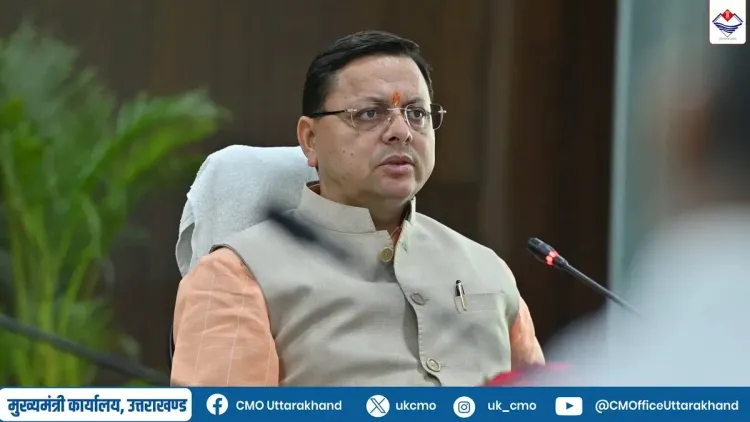
The hills of Rudraprayag are finally calling people back. The Chief Minister's Office of Uttarakhand posted on Sunday, October 25, 2026, signalling that the state's sustained push to reverse decades of out-migration from its hill districts is beginning to yield meaningful results — with Rudraprayag district cited as a visible example.
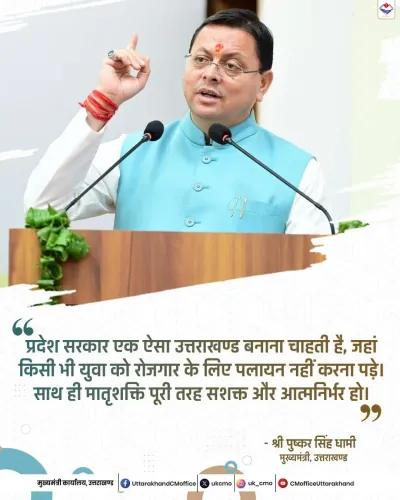
The post, in Hindi, states: 'Uttarakhand mein reverse palayan ki koshishon ke aa rahe sarthak parinam' — ('The efforts toward reverse migration in Uttarakhand are producing meaningful results') — a terse but pointed signal from the government that a long-standing demographic wound is starting to heal.
Rudraprayag and the ghost-village crisis
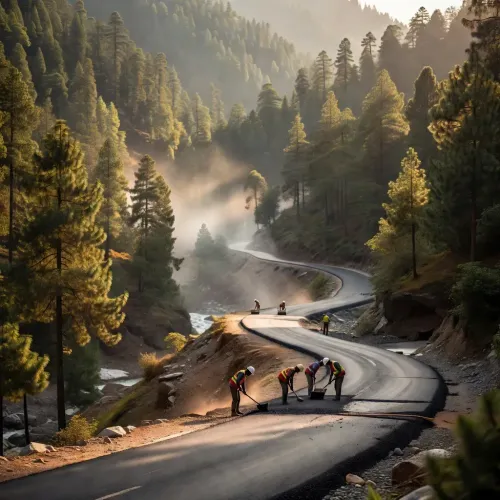
For generations, Rudraprayag — a mountainous district nestled at the confluence of the Alaknanda and Mandakini rivers — bled population steadily. Young men and women left for Dehradun, Delhi, and Mumbai, chasing jobs the hills could not offer. What remained were ageing households and, in hundreds of villages, no households at all. The phenomenon, replicated across all 13 districts of Uttarakhand, became one of the defining policy failures of the post-statehood era.
How the pandemic became an unlikely turning point
The COVID-19 lockdowns of 2020 sent a wave of migrants streaming back to their ancestral villages — an unplanned, crisis-driven reversal that the state government moved quickly to institutionalise. Uttarakhand launched self-employment and rural enterprise schemes targeting those returnees, anchoring incentives in three sectors where the hills hold a natural edge: tourism, horticulture, and micro-enterprise.
The logic was straightforward. Keep even a fraction of the 2020 returnees productive and rooted, and the reverse-migration trend becomes self-reinforcing — a village with working-age residents attracts services, schools stay open, and the spiral of depopulation slows. Whether that logic has translated into durable economic anchoring in Rudraprayag specifically is what today's signal from the CMO asserts.
A pattern across the Himalayas — and why Uttarakhand's stakes are higher
Uttarakhand is not alone. Himachal Pradesh and the hill states of the northeast have wrestled with the same demographic gravity for decades. But Uttarakhand carries an additional burden: it is home to some of India's most critical river catchments and a large share of the country's char dham pilgrimage economy. Depopulated villages mean unmaintained terraces, unchecked landslide risk, and a fragile tourism backbone with no local workforce to sustain it.
Reversing that flow — even modestly — is not just a welfare story. It is an ecological and economic security story for the broader region.
The next test will be hard data: district-level migration surveys, employment figures from rural enterprise schemes, and whether the momentum spreads to other hill districts beyond Rudraprayag. The CMO's post plants a flag. The numbers will either hold it or pull it down.
Point of View
Giving the state government a narrative that resonates far beyond Rudraprayag. The deeper policy question is whether incentive-driven rural enterprise schemes produce self-sustaining livelihoods or merely temporary clusters of activity that dissolve when subsidies run out — a pattern seen repeatedly across Himalayan states. If Uttarakhand can demonstrate durable employment creation in Rudraprayag, it sets a replicable template; if the data proves thin, the optics of the claim will become a liability.
NationPress
25 Oct 2026
Frequently Asked Questions
What is reverse migration in Uttarakhand?
Reverse migration in Uttarakhand refers to people returning to or staying in their home hill villages rather than moving to plains cities for work. The state government has been promoting this through rural self-employment and enterprise schemes, particularly after the 2020 pandemic sent large numbers of migrants back to their villages.
Why is Rudraprayag important in the Uttarakhand migration context?
Rudraprayag is a mountainous district that has historically suffered significant population loss due to limited local employment. It is now being cited by the Uttarakhand government as a district where reverse migration efforts are producing results.
What schemes did Uttarakhand launch to stop out-migration?
Following the 2020 COVID-19 reverse migration wave, Uttarakhand launched self-employment and rural enterprise schemes focused on tourism, horticulture, and micro-enterprises to create livelihood opportunities in hill districts and retain returning migrants.
How serious is the ghost-village problem in Uttarakhand?
Uttarakhand has hundreds of partially or fully abandoned villages due to decades of out-migration. The depopulation affects not only local communities but also the maintenance of mountain terraces, ecological stability, and the state's pilgrimage and tourism economy.
Which other Indian states face similar rural out-migration challenges?
Himachal Pradesh and several northeastern hill states face comparable out-migration challenges. Uttarakhand's situation is considered particularly acute given its fragile mountain ecology and dependence on local populations to sustain pilgrimage tourism infrastructure.