Uttarakhand CMO Spotlights Trout Farmer's Self-Employment Story
Synopsis
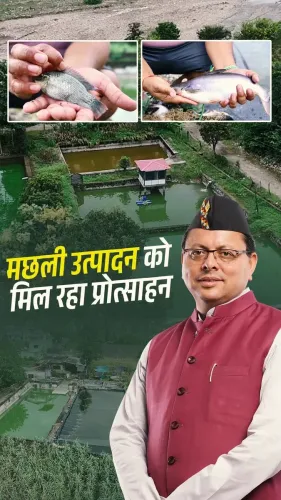
The Uttarakhand Chief Minister's Office on 8 July 2026 highlighted Rudraprayag resident Dinesh Singh Chaudhary, who returned to his village and adopted trout fish farming as self-employment, presenting him as a model of rural enterprise in the hill state.
Key Takeaways
The Chief Minister's Office of Uttarakhand shared the story of Dinesh Singh Chaudhary on 8 July 2026 as an example of successful rural self-employment.
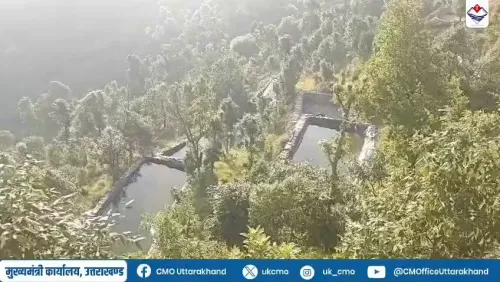
Chaudhary returned to his village in Rudraprayag district and established a trout fish farming enterprise.
Rudraprayag's cold-water streams make it naturally suited to rainbow trout aquaculture, a sector the state has promoted since the mid-2000s .
The story fits Uttarakhand's broader policy push around reverse migration and rural non-farm livelihood creation in hill districts.
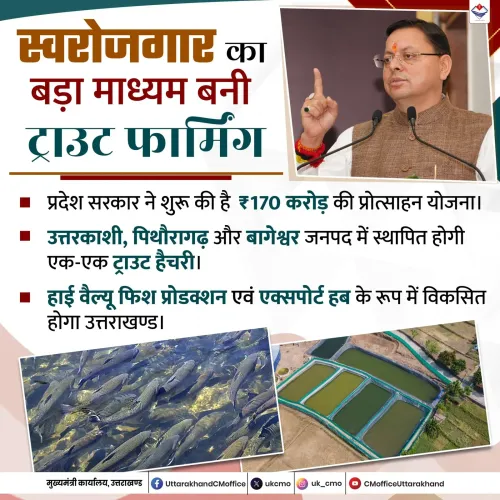
State fisheries programmes have offered subsidies, training, and credit linkages to encourage such ventures across higher-altitude districts.
Whether this spotlight translates into scaled institutional support — training camps, credit linkages, market access — in Rudraprayag and beyond remains the key question to watch.
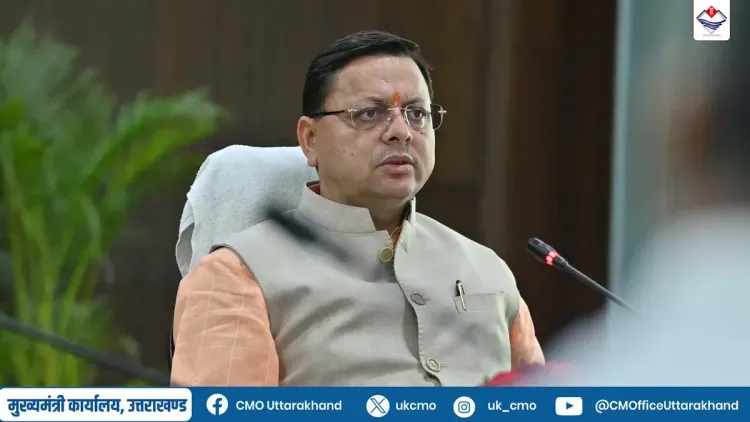
The Chief Minister's Office of Uttarakhand on Wednesday, 8 July 2026 highlighted the story of Dinesh Singh Chaudhary, a resident of Rudraprayag district who returned to his village and built a livelihood through trout fish farming, presenting him as a model of rural self-employment in the hill state.
The official post, shared in Hindi, reads: 'Gaon lautkar trout matsya palan apnaya, Dinesh Singh Chaudhary ne swarozgar se gadhi safalta ki nayi misal' — ('Returning to the village and adopting trout fish farming, Dinesh Singh Chaudhary has set a new example of success through self-employment.')
Context
Rudraprayag, a hilly district in the Garhwal division of Uttarakhand, is characterised by cold-water streams and high-altitude terrain that make it naturally suited to rainbow trout aquaculture. The district, like much of the state's mountain belt, has historically seen significant out-migration of working-age residents to plains cities in search of employment. Chaudhary's decision to reverse that trend and establish a fisheries enterprise locally places him within a growing but still modest cohort of rural entrepreneurs in the region.
Policy Backdrop
Uttarakhand's state fisheries programmes have promoted trout farming in higher-altitude districts since the mid-2000s, positioning it as an allied agricultural activity capable of diversifying rural incomes beyond subsistence farming. The cold, oxygen-rich streams of districts such as Rudraprayag, Chamoli, and Uttarkashi are considered among the most viable sites for such ventures in the country. State governments have periodically extended subsidies, technical training, and credit linkages to prospective fish farmers under broader rural livelihood and allied agriculture schemes.
Self-employment promotion in hill districts also intersects with Uttarakhand's broader policy concern around reverse migration — a theme that gained particular urgency after large numbers of migrant workers returned to the state during the Covid-19 pandemic, prompting the government to accelerate schemes in horticulture, animal husbandry, and fisheries to retain them productively in their home villages.
Stakeholders and Impact
The primary beneficiaries of such narratives and the underlying schemes are rural youth and returning migrants across Uttarakhand's thirteen districts, particularly those in the higher Himalayan belt where conventional agricultural returns remain limited. By amplifying individual success stories, the Chief Minister's Office signals to this demographic that viable livelihoods can be built locally — a message that carries both economic and social weight in communities where out-migration has hollowed out village populations over decades.
Trout farming also has a commercial upside: rainbow trout commands a premium price in urban and hospitality markets, meaning successful micro-enterprises in the sector can generate incomes meaningfully above subsistence levels. If Chaudhary's model is accompanied by market linkages and cold-chain access, it could serve as a replicable template for other Rudraprayag and Garhwal-belt farmers.
What's Next
Attention will now turn to whether the state follows up this public spotlight with concrete programme support — such as a new tranche of fisheries development funding, expanded training outreach, or credit-linkage camps in Rudraprayag and neighbouring districts. The broader question is whether individual success stories of this kind are systematically scaled through institutional backing, or remain isolated examples used primarily for state messaging. The government's next budget cycle and any fisheries scheme announcements will be a key indicator of intent.
Point of View
Particularly when large-scale scheme announcements are not imminent. The real test of policy seriousness, however, lies beyond the post: whether Rudraprayag's trout sector receives structured credit access, cold-chain infrastructure, and market linkages will determine if this remains an isolated story or seeds a genuine rural enterprise movement. Analysts watching Uttarakhand's hill-economy trajectory will look to the next fisheries budget allocation as the more substantive signal.
NationPress
8 Jul 2026
Frequently Asked Questions
Who is Dinesh Singh Chaudhary from Rudraprayag?
Dinesh Singh Chaudhary is a resident of Rudraprayag district in Uttarakhand who returned to his village and started a trout fish farming enterprise as a form of self-employment, earning recognition from the state's Chief Minister's Office in July 2026.
Why is trout farming promoted in Uttarakhand?
Uttarakhand's high-altitude districts have cold, oxygen-rich streams ideal for rainbow trout aquaculture. The state has promoted trout farming since the mid-2000s as a way to diversify rural incomes and reduce dependence on subsistence agriculture in hill areas.
What is reverse migration in Uttarakhand?
Reverse migration refers to the return of working-age residents from cities back to their home villages in Uttarakhand. The state government has been actively promoting rural self-employment in sectors like fisheries, horticulture, and animal husbandry to help returning migrants find livelihoods locally.
What government schemes support fish farming in Uttarakhand?
Uttarakhand's state fisheries programmes offer subsidies, technical training, and credit linkages to farmers wishing to take up trout and other cold-water fish farming. These initiatives are part of broader allied agriculture and rural livelihood schemes targeting higher-altitude districts.
Is trout farming profitable in Uttarakhand hill districts?
Rainbow trout commands a premium price in urban and hospitality markets, making it potentially more lucrative than conventional hill agriculture. Profitability depends significantly on access to market linkages, cold-chain logistics, and consistent technical support — areas where state intervention can make a decisive difference.