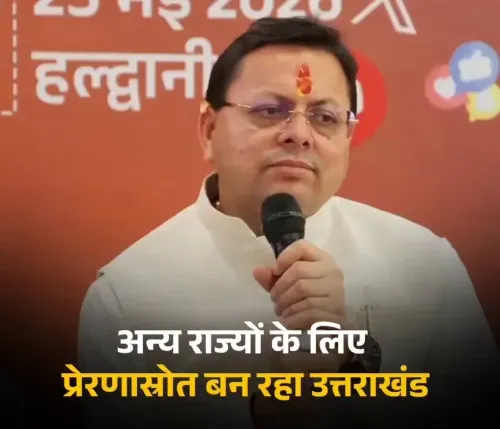
Uttarakhand's Devbhoomi Parivar Law Enacted After Governor Assent
Synopsis
Uttarakhand's Devbhoomi Parivar Kanoon has been enacted after the state Governor granted formal assent, the Chief Minister's Office confirmed on 14 June 2026. The law marks a fresh legislative milestone for CM Pushkar Singh Dhami's government, which has led state-level family law reform since passing India's first UCC bill in 2024.
Key Takeaways
The Devbhoomi Parivar Kanoon (Devbhoomi Family Law) has officially come into force in Uttarakhand .
The Governor of Uttarakhand granted formal assent, completing the constitutional process for the law's enactment.
The announcement was made by the Chief Minister's Office of Uttarakhand on 14 June 2026 .
Uttarakhand had earlier passed India's first state-level Uniform Civil Code Bill in February 2024 .
The official gazette notification detailing rules and enforcement mechanisms is expected to follow.
Legal challenges before the Uttarakhand High Court or Supreme Court remain a possibility to watch.
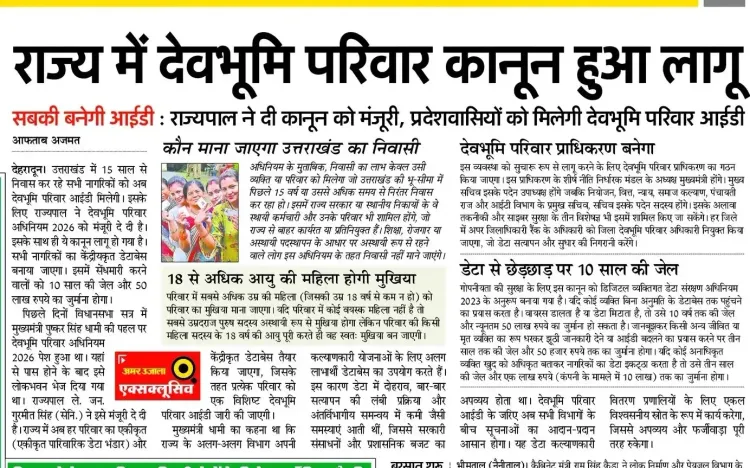
The Chief Minister's Office of Uttarakhand announced on Sunday, 14 June 2026 that the Devbhoomi Parivar Kanoon (Devbhoomi Family Law) has come into force in the state after receiving the Governor's formal assent, marking a significant legislative milestone for the Himalayan state.
Context
The CMO's post stated: 'Uttarakhand mein Devbhoomi Parivar Kanoon hua laagu, Rajyapal ne di manjuri' — ('The Devbhoomi Family Law has been enacted in Uttarakhand; the Governor has given approval'). The Governor of Uttarakhand, acting as the constitutional authority under the Indian Constitution, granted assent to the legislation, clearing the final procedural hurdle for its enforcement across the state.
Uttarakhand, officially referred to as Devbhoomi (Land of the Gods), is a northern Himalayan state formed in 2000. The state government under Chief Minister Pushkar Singh Dhami has pursued an active legislative agenda on social and family-related matters in recent years.
Policy Backdrop
Uttarakhand has been at the forefront of state-level family law reform. In February 2024, the state became the first in India since independence to pass a Uniform Civil Code (UCC) Bill at the assembly level — a landmark that drew national attention and positioned the state as a test case for codified personal law reform.
The Devbhoomi Parivar Kanoon is the latest in a series of legislative steps the state has taken to shape family governance within its jurisdiction. Indian states periodically enact or amend family-related statutes after legislative passage and gubernatorial assent, sometimes aligning with and sometimes diverging from central civil code frameworks.
Stakeholders and Impact
The law directly affects families and residents of Uttarakhand, who will now be subject to its provisions. The state government has framed such legislation within a broader agenda of preserving the demographic and cultural characteristics of the Himalayan region.
Civil society groups, legal practitioners, and community organisations across the state are expected to study the gazette notification closely once it is published, as it will detail the rules and enforcement mechanisms that give the law operational effect.
What's Next
The immediate next step is the publication of the official gazette notification laying out the rules, definitions, and implementation framework of the Devbhoomi Parivar Kanoon. Legal observers will watch for any petitions that may be filed before the Uttarakhand High Court or the Supreme Court of India challenging or seeking clarification on the law's provisions.
With the Governor's assent now secured, the state administration is expected to move swiftly toward operationalising the legislation, adding another chapter to Uttarakhand's growing record of state-initiated family law reform that continues to be watched closely across the country.
Point of View
Appealing to both local cultural sentiment and a broader national audience. The Governor's assent transforms a political signal into a legal reality, raising the stakes for implementation and judicial scrutiny. How the state operationalises the law through gazette rules will determine whether this milestone translates into meaningful change on the ground.
NationPress
14 Sept 2026
Frequently Asked Questions
What is the Devbhoomi Parivar Kanoon in Uttarakhand?
The Devbhoomi Parivar Kanoon is a family law enacted by the Uttarakhand state government that received the Governor's formal assent on or before 14 June 2026, bringing it into force across the state.
Who gave assent to the Devbhoomi Parivar Kanoon?
The Governor of Uttarakhand, who is the constitutional authority for granting assent to state legislation, approved the Devbhoomi Parivar Kanoon, enabling it to come into effect.
Is Devbhoomi Parivar Kanoon related to the Uniform Civil Code in Uttarakhand?
Uttarakhand passed India's first state-level Uniform Civil Code Bill in February 2024. The Devbhoomi Parivar Kanoon is a separate family law enactment announced in June 2026, part of the state government's broader legislative agenda on family and civil matters.
Will the Devbhoomi Parivar Kanoon be challenged in court?
Legal observers are watching for potential petitions before the Uttarakhand High Court or the Supreme Court of India, though no such challenge has been confirmed as of the announcement date.
When did the Devbhoomi Parivar Kanoon come into force?
The Chief Minister's Office of Uttarakhand announced on 14 June 2026 that the law had been enacted following the Governor's assent; the official gazette notification with implementation rules is expected to follow.