CM Dhami: Uttarakhand First State to Implement GEP Index
Synopsis
Uttarakhand Chief Minister Pushkar Singh Dhami declared his state the first in India to adopt the Gross Environment Product Index, framing it as proof of his government's resolve to harmonise ecological conservation with economic development.
Key Takeaways
Uttarakhand is the first Indian state to implement the Gross Environment Product (GEP) Index , a metric measuring environmental health alongside economic output.
CM Pushkar Singh Dhami framed sustainable development as a commitment to future generations, not just present needs.
The government's stated approach pairs ecology and economy so that neither development pace nor nature's balance is sacrificed.
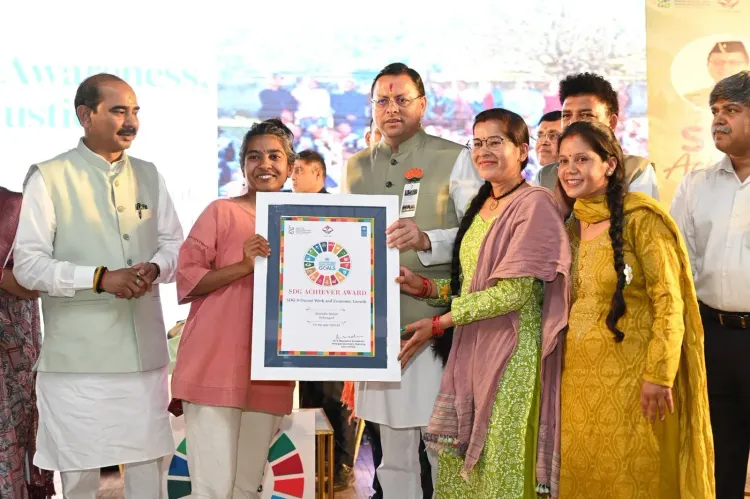
Union Minister of State Ajay Tamta and MLA Pramod Nainwal were present at the event, underscoring central-state alignment on green policy.
The GEP Index complements — rather than replaces — GDP, making the value of ecosystem services visible in state planning.
The move could influence other ecologically sensitive Indian states to adopt similar green accounting frameworks.
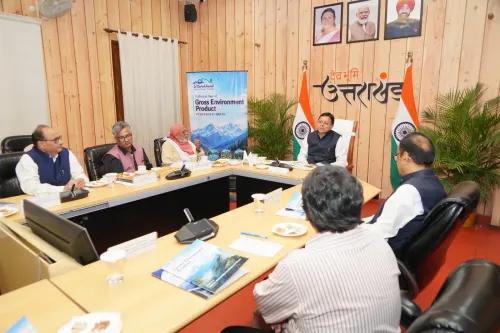
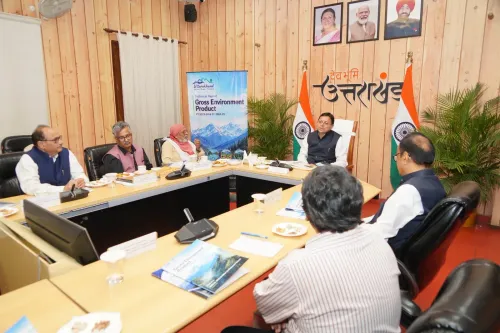
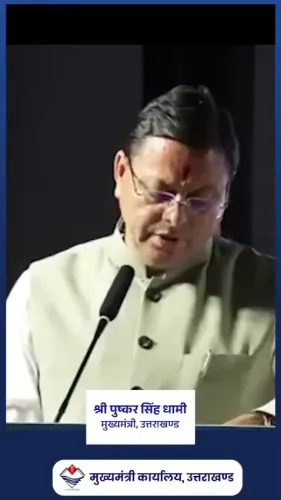
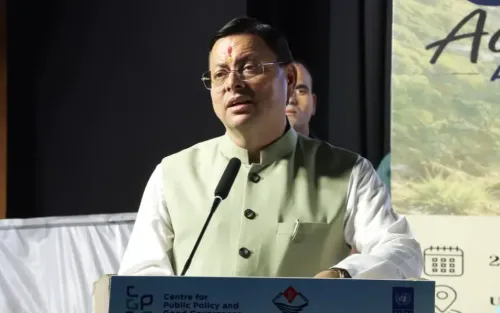
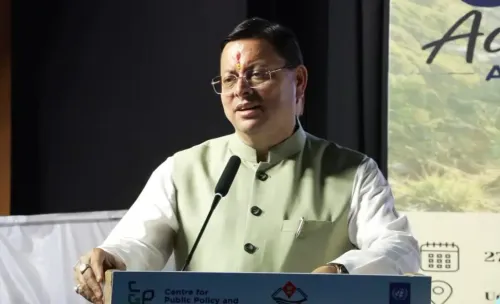
Uttarakhand Chief Minister Pushkar Singh Dhami on Wednesday, 27 May 2026 reaffirmed his government's commitment to balancing ecological preservation with economic growth, announcing that Uttarakhand has become the first state in India to implement the Gross Environment Product (GEP) Index — a metric designed to measure the state's environmental health alongside conventional economic indicators.
Context
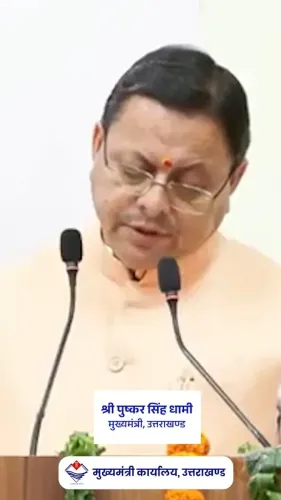
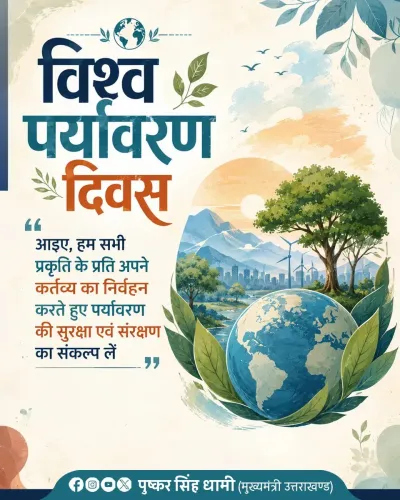
Posting on X, CM Dhami stated: 'सतत विकास केवल वर्तमान की आवश्यकताओं की पूर्ति तक सीमित नहीं है, बल्कि आने वाली पीढ़ियों के सुरक्षित, समृद्ध और संतुलित भविष्य का संकल्प भी है' ['Sustainable development is not limited to meeting present needs; it is also a resolve for the safe, prosperous and balanced future of coming generations']. He added that his government is working through the coordination of ecology and economy so that both the pace of development and the balance of nature are preserved.
The Chief Minister noted that the event was also attended by Union Minister of State Ajay Tamta and MLA Pramod Nainwal, signalling alignment between the state government and the Centre on green-growth policy.
Policy Backdrop
The Gross Environment Product Index is a state-level framework that attempts to quantify the value of ecosystem services, forest cover, biodiversity, and conservation efforts — complementing the conventional Gross Domestic Product (GDP) metric rather than replacing it. By adopting the GEP Index, Uttarakhand positions itself at the forefront of green accounting in India, a country that committed to integrating ecological concerns with development planning through the National Action Plan on Climate Change launched in 2008.
Himalayan states such as Uttarakhand face a particular tension between infrastructure expansion — roads, hydropower projects, tourism — and the fragile ecology of the upper Ganga basin. The GEP framework is intended to make that trade-off visible and measurable within government planning cycles.
Stakeholders and Impact
For Uttarakhand's residents, the GEP Index could influence how state budgets prioritise forest conservation, watershed management, and eco-tourism over extractive development. Environment departments and local bodies would use the index to justify conservation spending in fiscal planning documents.
Across India, several ecologically sensitive states — including those in the Northeast and the Western Ghats corridor — have explored similar green accounting tools. Uttarakhand's formal adoption of the index may accelerate that conversation at the national level, particularly around how the Centre allocates devolution funds or scores states on Sustainable Development Goal (SDG) metrics.
What's Next
The key question now is whether the GEP Index will be integrated into Uttarakhand's annual budget documents and development project approvals, or remain a standalone reporting exercise. Observers will also watch whether the Union government incorporates GEP-style metrics into national SDG reporting or inter-state fund allocation formulas.
If the index gains traction, it could set a precedent for other Himalayan and biodiversity-rich states to adopt comparable frameworks, reshaping how India measures and rewards ecological stewardship at the sub-national level.
Point of View
CM Dhami is making a calculated policy signal that resonates both locally — where residents live with the consequences of unchecked development — and nationally, where the BJP-led Centre has sought to project an image of environmentally responsible governance. The presence of a Union Minister of State at the event is not incidental; it suggests the Centre is watching this experiment as a potential template. Whether the GEP Index remains a branding exercise or gets embedded in actual budget allocation will determine its real impact. The broader arc here is India's gradual shift from growth-at-all-costs metrics toward composite indicators that account for natural capital — a shift that Himalayan states, with their outsized ecological footprint, are uniquely positioned to lead.
NationPress
11 Oct 2026
Frequently Asked Questions
What is the Gross Environment Product Index?
The Gross Environment Product (GEP) Index is a state-level metric that measures the value of ecosystem services, forest cover, biodiversity, and conservation efforts, complementing the conventional GDP by making environmental health quantifiable in government planning.
Which is the first state in India to implement the GEP Index?
Uttarakhand is the first state in India to implement the Gross Environment Product Index, as announced by Chief Minister Pushkar Singh Dhami in May 2026.
What did CM Dhami say about sustainable development?
CM Dhami stated that sustainable development is not limited to meeting present needs but is also a resolve for the safe, prosperous and balanced future of coming generations, and that his government is coordinating ecology and economy together.
Who attended the Uttarakhand GEP Index event with CM Dhami?
Union Minister of State Ajay Tamta and MLA Pramod Nainwal were present at the event alongside Chief Minister Pushkar Singh Dhami.
How does the GEP Index affect Uttarakhand's development plans?
The GEP Index is intended to make the trade-off between infrastructure expansion and ecological conservation visible and measurable, potentially influencing how state budgets prioritise forest conservation, watershed management, and eco-tourism.