Uttarakhand CM Office: No Horse-Mule Movement in Bad Weather on Char Dham Routes
Synopsis
The Uttarakhand Chief Minister's Office has directed that horse and mule movement on Char Dham Yatra routes, including Kedarnath and Yamunotri, will be halted during bad weather. The safety measure is part of post-2013 flood protocols aimed at protecting pilgrims on high-altitude Himalayan trails during the monsoon season.
Key Takeaways
The Uttarakhand CM's Office announced on June 5, 2026 that horses and mules will not operate on Char Dham Yatra routes during adverse weather.
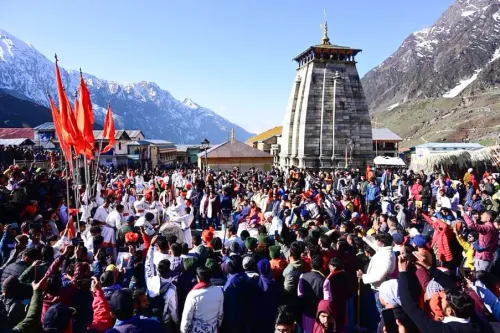
The restriction applies to key sites including Kedarnath (at 3,583 m ) and Yamunotri , where animal transport is the primary mode of ascent for pilgrims.
The measure is part of weather-triggered Standard Operating Procedures introduced after the 2013 Kedarnath floods .
The directive impacts pilgrims, pony and mule operators, and local tourism businesses during the peak June-September monsoon window.
Full 2026 yatra SOPs from the Uttarakhand Tourism Department, including enforcement thresholds, are yet to be released publicly.
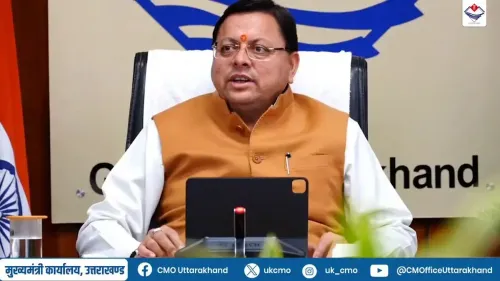
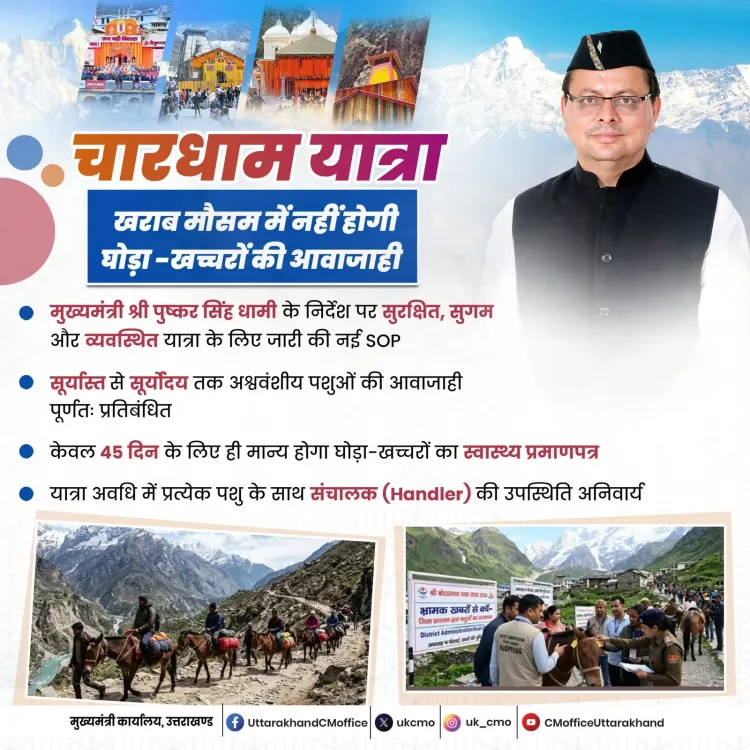
The Chief Minister's Office of Uttarakhand announced on Friday, June 5, 2026, that the movement of horses and mules on Char Dham Yatra routes will be suspended during adverse weather conditions, underscoring the state government's commitment to pilgrim safety on high-altitude Himalayan trails.
Context
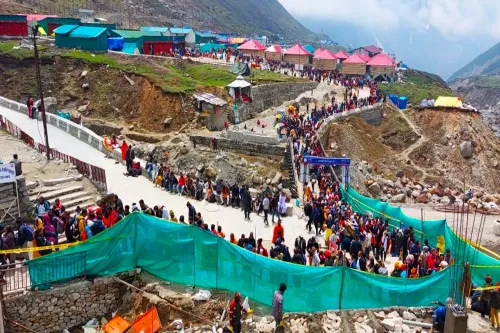
The official post, shared in Hindi, stated: 'Chardham yatra: kharab mausam mein nahin hogi ghoda-khachchar ki aawajaahi' ('Char Dham Yatra: horses and mules will not operate during bad weather'). The directive applies to key pilgrimage sites including Kedarnath and Yamunotri, where steep, narrow trails are the primary access routes for millions of pilgrims each year.
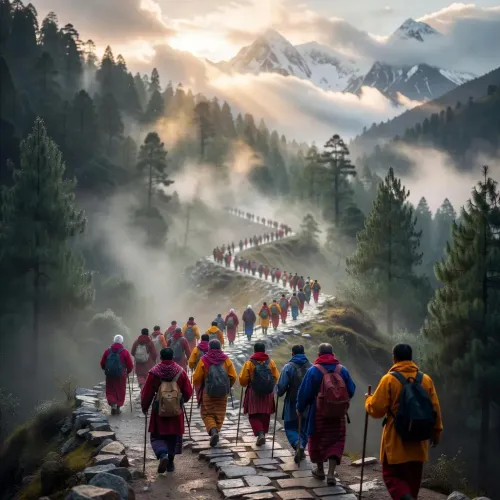
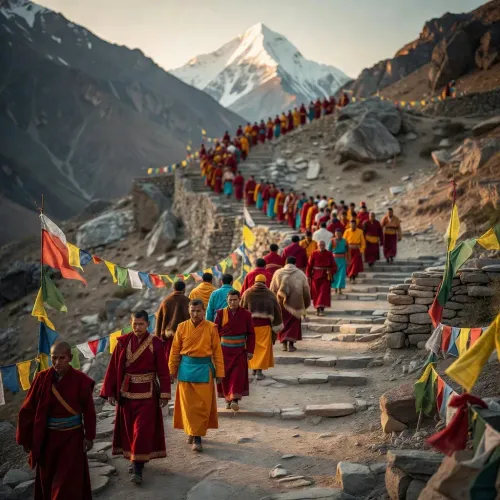
The announcement comes during the active 2026 Char Dham Yatra season, which draws pilgrims from across India and abroad to the four sacred shrines of Yamunotri, Gangotri, Kedarnath, and Badrinath in the Uttarakhand Himalayas.
Policy Backdrop
This weather-linked movement restriction is part of a broader set of Standard Operating Procedures that the Uttarakhand government has maintained for the Char Dham Yatra since the catastrophic 2013 Kedarnath floods, which caused massive loss of life and infrastructure. Those floods prompted authorities to institutionalise weather-triggered operational rules for pilgrimage routes in ecologically fragile terrain.
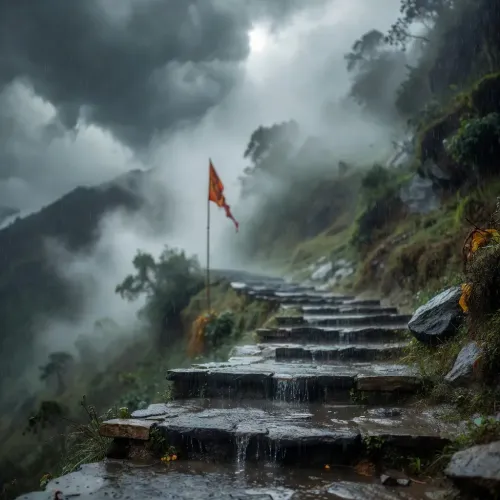
The June-to-September monsoon window poses recurring risks of landslides, flash floods, and trail erosion on high-altitude paths. Halting animal movement during bad weather directly reduces the risk of accidents involving pilgrims riding ponies or mules on slippery, narrow mountain tracks. Kedarnath, situated at an elevation of 3,583 metres, is among the most exposed sites on the circuit.
Stakeholders and Impact
The directive affects three primary groups: pilgrims who rely on horses and mules for the steep ascent to shrines such as Kedarnath and Yamunotri; pony and mule operators who depend on the yatra season for their livelihoods; and local tourism businesses whose revenues track pilgrim footfall closely.
For pilgrims, the restriction means that during weather alerts, alternative arrangements — such as palanquins or waiting at base camps — may be the only options. For animal operators, weather-related halts represent a direct loss of daily income during the short annual season, a trade-off the state has consistently prioritised against safety risks.
What's Next
The full 2026 Char Dham Yatra Standard Operating Procedures from the Uttarakhand Tourism Department are expected to detail the specific weather thresholds, enforcement mechanisms, and district-level orders that will govern route operations through the monsoon months. Authorities at the district level may also issue supplementary orders on route closures or alternative transport arrangements as conditions evolve.
With pilgrim numbers on the Char Dham circuit running into the millions each season, the state's ability to enforce weather-based restrictions swiftly and communicate them in real time to pilgrims on the ground will be a critical test of its administrative preparedness in 2026.
Point of View
Successive state governments have used the yatra SOPs as a framework to balance pilgrim access with safety — a politically delicate equation given that disruptions can draw criticism from pilgrims and operators alike. The directive signals that the current administration is prepared to enforce restrictions proactively rather than reactively, which has been a persistent criticism of past yatra management. How consistently these rules are applied on the ground, and whether real-time communication infrastructure is in place to inform pilgrims of sudden halts, will determine whether the policy translates into measurable safety outcomes in 2026.
NationPress
21 Oct 2026
Frequently Asked Questions
Why are horses and mules banned on Char Dham routes during bad weather?
The Uttarakhand government suspends horse and mule movement during adverse weather to prevent accidents on steep, narrow Himalayan trails that become dangerously slippery during rain, and to reduce the risk of landslides and flash floods affecting pilgrims and animals.
Which Char Dham sites are affected by the horse and mule movement ban?
The restriction applies across the Char Dham circuit, with Kedarnath and Yamunotri being the most directly affected, as these shrines are primarily accessed via steep pony and mule tracks with no motorable road to the temple.
When does the Char Dham Yatra 2026 season run?
The Char Dham Yatra season typically runs from late April or May through November, with the June-to-September monsoon window considered the highest-risk period for weather-related disruptions on high-altitude routes.
What should pilgrims do if horse and mule services are suspended at Kedarnath or Yamunotri?
Pilgrims are generally advised to wait at base camps or designated rest points until conditions improve. Palanquin (doli) services and trekking on foot remain options subject to trail safety assessments by local authorities.
What are the Char Dham Yatra Standard Operating Procedures?
The Char Dham Yatra SOPs are a set of safety and operational guidelines issued annually by the Uttarakhand government, covering weather-based movement restrictions, capacity limits, and emergency protocols, introduced following the 2013 Kedarnath floods.