CM Uttarakhand: NABARD funds Buksa tribe welfare in Nainital
Synopsis
The Uttarakhand government, in partnership with NABARD, is implementing a Tribal Development Fund project in Nainital to improve livelihoods of Buksa tribal families — a Particularly Vulnerable Tribal Group — through horticulture, skill training and market linkages.
Key Takeaways
The Chief Minister's Office of Uttarakhand confirmed an active NABARD Tribal Development Fund project in Nainital district as of 29 May 2026 .
The project targets Buksa families , a Particularly Vulnerable Tribal Group (PVTG) notified as a Scheduled Tribe in Uttarakhand.
NABARD's Tribal Development Fund typically finances wadi-based horticulture, irrigation, skill training and market linkages for PVTG communities.
Uttarakhand's tribal welfare framework is anchored in Article 275(1) and state tribal sub-plans dating to the state's formation in 2000 .
The Nainital model mirrors successful NABARD-state TDF partnerships in Jharkhand, Odisha and Gujarat targeting PVTG clusters.
Project evaluation reports from NABARD or the Uttarakhand Tribal Welfare Department are awaited to confirm scale and beneficiary outcomes.
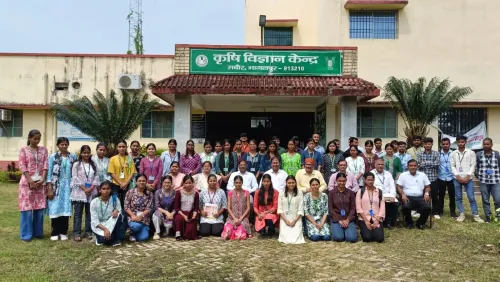
The Chief Minister's Office of Uttarakhand announced on 29 May 2026 that the state government, in collaboration with NABARD, is transforming the lives of Buksa tribal families in Nainital through the Tribal Development Fund (TDF) project — writing, as the post puts it, a 'new story of change.'
Context
The post, shared by the official Chief Minister's Office account, states in Hindi: 'Uttarakhand sarkar Nainital mein NABARD ke sahyog se Janjatiya Vikas Nidhi Pariyojana ke madhyam se Buksa Janjati ke parivaron ke jeevan mein badlav ki nayi kahani likh rahi hai' — ('The Uttarakhand government, in collaboration with NABARD in Nainital, is writing a new story of change in the lives of Buksa tribal families through the Tribal Development Fund project'). The announcement is accompanied by a video, signalling an on-ground documentation of the initiative's progress.
Policy Backdrop
The Buksa are a Particularly Vulnerable Tribal Group (PVTG) notified as a Scheduled Tribe, historically characterised by low literacy rates and shifting cultivation practices. Their presence is concentrated in pockets of Uttarakhand and neighbouring Uttar Pradesh.
NABARD's Tribal Development Fund, introduced in the early 2000s, finances sustainable livelihood models for PVTGs in partnership with state governments. The fund typically supports wadi-based horticulture, skill training, irrigation infrastructure, and market linkages — moving away from one-time subsidies toward measurable, asset-based income gains.
Uttarakhand's constitutional framework for tribal welfare draws from Article 275(1) and state-level tribal sub-plans formulated since the state's formation in 2000. The state has identified Buksa-dominated clusters in Nainital district as priority zones for integrated development under these provisions.
Stakeholders and Impact
The primary beneficiaries are Buksa tribal households in rural Nainital, a district that combines a prominent hill-tourism economy with marginalised tribal hamlets in its lower reaches. For these families, TDF-linked interventions typically mean access to orchard development, irrigation assets, and pathways to formal market networks — a structural shift from subsistence-level agriculture.
Uttarakhand's approach mirrors NABARD-state partnerships already operational in Jharkhand, Odisha, and Gujarat, where similar TDF projects targeting PVTG clusters have demonstrated measurable income improvements. The Himalayan terrain adds logistical complexity, making the Nainital project a test case for replicability in hill districts.
What's Next
Policy observers will watch for the release of project evaluation reports by either NABARD or the Uttarakhand Tribal Welfare Department that quantify beneficiary reach and income outcomes. Any supplementary budget allocations for tribal welfare in the next state assembly session will indicate the government's intent to scale the initiative.
If the Nainital model demonstrates strong outcomes, it could serve as a blueprint for extending NABARD's TDF window to other PVTG-inhabited districts of Uttarakhand, deepening the state's commitment to constitutionally mandated tribal development.
Point of View
The government anchors a political message in an institutional framework, lending it credibility beyond routine welfare claims. The Buksa community, long among the most marginalised groups in the Himalayan belt, represents both a constitutional obligation and a test of whether hill-state governance can deliver structural economic change rather than symbolic gestures. The absence of verified beneficiary numbers, however, means the announcement remains aspirational until independent project data is published.
NationPress
13 Oct 2026
Frequently Asked Questions
Who are the Buksa tribe in Uttarakhand?
The Buksa are a Particularly Vulnerable Tribal Group (PVTG) notified as a Scheduled Tribe, found primarily in Uttarakhand and Uttar Pradesh, historically known for low literacy and shifting cultivation practices.
What is NABARD's Tribal Development Fund?
NABARD's Tribal Development Fund is a financing scheme that supports sustainable livelihood models for PVTG communities through wadi-based horticulture, skill training, irrigation infrastructure and market linkages in partnership with state governments.
What is the Uttarakhand government doing for Buksa families in Nainital?
The Uttarakhand government is implementing a NABARD Tribal Development Fund project in Nainital aimed at transforming the livelihoods of Buksa tribal families through asset creation and income-generating activities.
What is Article 275(1) and how does it relate to tribal welfare in Uttarakhand?
Article 275(1) of the Indian Constitution provides grants to states for promoting the welfare of Scheduled Tribes and raising the level of administration in Scheduled Areas; Uttarakhand uses this provision alongside state tribal sub-plans to fund PVTG development.
Which other states have similar NABARD tribal development projects?
States including Jharkhand, Odisha and Gujarat have implemented similar NABARD-state TDF partnerships targeting PVTG clusters, with outcomes that include measurable income gains and improved market access for tribal households.