CM Dhami to form Uttarakhand Sanskrit Commission

Synopsis
The Uttarakhand government is preparing to establish a Sanskrit Commission to preserve and modernise the language, inviting suggestions from scholars, gurukuls, and institutions across India until 10 August 2026. The commission will cover education, manuscript digitisation, AI applications, and Sanskrit-based skill development.
Key Takeaways
The Uttarakhand government is preparing to establish the Uttarakhand Sanskrit Commission to preserve and modernise Sanskrit.
Suggestions are invited from scholars, teachers, researchers, universities, gurukuls, and institutions across India until 10 August 2026 via email.
Uttarakhand declared Sanskrit its second official language in 2010 , the first Indian state to do so.
CM Pushkar Singh Dhami had called for a high-level Sanskrit commission at an international Sanskrit conference in Haridwar in December 2025 .
The commission's mandate will include AI and digital media applications for Sanskrit, alongside education, manuscript digitisation, and skill development.
A high-level secretariat meeting on 15 July 2026 formally advanced the commission's constitution process.
The Chief Minister's Office of Uttarakhand announced on Wednesday, 22 July 2026 that the state government is preparing to establish the Uttarakhand Sanskrit Commission, a dedicated body to preserve, promote, and expand the modern use of Sanskrit. To shape the commission's mandate comprehensively, the government has invited suggestions from Sanskrit scholars, teachers, researchers, universities, gurukuls, Sanskrit institutions, and enthusiasts across the country, with submissions accepted by email until 10 August 2026.
Context
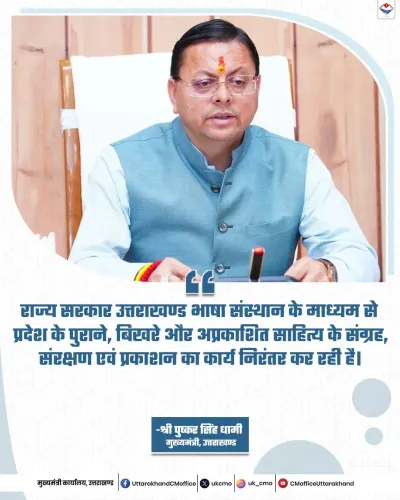
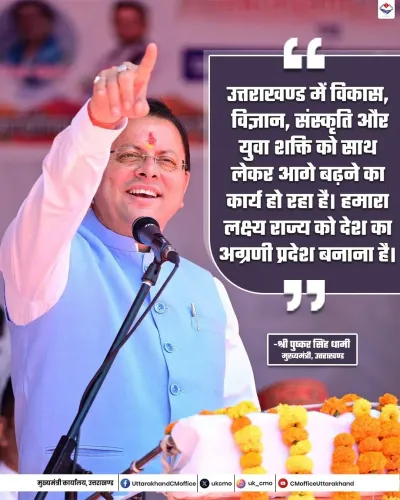
Chief Minister Pushkar Singh Dhami has stated that Uttarakhand's identity is rooted in its rich cultural and spiritual heritage, in which Sanskrit holds a special place. 'संस्कृत केवल एक भाषा नहीं, बल्कि भारत की ज्ञान परंपरा और सांस्कृतिक विरासत की आधारशिला है' ('Sanskrit is not merely a language, but the cornerstone of India's knowledge tradition and cultural heritage'), he said. The state government, he added, is continuously working to bring Sanskrit to every citizen and give it a renewed identity suited to contemporary times.
Sanskrit Education Secretary Deepak Kumar noted that Uttarakhand had made a landmark national move in 2010 by declaring Sanskrit the state's second official language, becoming the first Indian state to do so. That foundational step now underpins the push for a formal statutory body to institutionalise further action.
Policy Backdrop
CM Dhami had emphasised the need for a high-level Sanskrit commission at an international Sanskrit conference held in Haridwar in December 2025, calling for effective implementation of Sanskrit preservation measures. Following that, a high-level meeting at the secretariat on 15 July 2026 advanced the process of constituting the commission formally.
The proposed commission's scope is wide-ranging. It will work on Sanskrit education, research, preservation and digitisation of ancient manuscripts, Indian Knowledge Systems, Vedic and classical studies, Sanskrit-based skill development and employment, and the use of Sanskrit in administration and technical domains. Notably, the commission will also explore Sanskrit's potential in artificial intelligence (AI) and digital media — a forward-looking dimension that distinguishes this initiative from earlier ceremonial recognition of the language.
Stakeholders and Impact
The public consultation model — inviting input from gurukuls, Sanskrit universities, and individual scholars before the commission is constituted — signals an intent to build a broad institutional consensus. Sanskrit scholars and educators across India are being positioned as co-architects of the body's terms of reference, not merely future beneficiaries.
For Uttarakhand, a Himalayan state that markets itself as Devbhoomi (Land of the Gods), the commission fits a consistent pattern of using cultural and religious heritage as a pillar of state identity and governance. Gurukuls and traditional Sanskrit institutions operating within the state stand to gain formal policy support, funding pathways, and research mandates through the new body.
What's Next
The immediate milestone is the 10 August 2026 deadline for emailed suggestions. After that, the government is expected to collate inputs and move toward the formal legal and administrative steps required to constitute the commission. The scope covering AI and digital applications suggests the commission's eventual work plan will extend well beyond classical pedagogy into technology-linked language preservation — an area where Sanskrit's highly structured grammatical framework has drawn interest from computational linguists.
Whether the commission will have statutory powers, an independent budget, and a fixed term — or function as an advisory panel — will be determined in the constitution process that follows the consultation phase. Those details will define how effective the body can be in delivering on the state government's stated ambitions for Sanskrit's revival.
Point of View
Converting a symbolic status into an institutional apparatus with a defined mandate. By including AI and digital media in the commission's scope, the Dhami government is positioning Sanskrit not as a relic but as a living language with contemporary utility — a framing that aligns with the national push for Indian Knowledge Systems. The public consultation model, while adding a participatory layer, also serves to co-opt a broad constituency of Sanskrit stakeholders before the body is formally constituted. The commission's eventual effectiveness will hinge on whether it receives statutory authority and independent funding, or remains an advisory voice within the bureaucratic structure.
NationPress
21 Oct 2026
Frequently Asked Questions
What is the Uttarakhand Sanskrit Commission?
The Uttarakhand Sanskrit Commission is a proposed government body being established by the Uttarakhand state government to preserve, promote, and expand the modern use of Sanskrit. It will work on education, research, manuscript digitisation, AI applications, and Sanskrit-based skill development.
How can I send suggestions for the Uttarakhand Sanskrit Commission?
Interested individuals and institutions can send their suggestions by email until the deadline of 10 August 2026, as announced by the Uttarakhand government.
Was Sanskrit ever made an official language in Uttarakhand?
Yes. In 2010, Uttarakhand declared Sanskrit its second official language, making it the first Indian state to grant Sanskrit official-language status.
What will the Uttarakhand Sanskrit Commission do?
The commission will work on Sanskrit education, research, preservation and digitisation of ancient manuscripts, Indian Knowledge Systems, Vedic and classical studies, Sanskrit-based skill development, use of Sanskrit in administration, and exploring Sanskrit's potential in artificial intelligence and digital media.
What did CM Dhami say about Sanskrit?
Chief Minister Pushkar Singh Dhami stated that Sanskrit is not merely a language but the cornerstone of India's knowledge tradition and cultural heritage, and that Uttarakhand's identity is rooted in its rich cultural and spiritual heritage in which Sanskrit holds a special place.