Vaishnaw flags Ballari–Guntakal 3rd & 4th rail line boost
Synopsis
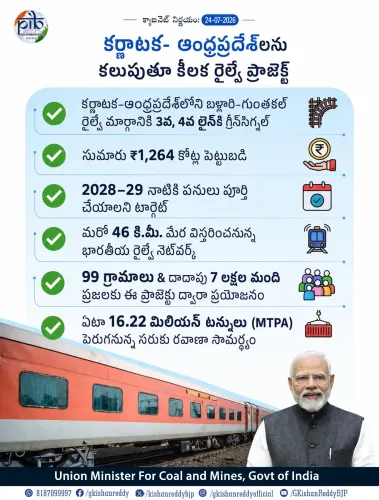
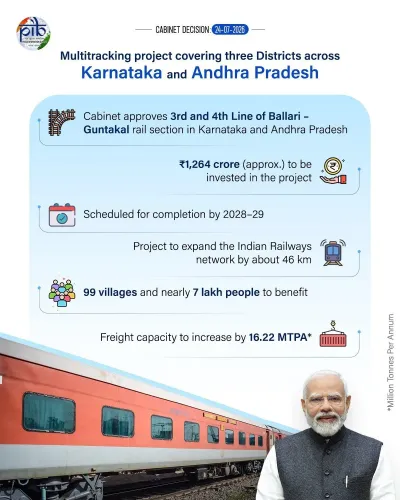
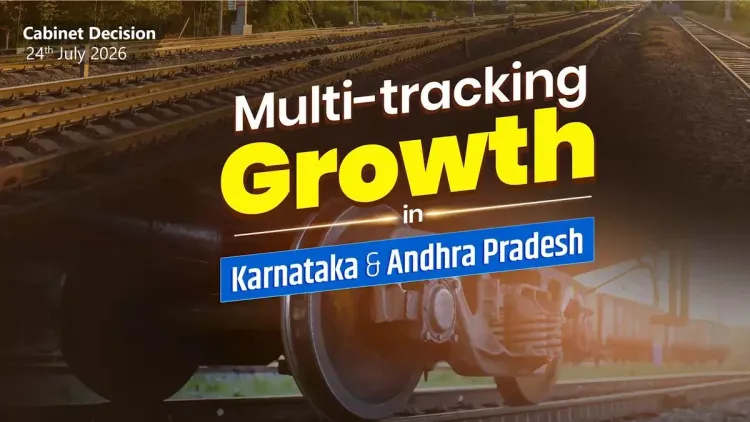
Union Minister Ashwini Vaishnaw on 25 July 2026 spotlighted the Ballari–Guntakal third and fourth rail line project, aimed at easing freight bottlenecks and boosting industrial clusters along the Karnataka–Andhra Pradesh corridor under the National Rail Plan framework.
Key Takeaways
Union Minister Ashwini Vaishnaw highlighted the Ballari–Guntakal 3rd and 4th rail line project on 25 July 2026 .
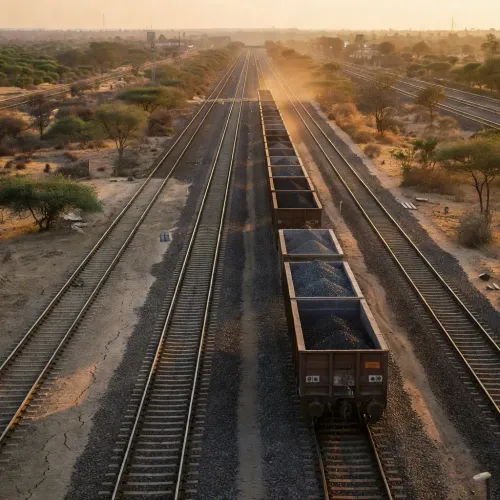
The project targets freight connectivity between Ballari (Karnataka) and Guntakal (Andhra Pradesh), a corridor critical to iron ore, steel, and manufacturing logistics.
Multi-tracking aligns with the National Rail Plan framework pursued by Indian Railways since the early 2020s to raise freight modal share.
Key beneficiaries include freight operators, mining and steel companies in the Karnataka–AP belt, and industrial clusters on both sides of the state border.
Funding allocations, tendering timelines, and land acquisition progress will be the key milestones to watch in upcoming railway budget cycles.
Union Minister Ashwini Vaishnaw on Saturday, 25 July 2026 highlighted the Ballari–Guntakal third and fourth rail line project, describing it as a measure that will strengthen freight connectivity and empower key industrial clusters along the Karnataka–Andhra Pradesh corridor.
Context
The Ballari–Guntakal corridor is one of southern India's busiest freight arteries, linking Ballari — a hub for iron ore mining and steel production in Karnataka — to Guntakal, a critical railway junction in Andhra Pradesh. Saturated track capacity on this route has long constrained the movement of bulk commodities, pushing freight onto roads and raising logistics costs for industries on both sides of the state border.
Vaishnaw stated that the project 'will strengthen freight connectivity and empower key industrial clusters across the Karnataka–Andhra Pradesh corridor,' signalling the Centre's intent to treat this stretch as a priority infrastructure investment.
Policy Backdrop
The project sits within the broader National Rail Plan framework, under which Indian Railways has pursued systematic capacity augmentation through third and fourth line additions on high-density corridors since the early 2020s. The objective is to raise the rail network's freight modal share — currently well below global benchmarks — and reduce the overall cost of logistics for Indian industry.
Multi-tracking projects on congested routes have been a consistent feature of successive railway budgets, with southern India receiving increased attention given its expanding manufacturing and mineral export base. The Karnataka–Andhra Pradesh belt, rich in iron ore, steel, and allied industries, represents a natural candidate for such investment.
Stakeholders and Impact
The primary beneficiaries of enhanced capacity on this corridor are freight operators, steel and mining companies based around Ballari, and logistics players serving ports and inland terminals in Andhra Pradesh. Additional track lines reduce congestion, improve scheduling reliability, and allow heavier and more frequent freight trains — directly cutting per-tonne transport costs.
Industrial clusters in both states stand to gain improved access to raw material supply chains and export gateways. Passenger services on the corridor are also likely to benefit indirectly, as freight and passenger trains compete for the same track slots on single or double-line sections.
What's Next
Attention will now turn to funding allocations, tendering timelines, and land acquisition milestones that will determine how quickly the project moves from announcement to execution. Future railway budget documents and revised estimates are expected to carry detailed progress indicators for this corridor.
As southern India's industrial footprint grows, the Ballari–Guntakal upgrade could serve as a template for similar multi-tracking interventions across the region's mineral and manufacturing logistics network, reinforcing the Centre's stated goal of making rail the preferred mode for bulk freight movement.
Point of View
Particularly in resource-rich southern states. Highlighting a specific corridor — rather than a broad scheme — signals an effort to demonstrate tangible, region-specific delivery ahead of continued political competition in both Karnataka and Andhra Pradesh. The framing around 'empowering industrial clusters' also ties the railways agenda to the broader 'Make in India' and logistics-cost-reduction narrative. Whether the project accelerates from announcement to ground-level execution will be the real test of its political and economic significance.
NationPress
23 Oct 2026
Frequently Asked Questions
What is the Ballari–Guntakal 3rd and 4th rail line project?
It is a capacity augmentation project by Indian Railways to add a third and fourth track on the Ballari–Guntakal corridor, which connects Karnataka's iron ore and steel hub to the key Andhra Pradesh junction at Guntakal, with the aim of easing freight congestion and reducing logistics costs.
Why is the Ballari–Guntakal corridor important for freight?
The corridor links Ballari's major iron ore mining and steel industries in Karnataka to Guntakal junction in Andhra Pradesh, making it a vital route for bulk commodity movement in southern India. Congestion on this stretch raises transport costs and limits freight capacity.
What is the National Rail Plan and how does this project fit in?
The National Rail Plan is Indian Railways' long-term capacity and infrastructure framework, under which multi-tracking on high-density corridors has been a priority since the early 2020s. The Ballari–Guntakal third and fourth line project is part of this broader effort to raise rail's freight modal share.
Who benefits from the Ballari–Guntakal rail line expansion?
Primary beneficiaries include freight operators, steel and mining companies around Ballari, logistics players serving Andhra Pradesh's ports and terminals, and industrial clusters in both Karnataka and Andhra Pradesh that depend on reliable bulk transport.
What are the next steps for the Ballari–Guntakal rail project?
Key milestones to watch include funding allocations in railway budgets, tendering timelines, and land acquisition progress. These will determine how quickly the project moves from the announcement stage to active construction and commissioning.