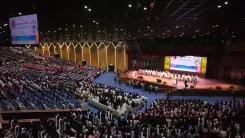
VP Radhakrishnan at RSET: Education must align with market, AI era demands
Synopsis
At RSET's 25th anniversary in Kochi, Vice President C.P. Radhakrishnan delivered a pointed message: India cannot afford to keep churning out graduates disconnected from market realities. His direct appeal to Kerala's Chief Minister to pivot toward high-tech, knowledge-based industries — and his use of China's education investment as a benchmark — signals a sharper urgency in the national conversation on higher education reform.
Key Takeaways
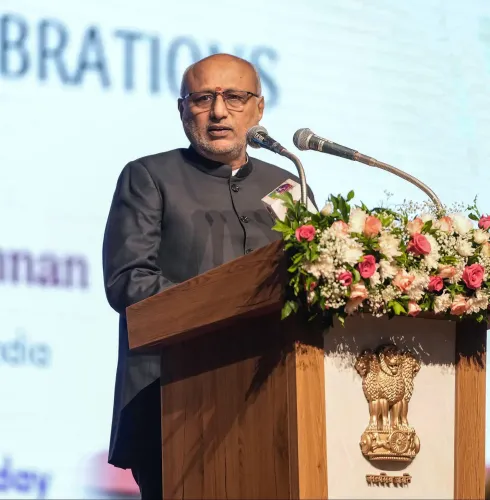
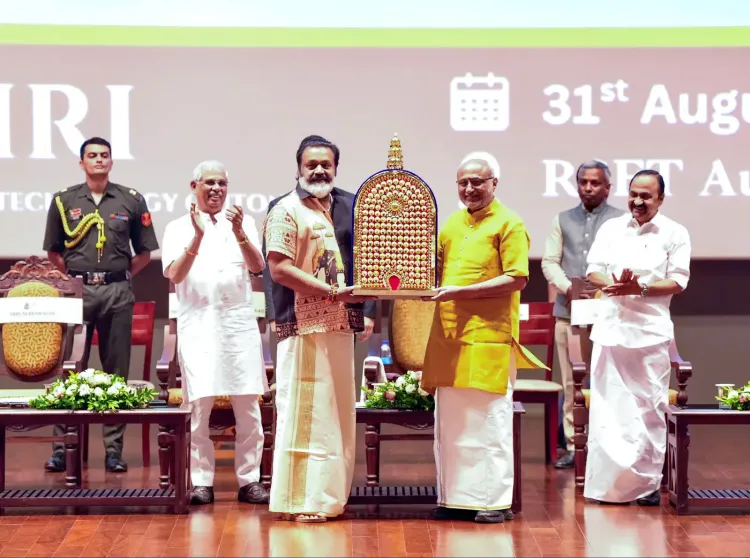
Radhakrishnan spoke at the Silver Jubilee of Rajagiri School of Engineering and Technology (RSET) in Kochi on 31 August .
He called for education to move beyond degrees toward market relevance, research, and innovation , particularly in the AI era .
Radhakrishnan urged Kerala to focus on high-tech and knowledge-based industries , citing land constraints as a barrier to traditional large-scale manufacturing.
He referenced China's sustained investment in higher education as a model for research-driven growth.
The Vice President laid the foundation stone for RSET's new Administrative Block and made a strong anti-drug appeal to students.
The event was attended by Kerala Governor Rajendra Vishwanath Arlekar , CM V.D.
Satheesan , and Union Minister Suresh Gopi , among other dignitaries.
Vice President C.P. Radhakrishnan on Monday, 31 August called for a fundamental rethink of India's higher education model, asserting that producing degree-holders alone is no longer sufficient in a technology-driven economy. Speaking at Kochi, he urged institutions and policymakers to orient education toward market relevance, research, and innovation.
Key Remarks at Confluence 3.0
Radhakrishnan delivered his address at the Silver Jubilee celebrations of Rajagiri School of Engineering and Technology (RSET) and during the inauguration of Confluence 3.0, an Industry-Academia Summit themed 'India, Impact of AI'. “We just cannot produce graduates; we have to understand the demands of the market,” he said, calling for greater emphasis on research, innovation, and problem-solving.
He commended the summit's focus on stronger industry-academia partnerships, describing them as essential to making Bharat a global hub for technology and start-ups. He also stressed the need for innovative teaching methods, interdisciplinary research, responsible use of artificial intelligence (AI), and meaningful international collaborations — all while remaining grounded in Bharat's core values.
Kerala's Strengths and Structural Challenges
Highlighting Kerala's record in literacy, social development, and human capital, Radhakrishnan said the state's strong educational base and talent pool position it well to attract high-technology enterprises. However, he flagged a structural constraint: Kerala's limited land availability and high land costs make large traditional industries difficult to establish.
Appealing directly to Chief Minister V.D. Satheesan, he urged a sharper focus on high-tech and knowledge-based industries that can create local employment, reduce out-migration, and even enable reverse migration of skilled professionals currently working abroad.
China's Higher Education Model as a Reference Point
Radhakrishnan pointed to China's transformation over recent decades as evidence of what sustained investment in higher education, research, and innovation can achieve. He urged Kerala to build a research-oriented higher education ecosystem that can replicate elements of that trajectory, adapted to India's democratic and values-based framework.
RSET's Legacy and the CMI Contribution
Recalling the founding ethos of Rajagiri School of Engineering and Technology, Radhakrishnan acknowledged the role of the Carmelites of Mary Immaculate (CMI) and the legacy of Saint Kuriakose Elias Chavara in democratising education — particularly in promoting women's education, adult literacy, and ensuring that poverty did not become a barrier to learning. He congratulated RSET on completing 25 years and appreciated its commitment to combining values with technological excellence.
He also laid the foundation stone for RSET's new Administrative Block, marking a fresh milestone in the institution's growth.
Appeal to Youth: Say No to Drugs
Radhakrishnan made a pointed appeal to students to reject drug use, invoking his mother's counsel from his own childhood. “Temporary pleasures can destroy great hopes and goals,” he said, urging young people to direct their capabilities toward personal growth, social good, and humanity's advancement.
The event was attended by Kerala Governor Rajendra Vishwanath Arlekar, Chief Minister V.D. Satheesan, Union Minister of State for Petroleum, Natural Gas and Tourism Suresh Gopi, Higher Education Minister Roji M. John, and senior management, faculty, and students of RSET. With India's AI and deep-tech ambitions accelerating, the Vice President's call for market-aligned, research-driven education is likely to resonate well beyond the Kochi auditorium.
Point of View
In a public forum, signals how urgent policymakers believe the gap has become. His appeal to Kerala's Chief Minister on high-tech industries also exposes a tension the state has long avoided confronting — that its celebrated human capital continues to leave, because the local economy has not built the industries to absorb it. The question is whether such speeches translate into policy, or remain inspirational footnotes at anniversary celebrations.
NationPress
16 Oct 2026
Frequently Asked Questions
What did Vice President Radhakrishnan say about education at the RSET event?
Vice President C.P. Radhakrishnan said education must go beyond producing graduates and align with market demands, research, and innovation. He made these remarks at the Silver Jubilee of Rajagiri School of Engineering and Technology in Kochi on 31 August, during the inauguration of the Confluence 3.0 Industry-Academia Summit.
What is Confluence 3.0 and what was its theme?
Confluence 3.0 is an Industry-Academia Summit hosted at RSET in Kochi, themed 'India, Impact of AI'. It focuses on strengthening collaboration between educational institutions and industry, particularly around artificial intelligence and emerging technologies.
What did Radhakrishnan say about Kerala's economic challenges?
He noted that Kerala's limited land availability and high land costs make large traditional industries difficult to sustain, and urged the Chief Minister to prioritise high-tech and knowledge-based industries. He argued this approach could create local employment and encourage reverse migration of skilled professionals.
Why did Radhakrishnan reference China in his speech?
Radhakrishnan cited China's transformation over recent decades as a demonstration of what sustained investment in higher education, research, and innovation can deliver. He urged Kerala and India to build similarly research-oriented ecosystems, adapted to their own values and democratic framework.
Who attended the RSET Silver Jubilee event in Kochi?
The event was attended by Kerala Governor Rajendra Vishwanath Arlekar, Chief Minister V.D. Satheesan, Union Minister of State Suresh Gopi, Higher Education Minister Roji M. John, and senior management, faculty, and students of RSET.