Is West Bengal Reshuffling IPS Officers Before Assembly Elections?
Synopsis
As West Bengal gears up for Assembly elections, the government has executed a significant reshuffle of IPS officers in politically sensitive districts, raising questions about electoral strategies and law enforcement effectiveness. With crucial constituencies at stake, these changes are seen as vital for maintaining order during the electoral process.
Key Takeaways
Significant reshuffle of IPS officers before elections.
Four officers transferred from sensitive districts.
Focus on maintaining law and order during the electoral process.
Alipurduar and Jangipur identified as crucial constituencies.
Administrative changes align with the upcoming Model Code of Conduct.
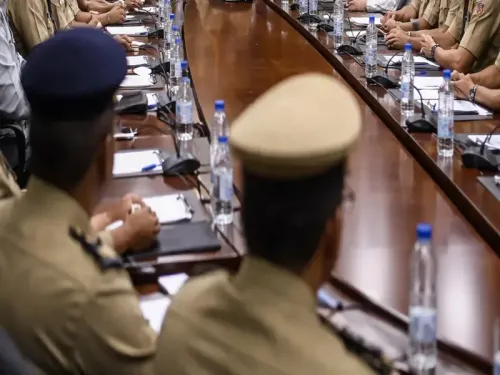
Kolkata, Feb 19 (NationPress) In preparation for the upcoming Assembly elections, the government of West Bengal executed a significant reshuffle within the state police framework on Thursday, relocating four IPS officers from their pivotal roles in politically sensitive districts.
A statement from the state Home Department indicated that these transfers were conducted in the “public interest”. However, both administrative and political analysts view this reshuffle as notable in light of the electoral preparations.
The official notice detailed alterations in the positions of Superintendents of Police (SPs) across several districts in both northern and southern Bengal that are known for their political sensitivity.
In line with the order, Khandbahale Umesh Ganapath, who was the Superintendent of Police for Alipurduar district, has been reassigned as the Superintendent of Police for the Intelligence Branch (IB) in northern Bengal. Arish Bilal, previously the Superintendent of Police in the state police's Intelligence Branch, now takes on the role of Superintendent of Police in the Basirhat Police District.
Dr. Hossain Mehedi Rahman, who served as the Superintendent of Police in Basirhat, has been transferred to Jangipur Police District within Murshidabad. Additionally, Shaw Kumar Amit, formerly the Superintendent of Police in Jangipur, steps into the role of Superintendent of Police for Alipurduar district in northern Bengal.
The notification specified that the aforementioned officers are expected to assume their new duties immediately until further instructions are provided.
Sources within the government noted that such administrative actions are standard practice ahead of significant elections to maintain effective law and order and to promote free and fair polling. Basirhat, Jangipur, and Alipurduar are regarded as politically charged districts, making such administrative modifications integral to election readiness.
Alipurduar in northern Bengal and Jangipur in Murshidabad, which has a considerable minority demographic, are anticipated to play crucial roles in the upcoming Assembly elections, underscoring the importance of administrative adjustments in these areas.
Once the Election Commission of India declares the election timetable and the Model Code of Conduct becomes active, the police and civil administration will operate under the direct oversight of the Election Commission, limiting the state government’s power to transfer officials.
Observers suggest that the state government is finalizing key administrative roles ahead of the Model Code of Conduct's enforcement to ensure readiness for election-related obligations.
Point of View
I believe these administrative changes signal a proactive approach by the West Bengal government to ensure electoral integrity. While reshuffles are common before elections, the timing and focus on sensitive districts raise important questions about the balance between political influence and law enforcement neutrality.
NationPress
22 Sept 2026
Frequently Asked Questions
Why were the IPS officers transferred?
The transfers were executed in the 'public interest' as part of the state's preparations for the upcoming Assembly elections.
Which districts were affected by the reshuffle?
The reshuffle impacted key districts including Alipurduar, Basirhat, and Jangipur, known for their political sensitivity.
What is the significance of these transfers?
These changes are aimed at ensuring effective law enforcement and maintaining order during the elections.
How does the Model Code of Conduct affect police transfers?
Once the Election Commission announces the election schedule, the state’s authority to transfer officials is restricted under the Model Code of Conduct.
What is the expected outcome of these administrative changes?
These changes are expected to enhance the management of law and order and promote free and fair polling in politically sensitive areas.