WII survey counts 586 saltwater crocodiles in Andaman and Nicobar Islands
Synopsis
The Wildlife Institute of India has counted 586 saltwater crocodiles across 173 creeks in the Andaman and Nicobar Islands — the most detailed island-wide assessment ever conducted. With nearly half the population clustered in one division and human-crocodile conflict up 75 per cent since the 2004 tsunami, the findings carry urgent implications for both conservation and public safety.
Key Takeaways
The Wildlife Institute of India (WII) recorded 586 saltwater crocodiles across 173 creeks in the Andaman and Nicobar Islands in a survey conducted in February–March 2026 .
Crocodiles were detected in 91 of 173 surveyed creeks, covering 52.6 per cent of sites.
Nearly 47 per cent of the population is concentrated in the Little Andaman and Nicobar division .
Between 1983 and 2023 , the archipelago recorded 36 cases of human-crocodile conflict; incidents rose 75 per cent after the 2004 tsunami .
About 75 per cent of attacks and sightings occur between June and December , the islands' wet season.
536 personnel across nine forest divisions were trained before the survey began.
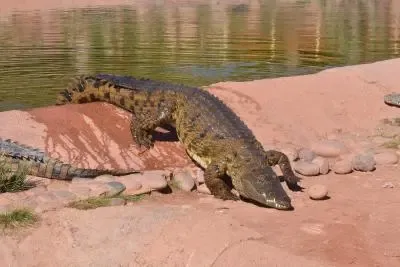
The Wildlife Institute of India (WII) has recorded 586 saltwater crocodiles across the Andaman and Nicobar Islands, according to findings from a pan-island population survey completed between February and March 2026. The study, the most comprehensive of its kind conducted in the archipelago, offers a detailed island-wide assessment of distribution and population status of the saltwater crocodile (Crocodylus porosus) — the largest living crocodilian on the planet.
How the Survey Was Conducted
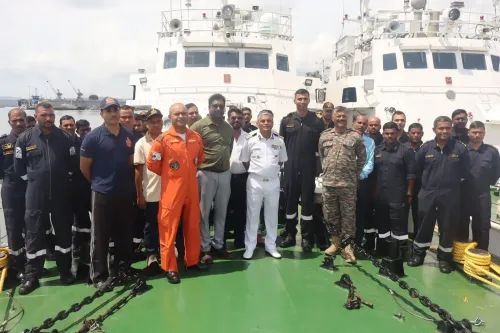
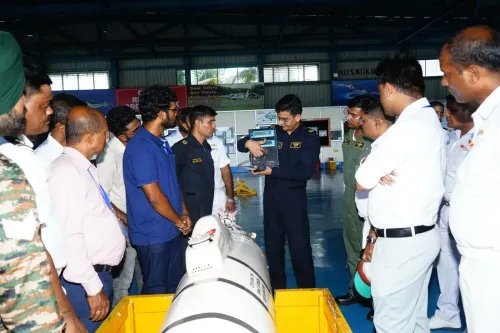
The survey was undertaken by the WII under the directives of the Andaman and Nicobar Islands Integrated Development Corporation Limited (ANIIDCO), in collaboration with the Andaman and Nicobar Forest Department. Before fieldwork commenced, 536 personnel were trained across nine forest divisions. Of 176 creeks selected for the survey, 173 were successfully covered — three could not be accessed due to terrain constraints.
Researchers employed a dependent double-observer method to count the population and estimate detection probability. To minimise the risk of crocodiles moving between survey sites, all fieldwork was completed in three closely spaced phases within a single season. Each site received four replicate surveys — two diurnal and two nocturnal — to improve detection accuracy and reduce observer bias. The minimum population estimate was derived by summing the maximum cumulative count from both observers across all replicates at each site.
Key Findings: Where the Crocodiles Are
Of the 173 surveyed creeks, crocodiles were detected in 91 creeks, representing 52.6 per cent of surveyed sites. Notably, nearly 47 per cent of the total estimated saltwater crocodile population is concentrated in the Little Andaman and Nicobar division, highlighting significant spatial clustering within the archipelago.
The saltwater crocodile inhabits a wide range of coastal habitats — lagoons, deltas, estuaries, marshes, and creeks. In India, the species occurs across three disjunct populations: Odisha, West Bengal, and the Andaman and Nicobar Islands. Globally, its range extends across the Indo-Pacific region.
Rising Human-Crocodile Conflict
The survey data also feeds into urgent conservation and safety concerns. Between 1983 and 2023, the archipelago recorded 36 cases of fatal and non-fatal human-crocodile conflicts. A separate study found that conflict incidents increased by 75 per cent following the 2004 tsunami, a pattern that researchers have been asked to investigate further.
Seasonality plays a clear role: nearly 75 per cent of attacks and sightings were recorded between June and December, corresponding to the islands' wet season. Contributory factors include livestock grazing near crocodile habitats, disposal of protein-rich waste near creeks and beaches — particularly at tourist sites — and unregulated human activity close to nesting zones during the breeding season.
Conservation and Management Implications
The findings form part of WII's 'Conservation and Management Plan of Saltwater Crocodile in the Andaman and Nicobar Islands' project. Authorities say the island-wide population baseline will support more targeted conflict mitigation strategies, habitat protection measures, and long-term conservation planning. With nearly half the population concentrated in one division, conservation resources can now be more precisely directed.
The study's methodology — multi-phase, multi-observer, multi-time surveys across a geographically complex archipelago — is expected to serve as a replicable framework for crocodile population assessments elsewhere in India.
Point of View
And its value lies not just in the headline count but in the spatial granularity — nearly half the population is in one division, which should concentrate both conservation resources and conflict-mitigation efforts. The 75 per cent post-tsunami spike in human-crocodile conflict is a data point that has gone underreported nationally, and the drivers — waste disposal near tourist creeks, livestock proximity, unregulated activity during breeding season — are all manageable if there is administrative will. What this study does not yet resolve is a trend line: without a pre-2026 comparable baseline, it is difficult to say whether the population is recovering, stable, or declining. That longitudinal dimension should be the next research priority.
NationPress
19 Sept 2026
Frequently Asked Questions
How many saltwater crocodiles were found in the Andaman and Nicobar Islands?
The Wildlife Institute of India recorded 586 saltwater crocodiles across 173 surveyed creeks in the Andaman and Nicobar Islands during a survey conducted in February–March 2026. Crocodiles were detected at 91 of the 173 sites, representing 52.6 per cent of locations surveyed.
Where are most saltwater crocodiles concentrated in the Andaman and Nicobar Islands?
Nearly 47 per cent of the total estimated saltwater crocodile population is concentrated in the Little Andaman and Nicobar division. The remaining population is distributed across other creek systems in the archipelago.
How was the WII crocodile survey conducted?
The survey used a dependent double-observer method across 173 creeks, with four replicate surveys — two diurnal and two nocturnal — at each site. All fieldwork was completed in three closely spaced phases within a single season to minimise crocodile movement between sites. A total of 536 personnel were trained across nine forest divisions before fieldwork began.
Why has human-crocodile conflict increased in the Andaman and Nicobar Islands?
Conflict cases rose by 75 per cent following the 2004 tsunami, according to a separate study cited in the WII report. Contributing factors include livestock near crocodile habitats, disposal of protein-rich waste near creeks and beaches at tourist sites, and unregulated human activity near nesting zones during the breeding season. About 75 per cent of attacks and sightings occur between June and December.
What will the WII study be used for?
The findings form part of WII's Conservation and Management Plan for the saltwater crocodile in the Andaman and Nicobar Islands, commissioned by ANIIDCO in collaboration with the Andaman and Nicobar Forest Department. The population baseline will inform conflict mitigation strategies, habitat protection, and long-term conservation planning across the archipelago.