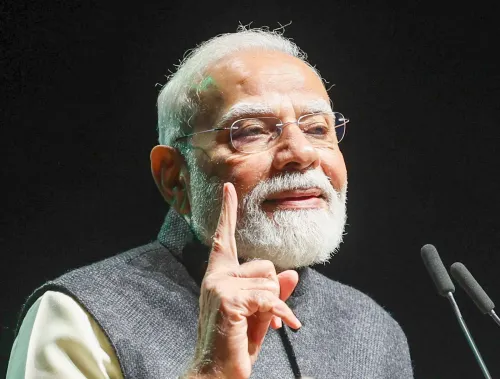
Yadav: PM Modi to flag off India's first hydrogen train

Synopsis
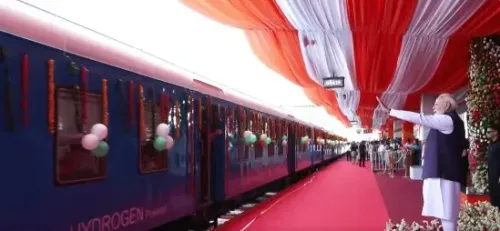
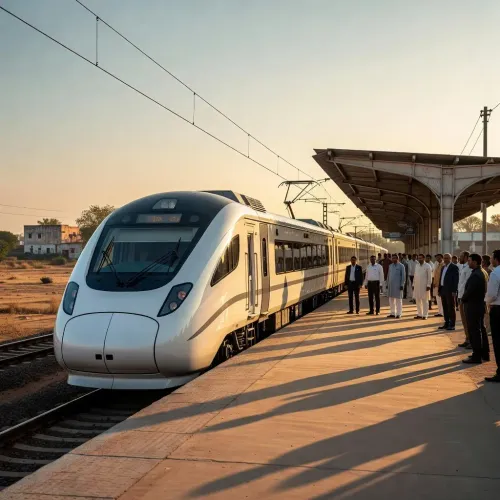
Prime Minister Narendra Modi is set to flag off India's first indigenously built hydrogen-powered train on the Jind–Sonipat route in Haryana. The 10-coach train runs on a 1,200 kW fuel cell system and emits only water vapour, with indigenous refuelling infrastructure already in place at Jind — a milestone for Aatmanirbhar Bharat and India's net-zero rail ambitions.
Key Takeaways
PM Narendra Modi will flag off India's first indigenous hydrogen-powered train on the Jind–Sonipat route in Haryana.
The train features a 1,200 kW hydrogen fuel cell propulsion system across 10 coaches and emits only water vapour.
Indigenous hydrogen storage and refuelling infrastructure has been established at Jind , making the corridor self-sufficient.
The initiative advances Indian Railways' goal of net-zero carbon operations by 2030 and India's national net-zero target by 2070 .
The project is framed under Aatmanirbhar Bharat and aligns with the National Green Hydrogen Mission .
India joins Germany and a handful of global leaders in operationalising hydrogen rail technology.
Union Environment Minister Bhupender Yadav on Friday, 17 July 2026, announced that Prime Minister Narendra Modi will flag off India's first indigenously developed hydrogen-powered train, set to run on the Jind–Sonipat route in Haryana — marking a landmark moment in the country's push for green rail technology.
Context
Yadav's post describes the train as a 10-coach rake equipped with a 1,200 kW hydrogen fuel cell propulsion system that emits only water vapour during operation. The minister framed the development as evidence of India's 'commitment to sustainable innovation and self-reliance,' invoking the #AatmanirbharBharat vision championed by the Modi government since 2020. Crucially, indigenous hydrogen storage and refuelling infrastructure has been set up at Jind, making the corridor a self-contained green mobility pilot.
The choice of the Jind–Sonipat corridor — a relatively short stretch — is consistent with global practice of trialling hydrogen trains on bounded, manageable routes before wider network deployment.
Policy Backdrop
India committed to a net-zero emissions target by 2070 at the COP26 climate summit in 2021, and Indian Railways has separately declared an ambition to achieve net-zero carbon operations by 2030 — one of the most ambitious decarbonisation pledges by any national rail network globally. The hydrogen train initiative sits squarely within that trajectory.
The project also aligns with the National Green Hydrogen Mission, under which India aims to develop domestic production, storage, and end-use capacity for green hydrogen. By deploying indigenous propulsion technology and locally built refuelling infrastructure, the pilot reduces dependence on imported diesel and foreign rail technology — directly echoing the Aatmanirbhar Bharat programme launched in 2020.
India joins a small group of countries — including Germany, which deployed the world's first hydrogen passenger train in 2022 — that have moved hydrogen rail from concept to operational reality.
Stakeholders and Impact
Rail passengers on the Jind–Sonipat corridor stand to be the immediate beneficiaries, travelling on a zero-emission service. Domestic renewable energy and hydrogen technology firms gain a high-profile demonstration platform that could unlock further government and private investment.
For Indian Railways, which operates one of the world's largest rail networks and has historically been a major diesel consumer, a successful hydrogen pilot would validate a scalable alternative to both diesel and conventional electric traction in areas where overhead electrification is not yet complete. Environment advocates and India's international climate partners will also watch the rollout closely as a signal of the country's ability to indigenise clean-energy transport.
What's Next
The immediate focus will be on the formal flag-off by Prime Minister Modi and the commencement of passenger or trial operations on the Jind–Sonipat route. Beyond the pilot, the government is expected to evaluate the performance data before deciding on the rollout of additional hydrogen train sets across other corridors.
Integration with National Green Hydrogen Mission production targets will be critical — scaling hydrogen rail requires a reliable, affordable domestic supply of green hydrogen. The success of the Jind refuelling hub as a replicable model will determine how quickly India can expand hydrogen mobility beyond this inaugural corridor.
Point of View
Tangible climate achievement ahead of ongoing global scrutiny of India's 2070 net-zero pledge. For the Environment Ministry, associating green hydrogen with Aatmanirbhar Bharat broadens the political coalition behind decarbonisation by framing it as industrial self-reliance rather than external climate pressure. The choice of an indigenous propulsion system and local refuelling hub at Jind is a deliberate signal that India intends to be a technology producer, not just a technology adopter, in the global clean-energy transition. Whether the pilot can scale will depend on the National Green Hydrogen Mission delivering affordable domestic supply — the real test lies ahead.
NationPress
17 Jul 2026
Frequently Asked Questions
What is India's first hydrogen train and where will it run?
India's first indigenously developed hydrogen-powered train is a 10-coach rake equipped with a 1,200 kW hydrogen fuel cell propulsion system. It will operate on the Jind–Sonipat route in Haryana and emits only water vapour, with refuelling infrastructure set up at Jind.
Who will flag off the hydrogen train in India?
Prime Minister Narendra Modi is scheduled to flag off the hydrogen train, as announced by Union Environment Minister Bhupender Yadav on 17 July 2026.
How does the hydrogen train fit into India's climate goals?
Indian Railways has pledged net-zero carbon operations by 2030, and India committed to a national net-zero target by 2070 at COP26. The hydrogen train pilot directly supports both goals by replacing diesel traction with zero-emission fuel cell technology.
What is the National Green Hydrogen Mission and how is it connected?
The National Green Hydrogen Mission is India's framework to develop domestic green hydrogen production, storage, and end-use capacity. The Jind hydrogen train pilot is a flagship end-use demonstration under this broader mission.
Is India the first country to run a hydrogen passenger train?
No. Germany deployed the world's first hydrogen passenger train in 2022. However, India's train is notable for being indigenously developed, placing India among a small group of countries operating hydrogen rail technology.