Will the Budget 2026 Enhance Education and Create Job Opportunities?
Synopsis
The Union Budget 2026-27, termed the Viksit Bharat Budget by Education Minister Dharmendra Pradhan, aims to enhance education and create job opportunities. With a significant increase in education funding, this budget plans to support the youth and empower various sectors, making it a pivotal moment for India's growth.
Key Takeaways
Viksit Bharat Budget aims to enhance education and job creation.
Education funding increased by 8.27% .
Provisions for girls’ hostels in every district for STEM education .
Establishment of a National Institute of Design in eastern India.
Focus on creating content creator labs in schools and colleges.
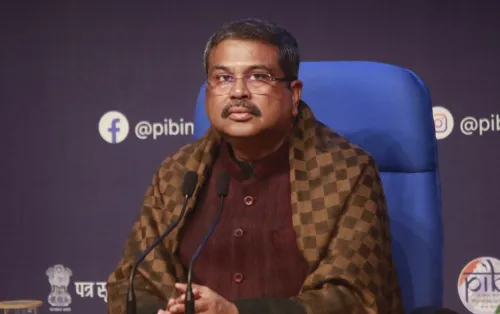
New Delhi, Feb 1 (NationPress) Union Education Minister Dharmendra Pradhan praised the Union Budget 2026-27, dubbing it the Viksit Bharat Budget, stating that it aims to enhance both education and job creation.
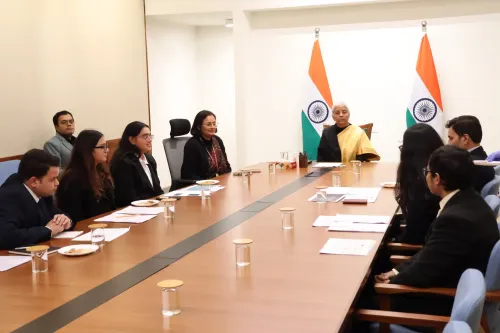
The budget was unveiled by Union Finance Minister Nirmala Sitharaman in Parliament.
"The Viksit Bharat Budget is inclusive, aimed at boosting education and generating employment, while laying out a roadmap for the next stage of development," Pradhan remarked in a video message.
He pointed out that this budget marks a significant step forward in development.
"This year, the funding for education has been increased by 8.27 percent compared to last year’s budget," Pradhan emphasized, highlighting the government's dedication to education.
He described the Budget as forward-thinking, youth-oriented, and focused on creating jobs.
"This budget embodies the principle of Sabka Saath, Sabka Vikas, ensuring that especially poor and middle-class families gain benefits," Pradhan stated in a post on the social media platform X.
The Education Minister referred to the provisions in the Budget as significant investments aimed at enhancing education and skills for the future across India.
FM Sitharaman, during her speech, revealed plans to establish a high-powered committee focused on transitioning from education to employment and enterprise, particularly emphasizing the services sector as a vital component of a Viksit Bharat.
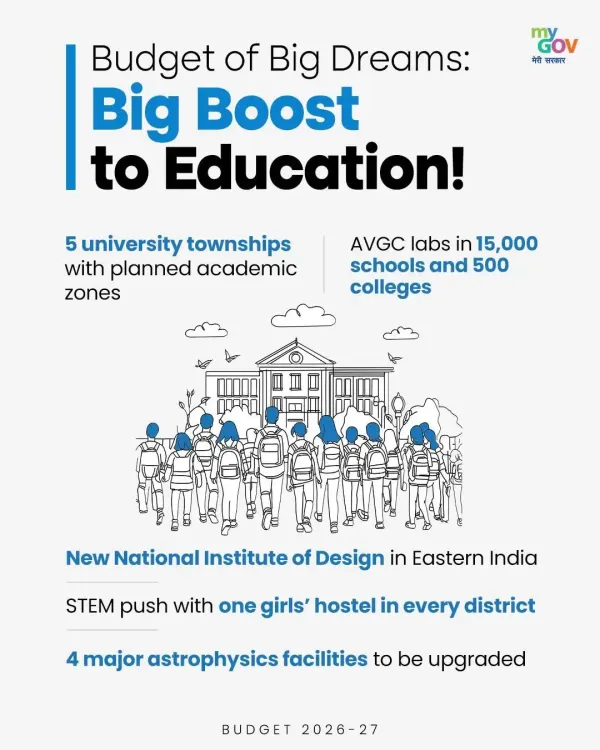
Proposed initiatives include creating five university townships near major industrial and logistics corridors, along with a girls’ hostel in every district to promote STEM education.
"In higher education STEM institutions, the extended hours for study and lab work present challenges for female students. With VGF/capital support, one girls' hostel will be established in every district," Sitharaman stated while outlining the Budget.
Additionally, the Budget suggests the creation of a National Institute of Design in eastern India.
Moreover, content creator labs will be established in 15,000 schools and 500 colleges, while the Digital Knowledge Grid will be developed to consolidate India’s cultural, heritage, and spiritual knowledge onto a single platform.
Point of View
I observe that the Union Budget 2026-27 is a strategic step towards enhancing education and employment. It reflects the government's commitment to inclusive growth and the empowerment of the youth. The proposed initiatives, particularly in STEM education for girls, are commendable and align with the broader vision of a developed India.
NationPress
20 Oct 2026
Frequently Asked Questions
What is the Viksit Bharat Budget?
The Viksit Bharat Budget refers to the Union Budget 2026-27 which aims to enhance education and create job opportunities while focusing on inclusive growth.
How much has the education budget increased?
The budget allocation for education has increased by 8.27% from the previous budget.
What initiatives are included for women's education?
One of the key initiatives is establishing a girls' hostel in every district to support STEM education for female students.
What is the Digital Knowledge Grid?
The Digital Knowledge Grid is a proposed initiative to consolidate India's cultural, heritage, and spiritual knowledge onto a single platform.
What are the proposed university townships?
Five university townships are planned to be set up near major industrial and logistic corridors to enhance education and employment opportunities.