Chinese MLCC makers CCTC, Fenghua surge on AI-driven H1 profits
Synopsis
China's top MLCC producers CCTC and Guangdong Fenghua posted profits up to 74% in H1 2026, with shares surging as AI server buildout supercharges demand for these tiny but critical electronic components.
Key Takeaways
CCTC revenue rose 55 per cent to 6.4 billion yuan (US$952.3 million) in H1 2026 , with net profit up 56 per cent to 1.9 billion yuan .
Guangdong Fenghua net profit jumped 74 per cent year-on-year to 290.3 million yuan ; sales rose 26 per cent to 3.5 billion yuan .
CCTC 's Hong Kong -listed shares gained more than 4 per cent on 28 August 2026 ; its Shenzhen shares rose nearly 1 per cent .
Both companies are pivoting toward high-end MLCCs for AI server and automotive electronics segments in H2 2026 .
CCTC cited recovering MLCC prices and improving market sentiment as key drivers of the revenue surge.
Chaozhou Three-Circle Company (CCTC) and Guangdong Fenghua Advanced Technology, two of China's largest makers of multilayer ceramic capacitors (MLCCs), posted sharp share gains on Friday, 28 August 2026, after reporting surging first-half revenue and profits fuelled by accelerating demand from the artificial intelligence sector.
Strong H1 earnings drive market rally
CCTC's Shenzhen-listed shares climbed nearly 1 per cent while its Hong Kong-listed stock rose more than 4 per cent. Shares of Guangdong Fenghua gained approximately 3 per cent in morning trading, following earnings disclosures made on Thursday.
CCTC reported a 55 per cent surge in revenue to 6.4 billion yuan (US$952.3 million) for the first half of 2026, with net profit jumping 56 per cent to 1.9 billion yuan. The company attributed the growth to improving market sentiment and a recovery in MLCC prices.
Fenghua posts 74% profit jump on AI, auto demand
Guangdong Fenghua reported a 74 per cent year-on-year rise in net profit to 290.3 million yuan for the first half of 2026, with sales up 26 per cent to 3.5 billion yuan. In its interim report, the company highlighted progress in scaling up production of higher-end components, “centring around high-growth segments like AI computing and automotive electronics.”
Why it matters: MLCCs are the 'rice of electronics'
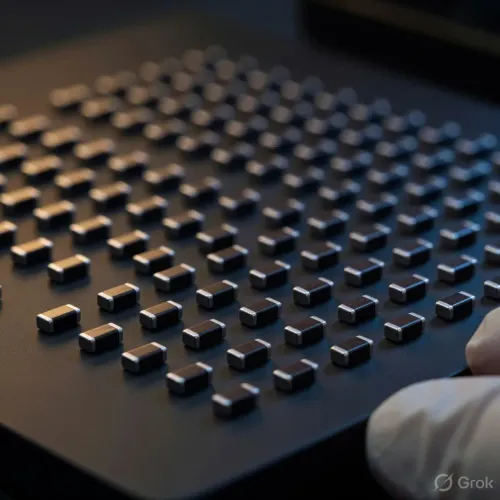
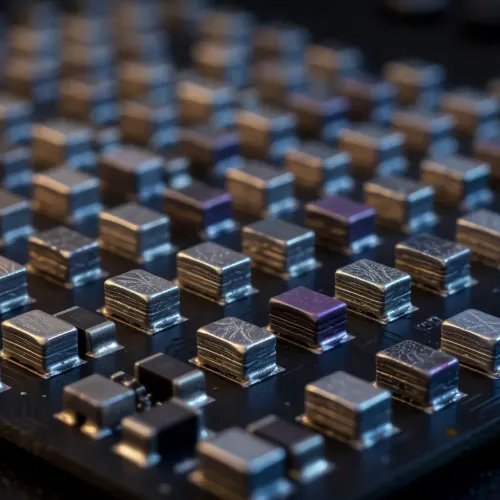
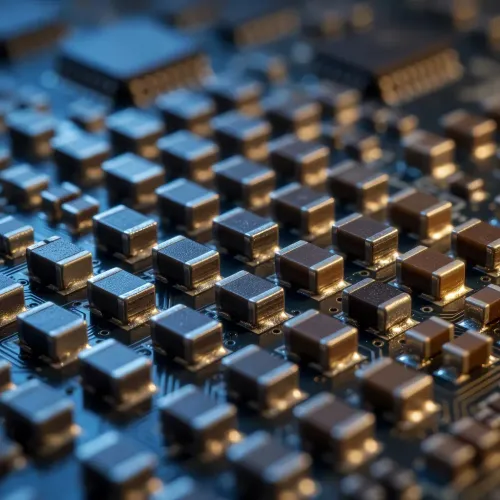
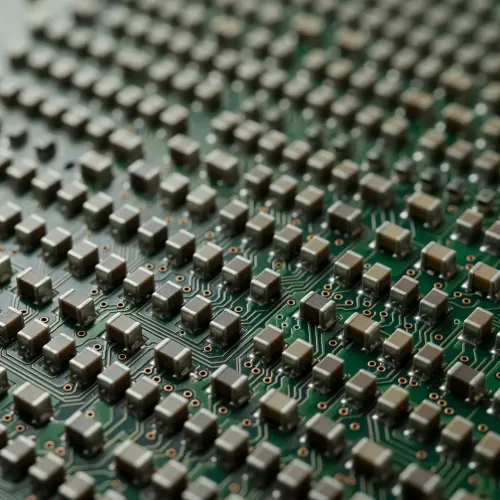
MLCCs — often called the “rice of the electronics industry” for their ubiquity — are passive components found in virtually every electronic device, from smartphones to servers. As AI infrastructure buildout accelerates globally, demand for high-capacitance MLCCs used in data centre servers has intensified, lifting prices and volumes for leading producers.
The segment is dominated globally by Japan's Murata Manufacturing and South Korea's Samsung Electro-Mechanics (SEMCO), making the strong performance of Chinese players a signal of shifting competitive dynamics in passive components.
What's next: High-end server and automotive push
For the second half of 2026, CCTC said it would intensify its focus on high-end MLCCs for the server and automotive sectors, targeting breakthroughs in — and mass production of — ultra-high-capacitance, large-format products. Guangdong Fenghua is pursuing a parallel strategy, pivoting its product mix toward premium tiers to capture margin expansion alongside volume growth.
With AI infrastructure spending showing no signs of deceleration, both companies are positioned to benefit further if server-grade MLCC demand continues to outpace supply — a dynamic that analysts say could sustain elevated pricing well into 2027.
Point of View
It typically precedes a broader component upcycle. Chinese producers are also using this AI windfall to fund a deliberate assault on the premium tier long held by Murata and SEMCO, raising the competitive stakes in a segment that underpins every advanced electronics platform. If Beijing's AI infrastructure push sustains its current trajectory, the passive-component supply chain may become the next front in the broader technology self-sufficiency drive.
NationPress
12 Oct 2026
Frequently Asked Questions
Why did CCTC and Guangdong Fenghua shares rise on 28 August 2026?
Shares of CCTC and Guangdong Fenghua rose on 28 August 2026 after both companies reported strong first-half earnings driven by surging AI-related demand for MLCCs. CCTC 's Hong Kong shares gained more than 4 per cent , while Fenghua's Shenzhen shares climbed about 3 per cent .
What are MLCCs and why are they important for AI?
MLCCs (multilayer ceramic capacitors) are tiny passive components used in virtually every electronic device, often called the “rice of the electronics industry.” In AI applications, high-capacitance MLCCs are critical for stabilising power delivery in data centre servers and GPUs, making them essential to the AI infrastructure buildout.
How much did CCTC's revenue grow in the first half of 2026?
CCTC 's revenue surged 55 per cent to 6.4 billion yuan (US$952.3 million) in H1 2026 , with net profit rising 56 per cent to 1.9 billion yuan . The company attributed the growth to recovering MLCC prices and improved market sentiment.
What is Guangdong Fenghua's strategy for the second half of 2026?
Guangdong Fenghua is shifting its product mix toward higher-end MLCCs targeting AI computing and automotive electronics segments. The company said in its interim report it had made progress in developing and scaling up production of premium components in these high-growth areas.
Who are the main global competitors to Chinese MLCC makers?
The global MLCC market is led by Japan 's Murata Manufacturing and South Korea 's Samsung Electro-Mechanics (SEMCO) . Chinese producers like CCTC and Guangdong Fenghua are using AI-driven revenue growth to fund a push into the high-end segments these Japanese and Korean firms have traditionally dominated.