China's glueball discovery hailed as 'triumph' by global physicists
Synopsis
Chinese-led physicists have delivered the strongest-ever experimental evidence for the glueball — a particle made purely of force, theorised since the 1970s — after 15 years of work at a Beijing underground collider, prompting Nobel Prize speculation.
Key Takeaways
Chinese-led researchers from 15 countries have presented the strongest evidence yet for the glueball , a particle made entirely of gluons, after 15 years of work.
The findings were announced at the International Conference on High Energy Physics in Natal, Brazil in August 2026 .
Data was collected at an underground collider in western Beijing , the Beijing Electron Positron Collider , from billions of measurements.
Colin Morningstar , theoretical physicist at Carnegie Mellon University, Pittsburgh , called the study 'an experimental triumph.' Glueballs were first theoretically predicted in the early 1970s and have been an unsolved puzzle in physics ever since.
Independent verification, including potential corroboration at Europe's Large Hadron Collider , is expected to follow.
A Chinese-led research team has produced the strongest experimental evidence yet for the existence of the glueball — a particle made entirely of pure force — in a breakthrough that the international physics community is calling a landmark moment for particle physics. The findings were presented last week at the International Conference on High Energy Physics in Natal, Brazil, drawing immediate acclaim from scientists worldwide.
What is a glueball and why does it matter?
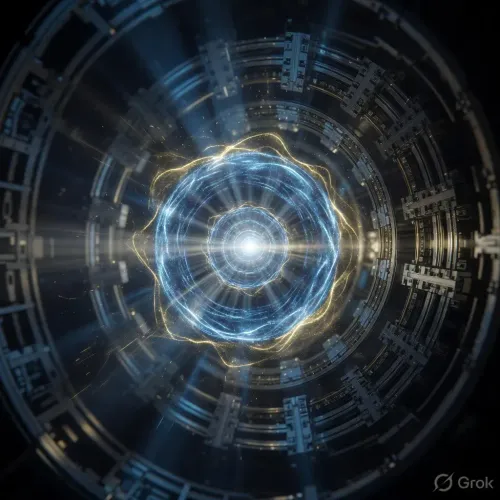
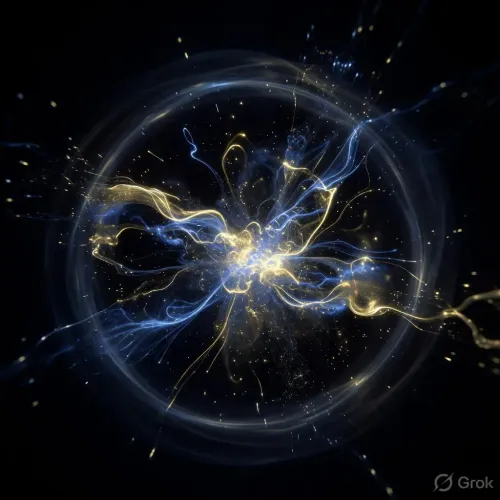
Glueballs are exotic particles composed entirely of gluons — the tiny, massless carriers of the strong nuclear force that binds atomic nuclei together. First theoretically predicted in the early 1970s, glueballs have remained one of the most elusive and debated puzzles in modern physics for more than five decades. Confirming their existence would fill a critical gap in the Standard Model of particle physics.
The discovery: 15 years, 15 countries, billions of measurements
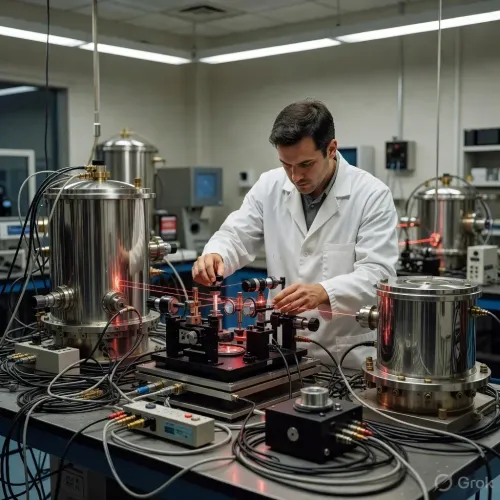
The breakthrough is the result of 15 years of collaborative work involving researchers from 15 countries, who analysed billions of measurements collected at an underground particle collider in western Beijing — the Beijing Electron Positron Collider. The sheer scale of the data-sifting effort underscores the complexity of isolating a signal for a particle that interacts only through the strong force, making it extraordinarily difficult to detect amid experimental noise.
Global scientific reaction
Colin Morningstar, a theoretical physicist at Carnegie Mellon University in Pittsburgh, Pennsylvania, described the study as 'an experimental triumph.' The endorsement from a leading Western theorist signals broad cross-border confidence in the rigour of the methodology. On Chinese social media, public discourse quickly turned to whether the discovery could be a contender for a future Nobel Prize in Physics.
Why it matters beyond the lab
The glueball, if confirmed through further independent verification, would represent the first observed particle made exclusively of force-carrying bosons — a category of matter with no known analogue. This distinguishes it fundamentally from all previously discovered particles, which contain quarks. The discovery also reinforces the scientific value of China's domestic accelerator infrastructure at a time when the country is investing heavily in next-generation collider projects to compete with Europe's Large Hadron Collider.
What's next
Independent replication and peer review will be the immediate next steps, as is standard for claims of this magnitude in high-energy physics. Physicists at facilities including the Large Hadron Collider in Europe may seek to corroborate the findings using different experimental setups. The broader particle physics community will be watching closely to see whether this evidence crosses the conventional 5-sigma threshold required to claim a formal discovery.
Point of View
Beijing is visibly advancing in foundational science that requires no imported chips or foreign components. The Nobel speculation on Chinese social media, however premature, reflects a national narrative of scientific self-sufficiency that policymakers in Washington and Brussels will note. If independent replication holds, this may accelerate China's case for hosting the next major international collider project.
NationPress
24 Sept 2026
Frequently Asked Questions
What is a glueball and has it been discovered?
A glueball is a hypothetical particle made entirely of gluons, the force-carrying particles of the strong nuclear force. Chinese-led researchers have now presented what scientists are calling the strongest experimental evidence yet for its existence, though independent verification is still needed to formally confirm the discovery.
Where was the glueball research conducted?
The research was conducted at the Beijing Electron Positron Collider , an underground particle accelerator in western Beijing, China . Scientists from 15 countries collaborated over 15 years , sifting through billions of measurements to isolate the signal.
What did scientists say about the glueball discovery?
Colin Morningstar , a theoretical physicist at Carnegie Mellon University in Pittsburgh, Pennsylvania , called the study 'an experimental triumph.' The findings were presented at the International Conference on High Energy Physics in Natal, Brazil .
Could the glueball discovery win a Nobel Prize?
Nobel Prize speculation has emerged on Chinese social media following the announcement, though no formal nomination process is underway. A Nobel Prize in Physics typically requires broad independent verification and acceptance by the scientific community over time.
What happens next after the glueball evidence is announced?
The immediate next step is independent replication by other experimental facilities, potentially including the Large Hadron Collider in Europe . Physicists will also look for whether the evidence meets the conventional 5-sigma statistical threshold required to claim a formal particle discovery.