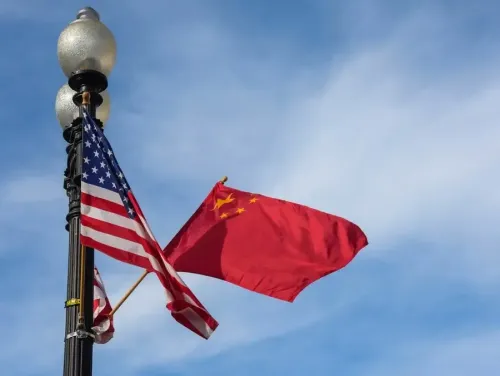
China rejects AI 'pacing' calls, warns of US tech entrenchment

Synopsis
China's researchers and state media have flatly rejected Silicon Valley's 'AI pacing' push, accusing the US of using safety rhetoric to permanently entrench its frontier model lead — a charge that reframes the global AI race as a geopolitical standoff with no ceasefire in sight.
Key Takeaways
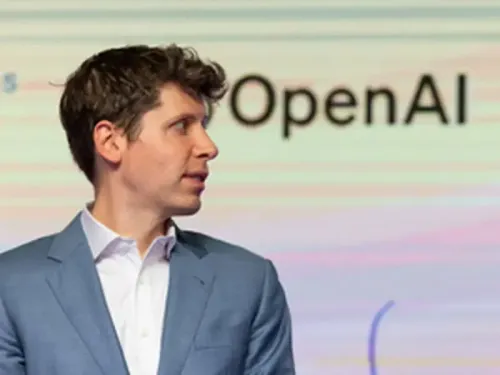
OpenAI CEO Sam Altman called for industry-wide AI 'pacing' on Monday, 14 September 2026 , warning that competitive pressure must not override safety.
Chinese researchers and state media , including Global Times , rejected the proposal, arguing it is designed to entrench America 's existing AI lead.
Altman wrote on X : 'The world deserves confidence that American companies developing increasingly capable AI will act responsibly.' China 's domestic AI players — including Alibaba Group Holding , Shanghai AI Lab , and MiniMax — are actively racing to close the gap with US frontier models.
The Cyberspace Administration of China has been advancing its own AI governance frameworks, positioning Beijing as an independent rule-setter.
The dispute echoes earlier semiconductor export control friction and raises the spectre of a formal AI Cold War between the two largest tech powers.
Chinese researchers and state media have sharply rejected calls from US tech leaders for a voluntary slowdown in artificial intelligence development, framing the proposal as a strategic manoeuvre to lock in America's existing technological advantage rather than a genuine safety initiative. The pushback marks a significant escalation in the rhetorical dimension of the global AI race, with Beijing-aligned voices openly questioning the motives behind Silicon Valley's self-regulation push.
Altman's 'Pacing' Call Ignites Global Debate
The controversy sharpened on Monday, 14 September 2026, when OpenAI CEO Sam Altman amplified a growing chorus of Silicon Valley executives demanding industry-wide restraint. Writing on social media platform X, Altman argued that competitive pressure must not override safety as AI capabilities advance at an accelerating pace. 'The world deserves confidence that American companies developing increasingly capable AI will act responsibly, especially as the trajectory of progress has steepened,' he wrote. He added: 'Every frontier lab must deliver on this, and there is no reason any of us should come to work if we cannot.'Why It Matters
The 'pacing' debate sits at the intersection of genuine safety concerns and hard geopolitical competition. For China, any internationally coordinated slowdown that takes effect while US labs — including OpenAI, Anthropic, and others — hold the frontier model lead would effectively freeze an asymmetric advantage in place. Chinese researchers and outlets including Global Times have argued that framing restraint as responsibility is a form of soft power, designed to delegitimise rivals who decline to participate.The Competitive Backdrop
The dispute unfolds as China's domestic AI ecosystem — spanning Alibaba Group Holding, Shanghai AI Lab, MiniMax, and a constellation of state-backed research institutes — races to close the gap with US frontier models. Regulatory bodies including the Cyberspace Administration of China have simultaneously pushed forward their own AI governance frameworks, positioning Beijing as a rule-setter rather than a rule-taker in the emerging global AI order. The dynamic mirrors earlier friction over semiconductor export controls, where US-led restrictions accelerated China's push for self-sufficiency.Broader Implications: An AI Cold War?
Industry analysts have noted that the pacing argument is not new — figures including Elon Musk have previously called for AI development pauses — but the explicit framing around AGI timelines and national competitiveness gives the current debate a sharper geopolitical edge. With both sides accelerating investment and neither showing appetite for binding multilateral agreements, the prospect of a coordinated global pause appears increasingly remote. The debate is likely to intensify as frontier labs approach capability thresholds that trigger new regulatory and security conversations in both Washington and Beijing.What's Next
The immediate question is whether US frontier labs will translate 'pacing' rhetoric into concrete, verifiable commitments — and whether any such commitments will be recognised internationally. Watch for responses from the Cyberspace Administration of China and affiliated research bodies, whose official positions will signal how aggressively Beijing intends to use the pacing debate as a diplomatic and competitive lever going forward.Point of View
From a competitor's vantage point, from market-protection arguments. What mainstream coverage underplays is that China's pushback is not merely rhetorical — it reflects a calculated policy choice to treat any externally imposed slowdown as equivalent to a sanctions regime. The parallel with semiconductor export controls is precise: each US-led norm-setting effort accelerates Beijing's drive for indigenous capability, ultimately widening the bifurcation of the global AI stack. The actors most exposed are mid-tier nations and multinational enterprises that will be forced to choose alignment with one governance framework or the other.
NationPress
16 Sept 2026
Frequently Asked Questions
Why is China rejecting calls for AI pacing?
China is rejecting AI pacing proposals because its researchers and state media believe the push is designed to lock in the United States' existing frontier model advantage rather than address genuine safety risks. From Beijing's perspective, agreeing to a voluntary slowdown while US labs hold the lead would permanently entrench American dominance in artificial intelligence.
What did Sam Altman say about AI pacing?
OpenAI CEO Sam Altman called for industry-wide AI pacing on Monday, 14 September 2026, writing on X that 'The world deserves confidence that American companies developing increasingly capable AI will act responsibly, especially as the trajectory of progress has steepened.' He added that 'every frontier lab must deliver on this.'
Which Chinese AI companies are involved in the race against US labs?
Key Chinese players in the AI race include Alibaba Group Holding, Shanghai AI Lab, and MiniMax, alongside a range of state-backed research institutes. The Cyberspace Administration of China is also advancing domestic AI governance frameworks to position Beijing as an independent global rule-setter.
What is the significance of the AI Cold War framing?
The AI Cold War framing signals that the competition between the US and China has moved beyond technical benchmarks into regulatory and diplomatic territory. Neither side has shown appetite for binding multilateral agreements, making a coordinated global pause on AI development appear increasingly unlikely.
How does this relate to earlier US-China tech disputes?
The AI pacing dispute mirrors earlier friction over US semiconductor export controls, where restrictions on chip access accelerated China's push for self-sufficiency. Analysts note that US-led norm-setting efforts in AI could similarly drive Beijing to deepen indigenous capability development rather than align with Western governance frameworks.