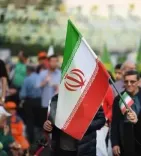
China sends scientists to Iran for rare earth exploration and processing
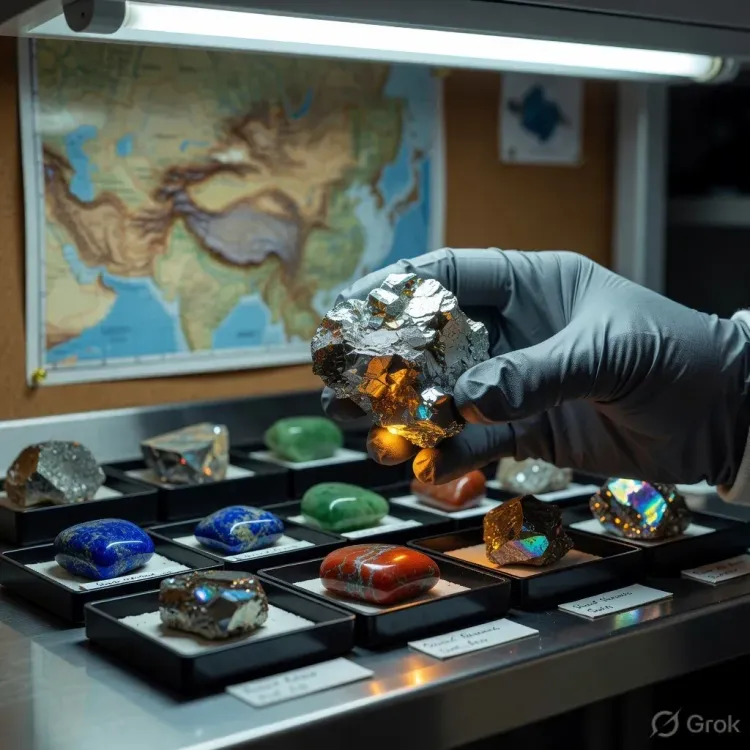
Synopsis
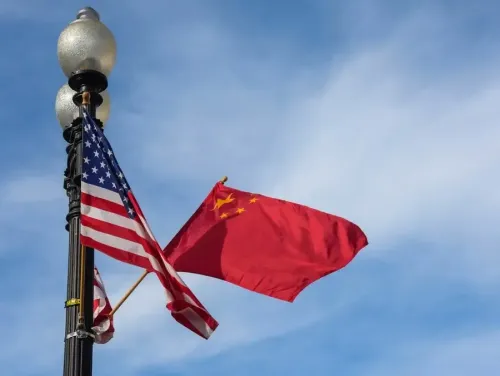
China's top science funding body is sending researchers to Iran to collaborate on rare earth exploration and processing — technologies Beijing actively restricts from Western transfer — just as the US reports it has nearly exhausted its long-range missile stockpile in the ongoing Iran conflict.
Key Takeaways
The National Natural Science Foundation of China (NSFC) announced a joint workshop programme with the Iran National Science Foundation on Monday, 11 August 2026 .
Rare earth 'exploration and processing' is listed among five priority cooperation areas, with each workshop funded at 30,000 yuan (US$4,200) by the Chinese side.
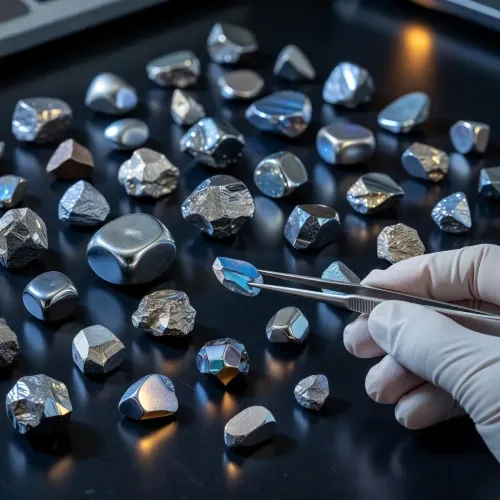
Rare earths — 17 metals critical to missiles, fighter jets, radar, and electronics — are at the heart of the ongoing global supply-chain contest between China and the United States .
Reuters reported in August 2026 that the US had used 'virtually all' of its long-range precision missiles during its five-month conflict with Iran , heightening the strategic stakes of the announcement.
Beijing has progressively tightened controls on rare earth processing know-how, making its transfer to Iran — a sanctioned state — a pointed geopolitical move.
China is deepening scientific ties with Iran in the strategically sensitive domain of rare earth elements, dispatching researchers to collaborate on exploration and processing technologies that Beijing has moved aggressively to restrict from foreign transfer. The National Natural Science Foundation of China (NSFC) announced the initiative on Monday, 11 August 2026, identifying rare earth cooperation as one of five priority areas under a new joint workshop programme with the Iran National Science Foundation.
What the programme covers
The NSFC will fund each workshop to the tune of 30,000 yuan (approximately US$4,200), covering meetings, accommodation, and domestic travel costs, according to the foundation. The Iran National Science Foundation will in turn support international travel for Iranian participants and provide accommodation for Chinese researchers visiting Iran. The arrangement is structured as a reciprocal exchange rather than a unilateral technology transfer.
Why it matters
Rare earths — a cluster of 17 metals prized for their exceptional magnetic and electronic properties — are foundational to modern defence systems, including missiles, fighter jets, radar arrays, and advanced electronics. The cooperation arrives at a moment of acute geopolitical tension: the US-Israel conflict with Iran remains unresolved, and Reuters reported earlier in August 2026 that the United States had expended 'virtually all' of its long-range precision missiles over the five-month campaign. That drawdown has intensified Washington's sensitivity to any technology flows that could bolster Iran's defence-industrial base.
The competitive backdrop
China controls an estimated dominant share of global rare earth mining and, critically, the processing and refining capacity that transforms raw ore into defence- and tech-grade materials. Beijing has in recent years tightened export controls on rare earth processing know-how, making the decision to share such expertise with Iran — a country under sweeping US and international sanctions — a deliberate strategic signal. The move fits within a broader pattern of China-Iran alignment accelerated by the Belt and Road Initiative and a 25-year cooperation agreement signed between the two countries.
What's next
Analysts will be watching whether the workshops progress from academic exchange to operational technology transfer — a line that Washington and its allies have repeatedly warned against crossing. The Trump administration has made rare earth supply chain security a stated priority, and any evidence of processing-technology proliferation to Iran could trigger fresh sanctions designations targeting Chinese institutions, including potentially the NSFC itself. How the Iran National Science Foundation and its partner institutions deploy knowledge gained from these workshops will be the critical variable to track in the months ahead.
Point of View
Beijing is leveraging its rare earth dominance as a geopolitical instrument rather than merely an economic one. Mainstream coverage tends to frame China-Iran cooperation through a sanctions-compliance lens, but the deeper story is that Beijing is effectively field-testing how far it can extend its rare earth supply-chain influence into adversarial states before triggering a decisive Western response. The NSFC's institutional involvement — rather than a commercial entity — gives Beijing plausible deniability while keeping state control over what knowledge actually transfers.
NationPress
27 Sept 2026
Frequently Asked Questions
What is China's rare earth cooperation deal with Iran?
The National Natural Science Foundation of China (NSFC) has launched a joint workshop programme with the Iran National Science Foundation covering the exploration and processing of rare earth elements, announced on Monday, 11 August 2026 . The Chinese side will fund each workshop at 30,000 yuan (US$4,200) , while Iran will cover international travel for its participants and accommodation for visiting Chinese researchers.
Why is China sharing rare earth processing technology with Iran significant?
China controls the majority of global rare earth processing capacity and has been tightening restrictions on transferring this expertise abroad. Sharing it with Iran — a country under extensive international sanctions and currently in an active conflict with the United States and Israel — carries significant strategic and geopolitical implications for global defence supply chains.
What are rare earth elements and why do they matter for defence?
Rare earths are a group of 17 metals with unique magnetic and electronic properties essential to modern weapons systems, including missiles, fighter jets, radar, and a wide range of electronic systems. Control over their mining and — critically — their processing is considered a key lever of national security and industrial power.
How does this relate to the US-Iran conflict?
Reuters reported in August 2026 that the United States had expended 'virtually all' of its long-range precision missiles during its five-month conflict with Iran . Any collaboration that could enhance Iran 's access to rare earth materials used in weapons manufacturing is therefore acutely sensitive from Washington 's perspective.
Could this trigger new US sanctions on Chinese institutions?
The Trump administration has made rare earth supply-chain security a top priority, and technology transfers to sanctioned states are a recognised sanctions trigger. If the workshops advance from academic exchange to operational processing know-how transfer, institutions including the NSFC could face designations under existing US sanctions frameworks targeting entities that support Iran 's defence sector.