China proposes buried nuke to destroy doomsday asteroids
Synopsis
Chinese rocket scientists say burying a 3-megaton nuclear bomb 30 metres into a 100-metre asteroid could triple its deflection speed — outperforming every existing planetary defence method, according to a May 2026 simulation study.
Key Takeaways
Researchers at the China Academy of Launch Vehicle Technology in Beijing published the study in Space: Science & Technology in May 2026 .
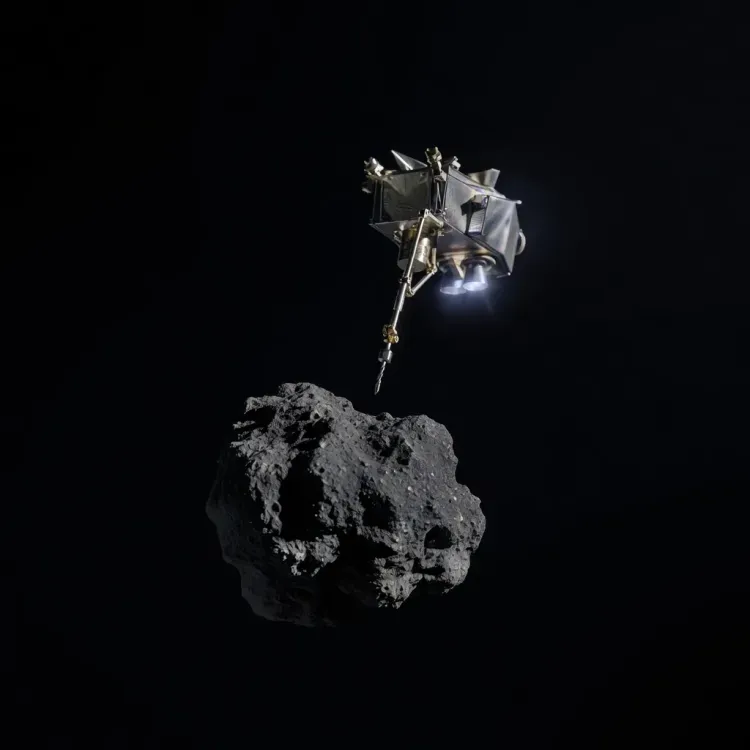
A two-spacecraft mission would first drill a hole with a metal penetrator, then drop a nuclear device into it before detonating.
A 3-megaton explosion (about 200 Hiroshima bombs ) could completely destroy an asteroid 100 metres (328 feet) wide, per simulations.
Burying the bomb 30 metres underground more than triples the change in asteroid velocity versus a shallow detonation.
The method uses entirely uncrewed spacecraft and is argued to be less technically complex than a direct nuclear impact approach.
The concept is complementary to NASA 's kinetic impactor approach demonstrated by the DART mission in 2022 .
Researchers at the China Academy of Launch Vehicle Technology in Beijing have identified what they describe as the most effective method to neutralise a large, Earth-threatening asteroid: burying a nuclear bomb beneath the asteroid's surface before detonating it. The findings, published in the journal Space: Science & Technology in May, outline a two-step uncrewed mission concept that the team argues surpasses existing deflection strategies in both simplicity and effectiveness.
How the two-step method works
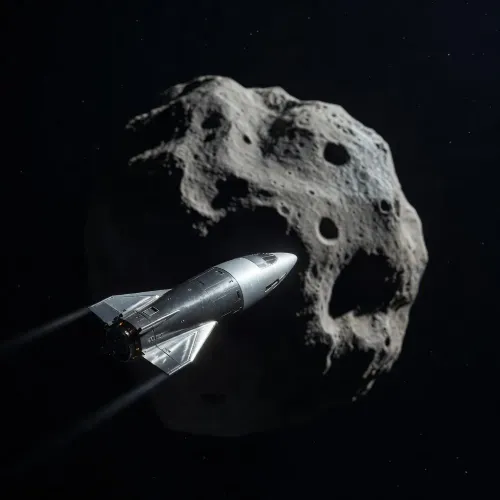
The proposed approach involves two spacecraft working in sequence. The first would slam a metal penetrator into the asteroid, carving out a deep cavity. A second spacecraft would then lower a nuclear device into that cavity and detonate it — allowing engineers to control precisely where and how deep the bomb is placed, rather than relying on a single high-speed impact at an uncontrolled location.
The team's simulations showed that a 3-megaton explosion — equivalent to roughly 200 Hiroshima bombs — could completely shatter an asteroid approximately 100 metres (328 feet) in diameter.
Why burial depth matters
A key finding of the study is that detonation depth is critical to mission success. Burying the bomb 30 metres beneath the asteroid's surface could more than triple the change in the asteroid's velocity compared with a shallow surface blast, according to the researchers. This makes the buried approach dramatically more effective at pushing a threatening rock off a collision course with Earth.
The team argued that the two-step method offers lower technical complexity than a direct high-speed nuclear impact, while delivering superior planetary defence outcomes.
The Armageddon comparison
The concept draws inevitable comparisons to the 1998 disaster film Armageddon, in which astronauts drill into an asteroid and detonate a nuclear device. The Chinese researchers' proposal, however, relies entirely on uncrewed spacecraft — removing the human risk element that defined Hollywood's fictional treatment of the scenario.
Unlike the film's improvised drama, the scientific proposal centres on precision engineering: pre-selecting the detonation site, controlling burial depth, and optimising explosive yield for the target body's size.
Competitive backdrop: planetary defence goes global
NASA's DART mission in 2022 demonstrated kinetic impactor technology by successfully altering the orbit of the asteroid Dimorphos. China's nuclear burial concept represents a different — and potentially complementary — tier of response, suited to larger asteroids or scenarios where a kinetic impactor alone would be insufficient. As space agencies worldwide accelerate planetary defence research, the debate over which method — kinetic, nuclear surface burst, or nuclear subsurface detonation — offers the best risk-adjusted solution is intensifying.
What's next
The research remains at the simulation stage, and no mission has been announced. However, as detection catalogues of near-Earth objects grow and international coordination on planetary defence deepens, studies like this one are increasingly informing real mission architecture decisions. The next milestone to watch is whether China's space agency formally incorporates subsurface nuclear deflection into its long-term planetary defence roadmap.
Point of View
With the US DART success in 2022 setting a benchmark that rivals are now racing to exceed. The buried-bomb concept is notable not just for its physics — tripling velocity change is a significant margin — but for its implicit message: that Beijing's space programme is thinking beyond launch vehicles and lunar ambitions toward civilisation-scale risk mitigation. What mainstream coverage often misses is that nuclear deflection remains legally fraught under the Outer Space Treaty, meaning any real mission would require unprecedented international legal consensus. The true test of this research's relevance will be whether it shapes China's formal planetary defence doctrine or remains a simulation exercise with no institutional follow-through.
NationPress
2 Aug 2026
Frequently Asked Questions
What did Chinese researchers propose for asteroid deflection?
Researchers at the China Academy of Launch Vehicle Technology proposed a two-step method: first using a metal penetrator spacecraft to drill into an asteroid, then dropping a nuclear bomb into the hole and detonating it. Their simulations, published in May 2026 , show this buried approach is more effective than a surface nuclear blast or kinetic impact alone.
How powerful would the nuclear bomb need to be?
According to the study, a 3-megaton explosion — roughly equivalent to 200 Hiroshima bombs — would be sufficient to completely destroy an asteroid about 100 metres (328 feet) in diameter. The researchers found that burial depth of 30 metres was key to maximising destructive and deflection effect.
How does this compare to NASA's DART mission?
NASA 's DART mission used a kinetic impactor to alter the orbit of asteroid Dimorphos in 2022 , demonstrating that physical collision can shift a small asteroid's path. The Chinese nuclear burial concept targets larger asteroids or higher-threat scenarios where kinetic impact alone would be insufficient, making the two approaches potentially complementary.
Would astronauts be involved, like in the film Armageddon?
No. Unlike the 1998 film Armageddon , the Chinese proposal relies entirely on uncrewed spacecraft . The researchers specifically cited lower technical complexity and the elimination of human risk as advantages of their automated two-step method.
Is this method ready to be used?
Not yet — the research is currently at the computer simulation stage, and no actual mission has been announced. The study contributes to the global scientific debate on planetary defence architecture, and its real-world viability would also depend on international legal frameworks governing nuclear weapons in space.