Sitharaman flags customs, banking reforms for Viksit Bharat at G20
Synopsis
At the G20 Finance Ministers' meeting in Asheville, Sitharaman outlined two under-reported reform tracks: scanner-based risk screening at ports that could transform import clearance timelines, and a high-level banking committee whose mandate — aligning the sector with Viksit Bharat goals — could reshape credit priorities. Both remain without a public timetable, making execution the real story.
Key Takeaways
Finance Minister Nirmala Sitharaman announced fresh customs and banking reforms at the G20 Finance Ministers' meeting in Asheville on 1 September .
Proposed customs overhaul includes deploying scanners for high-risk importers and automatic clearance for lower-risk consignments — no rollout timetable confirmed.
A high-level committee has been appointed to review the banking sector's role in achieving Viksit Bharat ; report timeline not disclosed.
More than 1,000 laws repealed and around 40,000 regulations simplified to reduce compliance burden.
India recorded 7.8% GDP growth in Q1 FY2026-27 ; manufacturing up 9.2% , financial services up 12.1% .
Government is pushing bilateral investor protection agreements alongside trade pacts, with UPI and NPCI expansion aiding SME access to global markets.
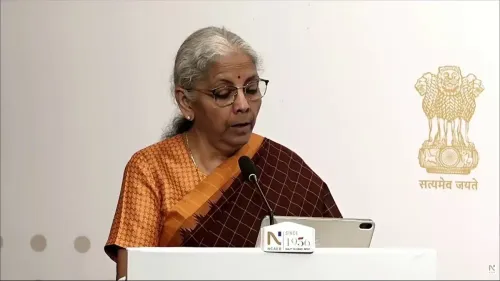
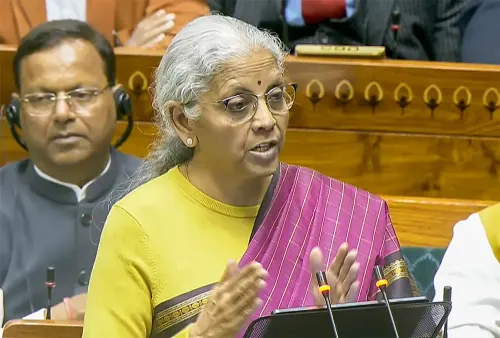
Finance Minister Nirmala Sitharaman announced that India is preparing a fresh wave of customs and banking reforms, including risk-based import screening at ports and a high-level committee review of the banking sector's role in achieving Viksit Bharat — the government's vision of a developed India by 2047. She made the remarks on the sidelines of the G20 Finance Ministers' meeting in Asheville on 1 September.
Customs Reforms: Smarter Screening at Ports
A central plank of the proposed customs overhaul is the deployment of scanners to concentrate scrutiny on high-risk importers, while allowing lower-risk consignments to be cleared automatically. The move is aimed at reducing delays and easing congestion at Indian ports.
'We are trying to bring in scanners and have high-risk importers alone go through them, and the rest of them can be cleared automatically,' Sitharaman said. She added that further customs changes were already in the pipeline, building on reforms already made to direct and indirect taxation. However, no timetable was provided for rolling out the scanner network or the automatic clearance system.
Banking Sector Under High-Level Review
The government has constituted a high-level committee to examine the banking sector and map its future role in meeting India's development targets. 'The banks, of course, we've appointed a high-level committee to look into banking for Viksit Bharat,' Sitharaman said, without indicating when the panel's recommendations would be submitted.
She also pointed to foreign deposits and overseas Indian investments as indicators of confidence in the Indian banking system, saying the data reflected a positive story about trust and macroeconomic stability.
Compliance Burden Cut, States Get Credit
Sitharaman credited both the Centre and state governments for progress on the ease of doing business. She said more than 1,000 laws had been repealed and around 40,000 regulations simplified, reducing the compliance burden on citizens and companies alike.
'I think together with the states, I will also credit the states, many of them who have come forward to make doing business a bit easier,' she said. The government, she added, has been simplifying Acts, rationalising regulations, and removing archaic statutes.
Trade Agreements and Digital Finance Push
The Finance Minister said India was actively pursuing bilateral trade agreements and, increasingly, investor protection agreements. She also highlighted the expansion of UPI and NPCI systems, including QR-code payments, as tools helping small and medium-sized enterprises access global markets.
Economic Backdrop
The reform announcements come as India reported 7.8% GDP growth in the first quarter of the 2026-27 financial year. Manufacturing expanded by 9.2%, while the financial and professional services sector grew by 12.1% in the same period. Sitharaman said reforms across government departments and the financial sector had demonstrated the underlying robustness of the Indian economy.
With the high-level banking committee yet to submit its report and no timeline confirmed for customs scanner deployment, the pace of implementation will be closely watched by industry and trade bodies.
Point of View
But the absence of timelines on both the customs scanner rollout and the banking committee's report is telling — India has a pattern of announcing reform frameworks well ahead of implementation. The risk-based screening proposal is operationally sound and overdue, but port infrastructure and inter-agency coordination have stalled similar ideas before. The banking committee's mandate — aligning the sector with Viksit Bharat — is broad enough to mean everything and nothing; what matters is whether it produces binding recommendations on credit allocation, not another advisory document. Meanwhile, the 7.8% growth figure provides political cover to move at a measured pace, reducing urgency for the structural banking reforms that a truly developed India would require.
NationPress
1 Sept 2026
Frequently Asked Questions
What customs reforms did FM Sitharaman announce?
Sitharaman outlined a plan to deploy scanners at Indian ports to screen only high-risk importers, while allowing other consignments to be cleared automatically. The goal is to reduce delays and ease port congestion, though no implementation timetable was provided.
What is the high-level banking committee for Viksit Bharat?
The government has appointed a high-level committee to examine the banking sector's future role in achieving India's Viksit Bharat development vision. The committee is expected to submit a report, but no deadline for its recommendations has been announced.
How much has India reduced its regulatory burden?
According to Sitharaman, more than 1,000 laws have been repealed and around 40,000 regulations simplified. The effort has involved reforming Acts, rationalising rules, and removing outdated statutes, with state governments also contributing to ease-of-doing-business improvements.
What is India's current GDP growth rate?
India recorded 7.8% GDP growth in the first quarter of the 2026-27 financial year. Manufacturing grew 9.2% and the financial and professional services sector expanded 12.1% in the same period.
What bilateral agreements is India pursuing?
Beyond bilateral trade agreements, India is now actively pushing investor protection agreements with partner countries. Sitharaman also cited UPI and NPCI expansion, including QR-code payments, as tools enabling small and medium enterprises to access global markets.